Methodology
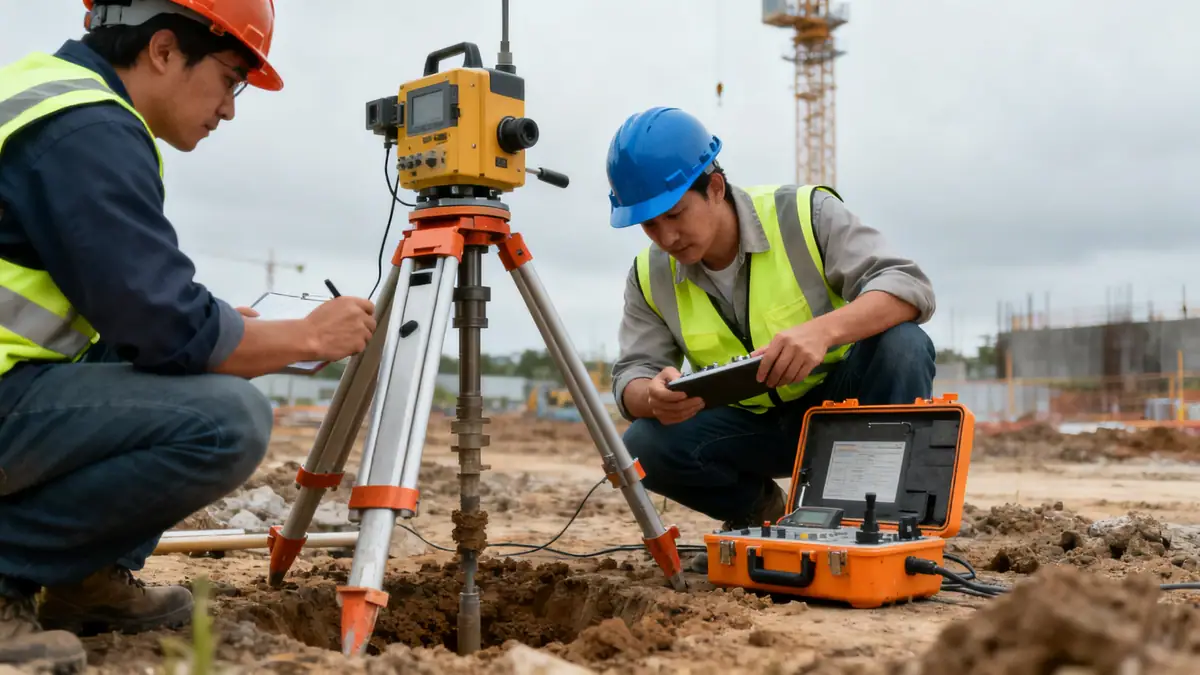
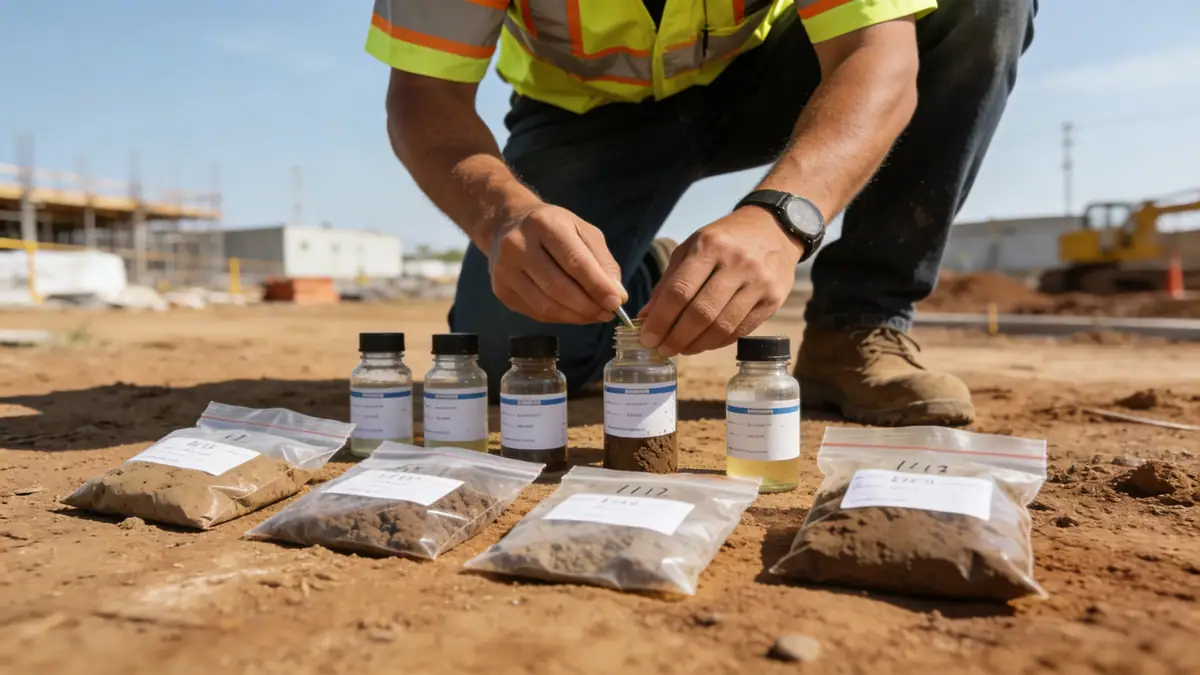
Our approach as a soil mechanics laboratory in Los Angeles integrates field sampling and laboratory testing according to ASTM standards. We perform standard penetration testing (ASTM D1586) at 1.0–1.5 m intervals to obtain N60 values, supplemented by continuous CPT soundings at 2 cm resolution to depths of 30 m. Soil classification includes sieve analysis (ASTM D6913) and hydrometer testing (ASTM D7928) for fines. Index properties are determined via Atterberg limits (Casagrande cup method) and Proctor compaction (ASTM D698). This comprehensive methodology supports foundation design, slope stability, and seismic hazard assessment for projects across Los Angeles. For a detailed overview of our capabilities, visit our soil mechanics laboratory page.
Reference Technical Parameters
| Parameter | Reference Value |
|---|---|
| Predominant soil type | Alluvial sands, silts, and clays |
| Maximum seismic acceleration (PGA) | 0.4 g (ASCE 7 Site Class D) |
| Typical groundwater level | 3–10 m below ground surface |
| Bedrock depth | 100–300 m (deep basin) |
| Typical N60 range | 5–30 blows/ft (variable) |
Local Considerations — Los Angeles
Los Angeles sits atop a deep sedimentary basin with complex geology. The predominant soils include alluvial sands, silts, and clays from the Los Angeles River and its tributaries, with localized marine deposits near the coast. Groundwater levels vary from 3 to 10 m depth, requiring dewatering considerations for deep excavations. Seismic hazard is high (PGA up to 0.4 g per ASCE 7), demanding site-specific response analysis. Contrasting conditions exist between the San Fernando Valley (deeper alluvium with lower N60) and the Hollywood Hills (shallow bedrock). Typical foundation issues include liquefaction in saturated loose sands and differential settlement on heterogeneous fill. For advanced testing, refer to our granulometry & atterberg service.
Request a Quote
Our team reviews your project and issues an initial report at no cost.
Or write us directly at [email protected]
Services in Los Angeles
Locations covered in Los Angeles
Applicable Standards
- ASTM D1586 (Standard Penetration Test)
- ASCE 7 (Minimum Design Loads for Buildings)
- California Building Code (CBC) Chapter 18
- ASTM D2487 (Unified Soil Classification System)
- ASTM D2435 (One-Dimensional Consolidation)
Frequently Asked Questions
What soil types are commonly found in Los Angeles?
Los Angeles predominantly features alluvial sands, silts, and clays deposited by ancient rivers. Coastal areas contain marine sediments, while hillside regions expose older sedimentary rock. These variations require site-specific testing to characterize bearing capacity and seismic behavior.
How does seismic design affect soil testing in Los Angeles?
Seismic design per ASCE 7 requires site classification (A–F) based on soil shear wave velocity or SPT N-values. For Los Angeles, Site Class D or E is common, demanding site response analysis. Our testing provides the necessary parameters for liquefaction assessment and foundation damping calculations.
Are geotechnical studies mandatory for construction in Los Angeles?
Yes, the California Building Code mandates geotechnical investigations for most new buildings and major alterations. A soil report must address bearing capacity, settlement, seismic hazards, and groundwater conditions. Local jurisdictions may also require peer review for projects in high-seismic zones.