Methodology
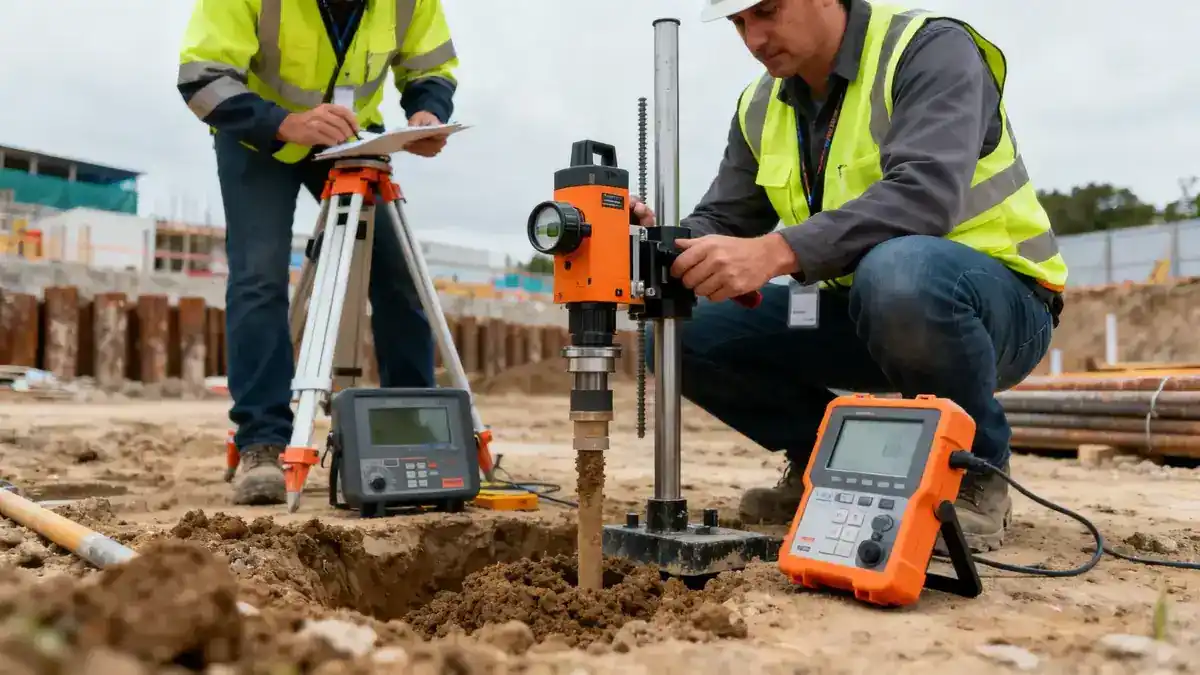
Our methodology follows ASTM D6913 for sieve analysis and ASTM D4318 for Atterberg limits. For fine-grained soils, we combine hydrometer analysis with mechanical sieving, using a 63 μm sieve as the separation point. Liquid limit is determined via the Casagrande cup method (25 blows), while plastic limit is measured by rolling threads to 3.2 mm diameter. We report particle size distribution curves and plasticity charts. Typical sample mass is 500 g for sieving and 200 g for hydrometer analysis. Our team also integrates these results with Proctor & CBR Testing for compaction characteristics.
Reference Technical Parameters
| Parameter | Reference Value |
|---|---|
| Sieve Sizes (ASTM E11) | 75 mm to 75 μm |
| Liquid Limit (LL) Range | 20% – 100% |
| Plasticity Index (PI) Range | 0% – 60% |
| Sample Mass Required | 500 g (sieve), 200 g (hydrometer) |
| Testing Duration | 5 – 7 business days |
Local Considerations — USA
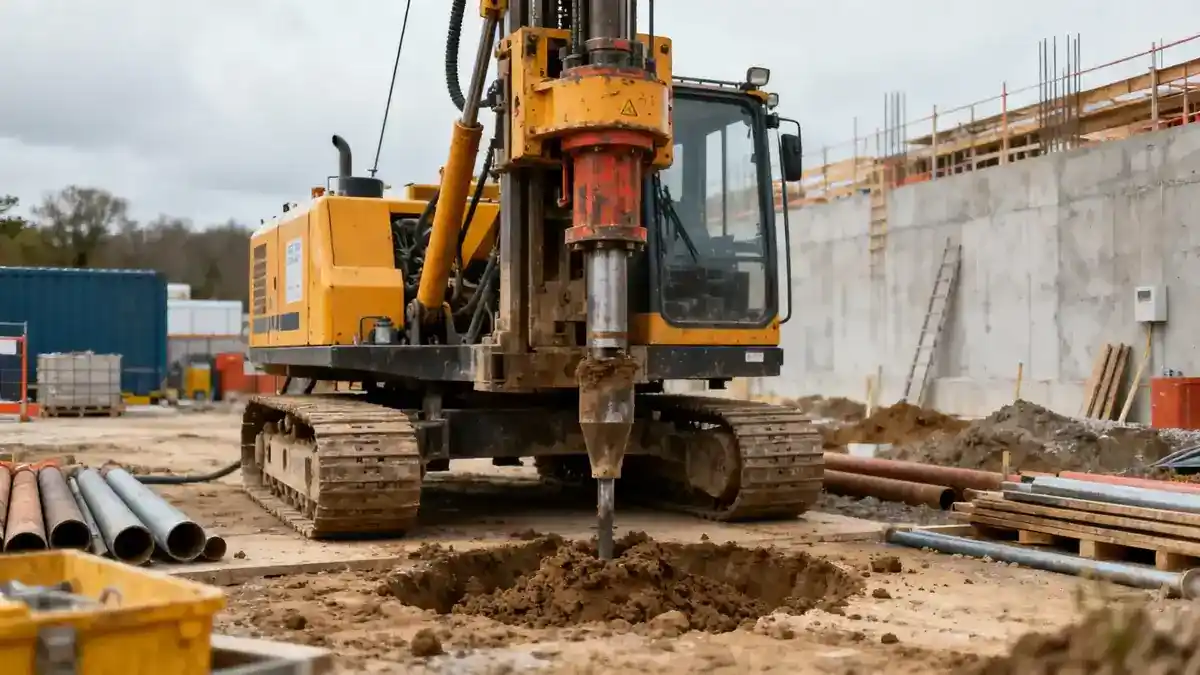
Granulometry & Atterberg requirements vary by region: in areas like Akron and Allentown, glacial till deposits require careful classification for slope stability. In arid zones such as Albuquerque, low-plasticity silts dominate, affecting compaction specifications. Our firm adapts testing protocols to local soil conditions, referencing regional building codes. For coastal cities like Anchorage and Arlington, marine clays with high plasticity demand precise Atterberg limits to assess expansion potential. We coordinate sampling and testing schedules to align with construction timelines across all service areas.
Request a Quote
Our team reviews your project and issues an initial report at no cost.
Or write us directly at [email protected]
Applicable Standards
- ASTM D6913 – Particle-Size Distribution (Gradation) of Soils
- ASTM D4318 – Standard Test Methods for Liquid Limit, Plastic Limit, and Plasticity Index of Soils
- ASTM D7928 – Particle-Size Distribution (Gradation) of Fine-Grained Soils Using the Sedimentation (Hydrometer) Analysis
- AASHTO T 88 – Particle Size Analysis of Soils
Frequently Asked Questions
What is the difference between sieve analysis and hydrometer analysis?
Sieve analysis separates particles by size using a stack of sieves with decreasing openings, typically down to 75 μm. Hydrometer analysis is used for particles finer than 75 μm, measuring sedimentation rate to determine clay and silt fractions. Both are combined for a complete particle size distribution per ASTM D6913.
How do Atterberg limits influence soil classification?
Atterberg limits (liquid limit, plastic limit, plasticity index) define the moisture content thresholds between solid, plastic, and liquid states. These values are used in the Unified Soil Classification System (USCS) to classify fine-grained soils as clays (high plasticity) or silts (low plasticity), directly affecting foundation design and compaction criteria.
What is the typical turnaround time for Granulometry & Atterberg testing?
Standard turnaround is 5 to 7 business days from sample receipt. Expedited services are available for critical projects. The timeline depends on sample quantity and required testing scope (e.g., additional hydrometer analysis). Our laboratory communicates schedule updates throughout the process.
How much does Granulometry & Atterberg testing cost in the United States?
Testing costs range from $550 to $760 per sample, depending on depth, site accessibility, and number of tests (e.g., sieve only vs. full hydrometer and Atterberg). This is a 2026 reference range. For an accurate quote tailored to your project, please request a specific proposal from our team.