Methodology
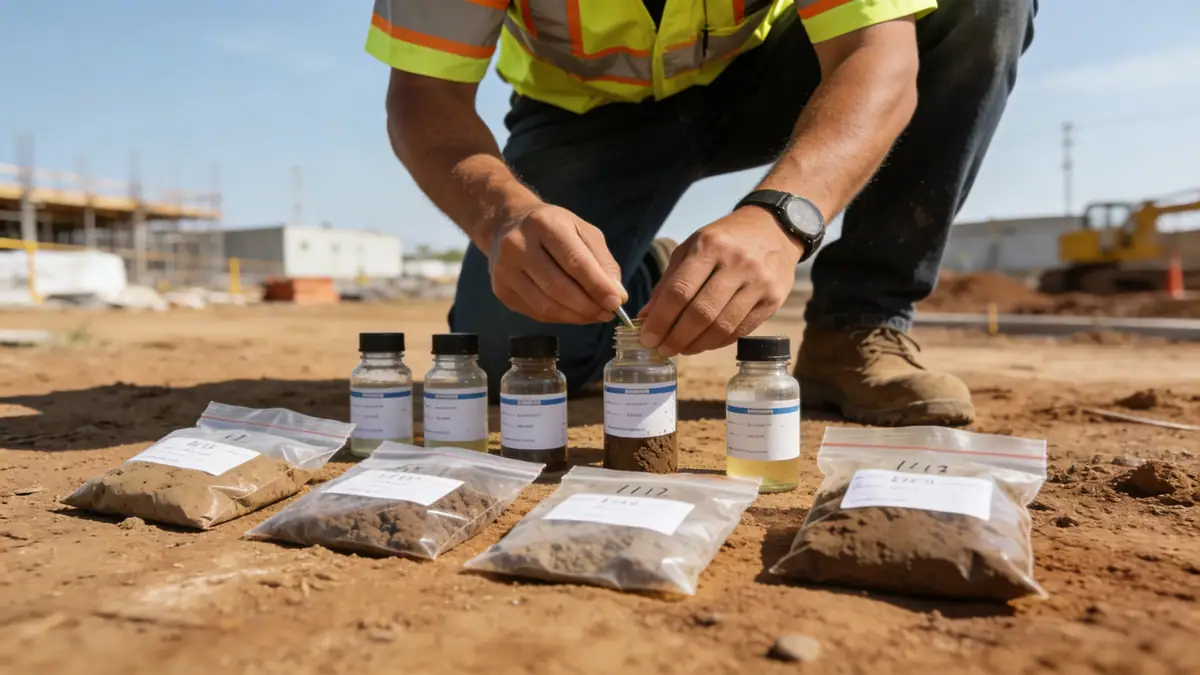
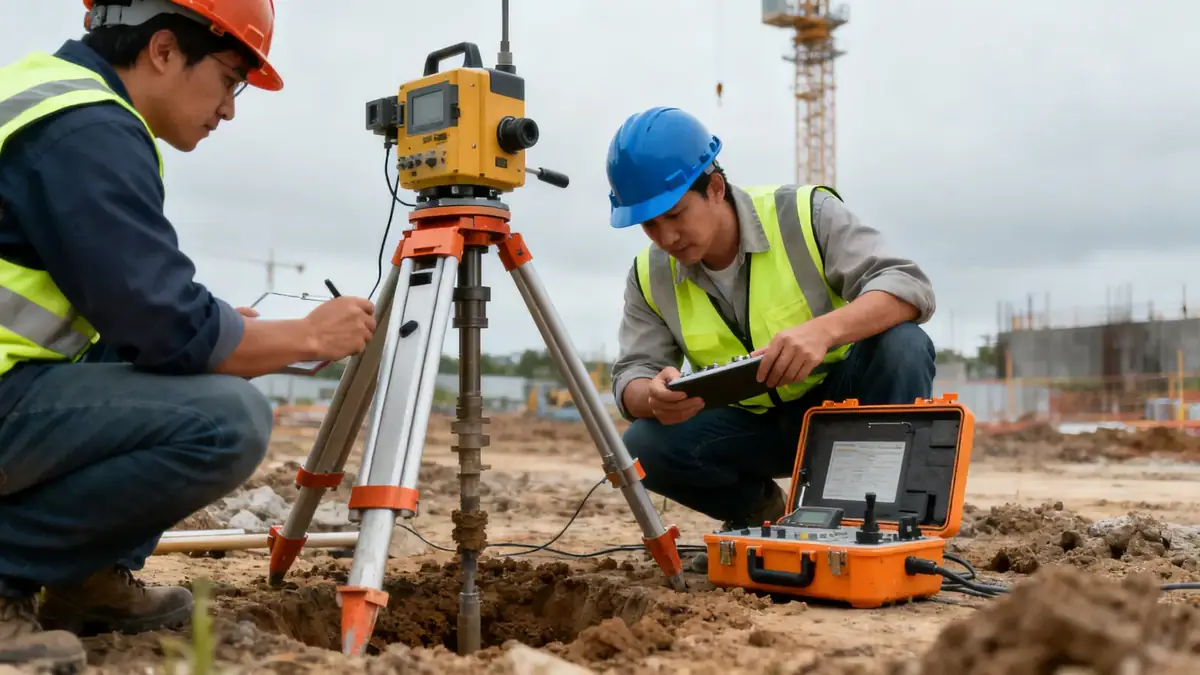
Our methodology begins with a thorough review of project specifications and site geology, followed by field sampling and laboratory testing. We employ Soil Mechanics Laboratory procedures including grain size distribution, Atterberg limits, Proctor compaction, CBR, triaxial shear, and consolidation tests. All testing follows ASTM standards such as ASTM D422 for particle-size analysis and ASTM D2435 for consolidation. Data is analyzed using advanced software to model soil behavior under various loading conditions, ensuring reliable foundation design parameters.
Reference Technical Parameters
| Parameter | Reference Value |
|---|---|
| Seismic Zone (ASCE 7) | Zone 1 (low) to Zone 4 (high) |
| Typical Boring Depth | 10–30 m (33–100 ft) |
| Standard Penetration Test (SPT) N-value | 4–50 blows/0.3 m |
| Soil Types Encountered | Gravel, sand, silt, clay, peat |
| Bedrock Depth Range | 0–50 m (0–165 ft) |
Local Considerations — USA
The United States presents a wide range of geotechnical challenges due to its varied geology. Seismic zones per ASCE 7 dictate foundation design in active regions such as California and the Pacific Northwest. Expansive clays in Texas and the Gulf Coast require special treatment, while glacial till in the Northeast influences bearing capacity. Our team addresses these conditions with site-specific testing, including services in the Southwest for arid soils and permafrost considerations in Alaska. We adhere to local building codes and ASTM standards to ensure safe and economical designs.
Request a Quote
Our team reviews your project and issues an initial report at no cost.
Or write us directly at [email protected]
Applicable Standards
- ASTM D1586 – Standard Penetration Test
- ASTM D2487 – Classification of Soils
- ASCE 7 – Minimum Design Loads
- IBC – International Building Code
Frequently Asked Questions
What is the purpose of a soil mechanics laboratory?
A soil mechanics laboratory tests soil samples to determine physical and mechanical properties such as strength, compressibility, and permeability. These data are essential for designing foundations, retaining walls, and earthworks, ensuring structures are safe and stable under expected loads.
Which ASTM standards are commonly used in soil testing?
Common ASTM standards include ASTM D1586 for SPT, ASTM D422 for grain size, ASTM D4318 for Atterberg limits, ASTM D698 for Proctor compaction, and ASTM D2850 for unconsolidated-undrained triaxial tests. These ensure consistency and reliability across laboratories.
How does seismic zone affect foundation design?
Seismic zones, defined by ASCE 7, indicate ground motion intensity during earthquakes. Higher zones require stronger foundations, deeper embedment, and sometimes soil improvement to mitigate liquefaction risk. Our laboratory provides dynamic soil properties for seismic analysis.