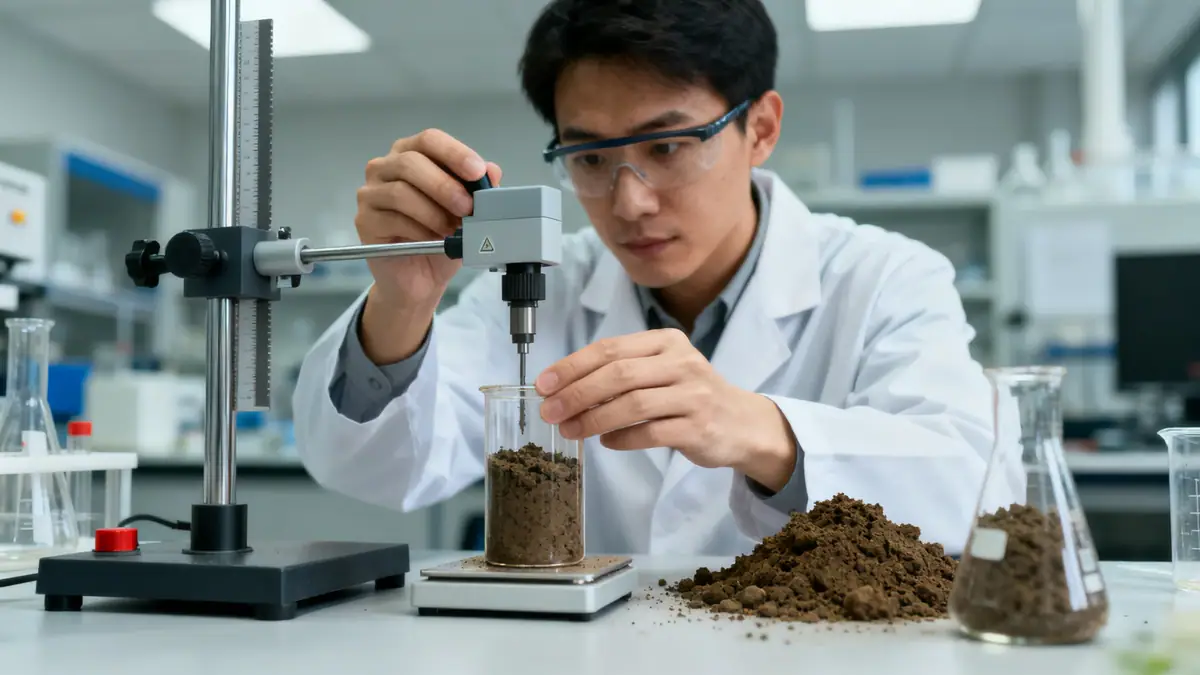
Methodology
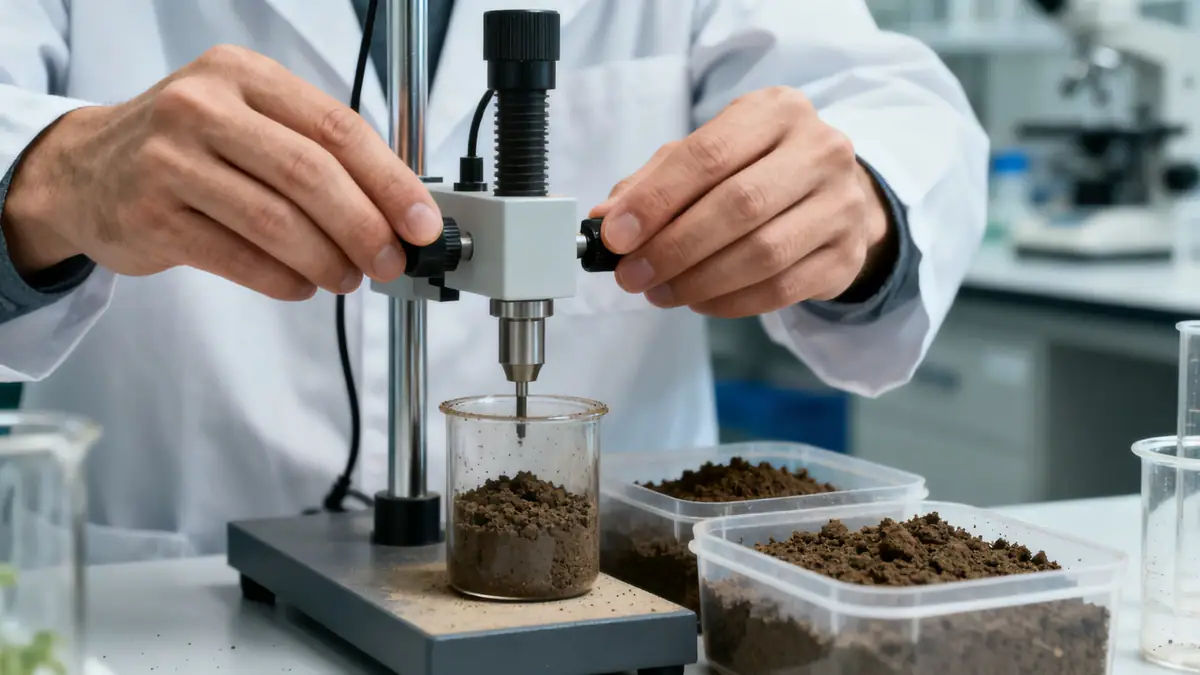
Our soil mechanics laboratory methodology follows ASTM D1586 for standard penetration testing and ASTM D4318 for Atterberg limits. We employ automated triaxial systems and consolidation apparatus to measure shear strength and compressibility. Each sample undergoes visual classification, moisture content determination (ASTM D2216), and particle size analysis via sieve and hydrometer methods. For dynamic properties, we conduct resonant column tests to a maximum shear strain of 0.001%. Our procedures ensure repeatability with a tolerance of ±5% for density measurements. For further details on specific tests, see our Granulometry & Atterberg service.
Reference Technical Parameters
| Parameter | Reference Value |
|---|---|
| Shear Strength (Triaxial UU) | 20–500 kPa |
| Compression Index (Cc) | 0.1–0.8 |
| Maximum Dry Density (Proctor) | 1.6–2.2 g/cm³ |
| Permeability (Constant Head) | 10⁻⁶–10⁻³ cm/s |
| Atterberg Limits (LL, PL, PI) | LL 20–80, PL 15–50, PI 5–40 |
Local Considerations — USA
Soil conditions across the United States vary significantly—from the expansive clays of Texas to the glacial tills of the Midwest and the liquefaction-prone sands of California. Our laboratory adapts testing protocols to regional geology and seismic zones. For instance, in Anchorage and Akron, we emphasize cyclic triaxial tests to evaluate liquefaction potential per ASCE 7-22. In Albuquerque and Allentown, we focus on swell-consolidation tests for expansive soils. This region-specific approach ensures accurate parameters for foundation design, slope stability, and pavement analysis. Learn more about our work in Akron.
Request a Quote
Our team reviews your project and issues an initial report at no cost.
Or write us directly at [email protected]
Applicable Standards
- ASTM D1586 (Standard Penetration Test)
- ASTM D4318 (Atterberg Limits)
- ASCE 7-22 (Minimum Design Loads for Buildings)
- Eurocode 7 (Geotechnical Design)
Frequently Asked Questions
What is the typical turnaround time for soil mechanics tests?
Standard testing, including classification, compaction, and shear strength, is completed within 5–10 business days. Advanced tests like triaxial consolidation may require up to 14 days. Expedited services are available for critical path projects.
Which ASTM standards do you follow for soil classification?
We adhere to ASTM D2487 (Unified Soil Classification System), ASTM D2488 (visual-manual description), and ASTM D422 (particle-size analysis). All procedures are performed in accordance with current ASTM standards to ensure consistency and legal defensibility.
Can you test frozen or permafrost soils?
Yes, our laboratory is equipped for frozen soil testing per ASTM D5520 (thermal conductivity) and ASTM D4083 (unconfined compression of frozen soil). We maintain temperature-controlled chambers for samples from cold regions like Anchorage and Juneau.
How much does soil mechanics laboratory testing cost in the USA?
The cost ranges from $3,150 to $5,250 for a standard suite of tests (classification, compaction, triaxial shear). Final pricing depends on sample depth, accessibility, and number of tests. Contact our team for a detailed quote tailored to your project.