Methodology
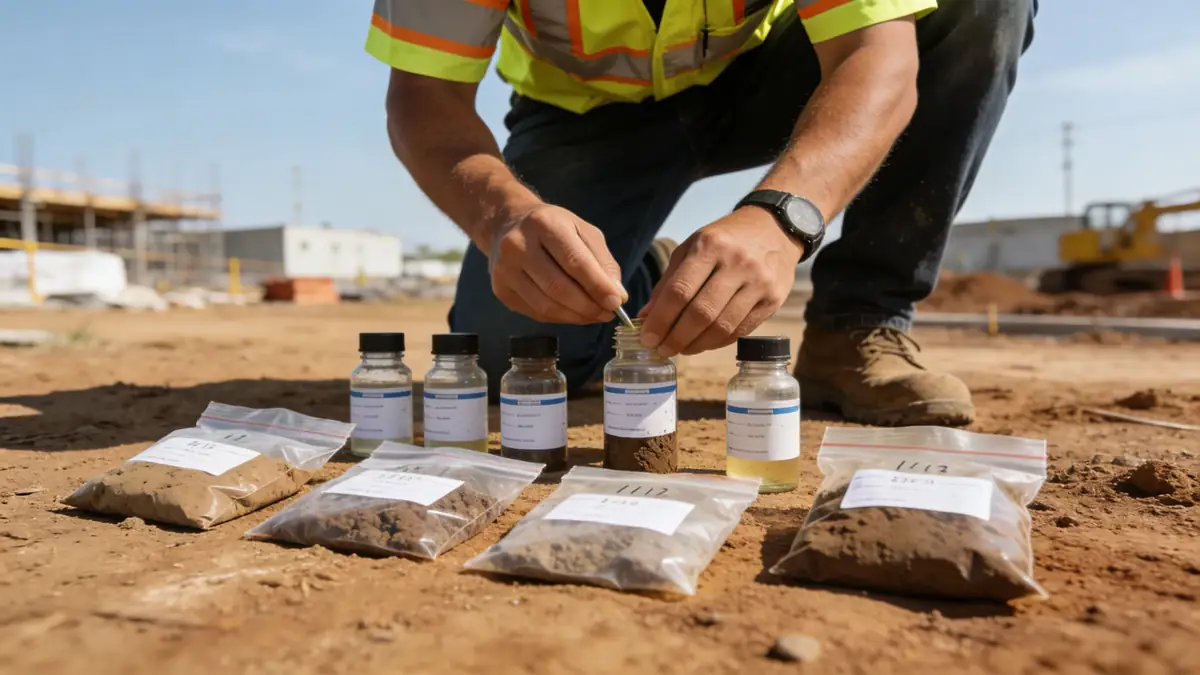
Our methodology for projects in Miami integrates advanced field and laboratory procedures tailored to the region's carbonate sands and clay layers. We perform standard penetration tests (SPT) per ASTM D1586 with sampling intervals of 1.0–1.5 m to characterize soil layers. Laboratory testing includes sieve analysis and hydrometer tests for grain size distribution, as well as Atterberg limits for plasticity assessment. For compaction control, we conduct Proctor tests (standard or modified) to determine optimum moisture content and maximum dry density. Our team also performs triaxial and consolidation tests to evaluate shear strength and settlement parameters. All procedures follow applicable ASTM standards and local building codes, ensuring reliable data for foundation design in Miami's coastal environment.
Reference Technical Parameters
| Parameter | Reference Value |
|---|---|
| Predominant soil type | Limestone (Miami Limestone), sand (quartz/carbonate), and clay |
| Maximum seismic acceleration (PGA) | 0.15g (ASCE 7-22, Site Class C/D) |
| Typical groundwater level | 1.0–3.0 m below ground surface (Biscayne Aquifer) |
| Bedrock depth | Variable: 0–10 m (shallow in western areas, deeper east) |
| Typical N60 range (SPT) | 5–30 blows/ft (sand); >50 in limestone layers |
Local Considerations — Miami
Miami's geology is dominated by the Miami Limestone, a porous oolitic limestone with variable karst features, overlain by sands and occasional clay lenses. The high water table (1–3 m depth) and the Biscayne Aquifer require careful dewatering and foundation design. Seismic hazard is moderate (PGA up to 0.15g per ASCE 7-22). Neighborhood contrasts are significant: coastal areas (e.g., Brickell) have deeper fill and soft soils, while western suburbs (e.g., Kendall) have shallower limestone. Typical projects include high-rise foundations requiring deep piles or drilled shafts, and residential developments needing slab-on-grade evaluations. Our team has extensive experience addressing these local conditions through targeted soil mechanics laboratory investigations.
Request a Quote
Our team reviews your project and issues an initial report at no cost.
Or write us directly at [email protected]
Services in Miami
Locations covered in Miami
Applicable Standards
- ASTM D1586 (Standard Penetration Test)
- ASCE 7-22 (Minimum Design Loads for Buildings)
- ASTM D2487 (Soil Classification)
- Florida Building Code (2023)
- ASTM D698 (Standard Proctor)
Frequently Asked Questions
What are the typical soil types encountered in Miami?
Miami's subsurface consists primarily of Miami Limestone (oolitic limestone) near the surface, underlain by sandy deposits and occasional clay layers. The limestone is highly porous, and the water table is shallow due to the Biscayne Aquifer. These conditions influence foundation design and require careful geotechnical evaluation.
Is seismic analysis required for projects in Miami?
Yes, the Florida Building Code requires seismic analysis per ASCE 7-22. Miami is in a moderate seismic zone (PGA up to 0.15g). Site-specific response spectra may be needed for critical structures. Our team performs seismic site classification and liquefaction assessments to meet code requirements.
Are geotechnical studies mandatory for construction in Miami?
The Florida Building Code mandates geotechnical investigations for most building projects, especially those with shallow foundations, high loads, or in areas with known subsurface variability. A comprehensive soil mechanics laboratory report is typically required for permit approval, ensuring safe and economical foundation design.