Methodology
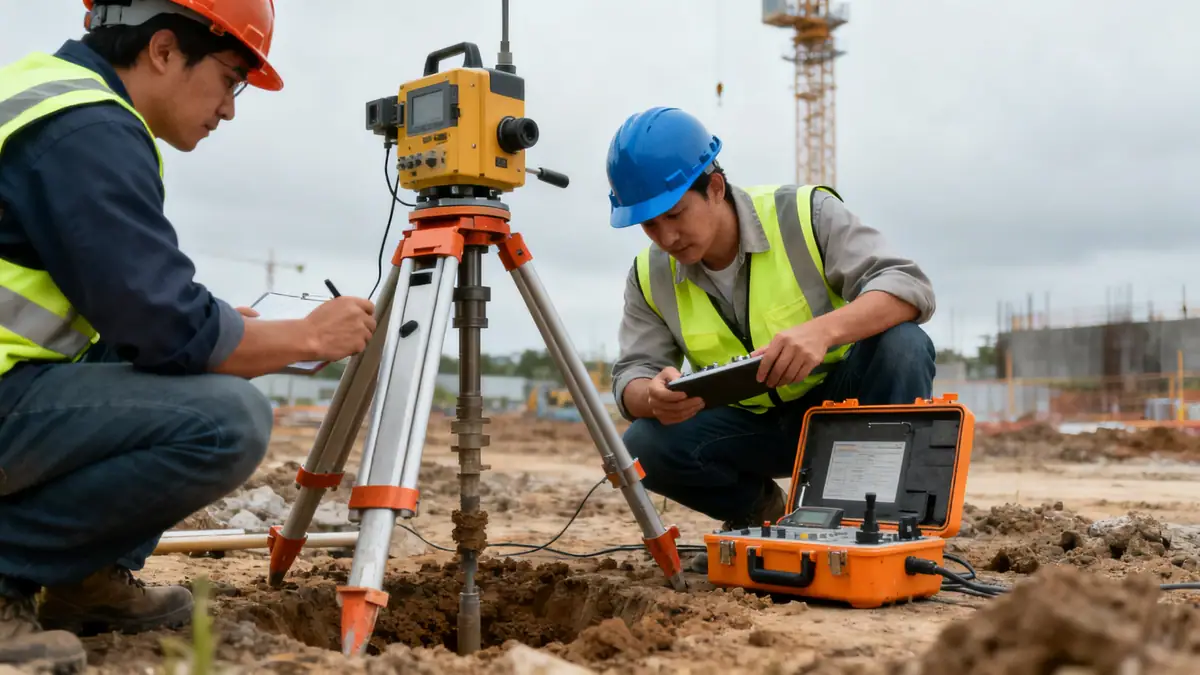
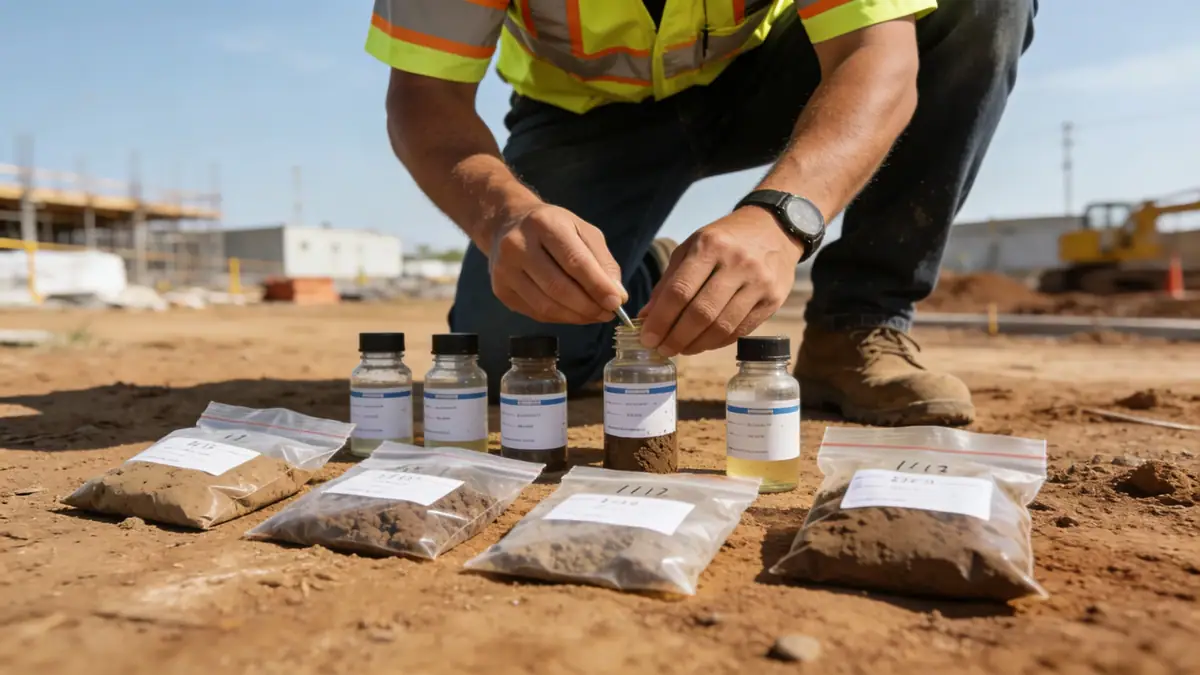
Our methodology at Soil Mechanics Laboratory in Albuquerque follows ASTM standards to ensure reliable results. For subsurface exploration, we conduct Standard Penetration Tests (SPT) per ASTM D1586, with sampling intervals of 1.0 to 1.5 meters, reaching depths of 8 to 15 meters for residential projects and up to 30 meters for industrial sites. We also perform Cone Penetration Testing (CPT) for continuous soil profiling. Laboratory testing includes soil mechanics laboratory for classification, Proctor compaction, and triaxial shear strength assessments. All procedures are calibrated to Albuquerque's specific soil conditions, providing data that directly informs foundation design and earthwork specifications.
Reference Technical Parameters
| Parameter | Reference Value |
|---|---|
| Predominant soil type | Clayey sands (SC) and silty clays (CL) with gravel lenses |
| Maximum seismic acceleration (PGA) | 0.24 g (ASCE 7-16 Site Class D) |
| Typical groundwater level | 10 to 30 meters below ground surface |
| Bedrock depth | 15 to 50 meters (Santa Fe Group) |
| Typical N60 range (SPT) | 8 to 30 blows per 0.3 m |
Local Considerations — Albuquerque
Albuquerque's geology is dominated by the Rio Grande Rift, with alluvial fans, basin-fill deposits, and occasional basalt flows. Expansive soils are common in the eastern mesa, requiring swell-consolidation testing. Seismic design per ASCE 7-16 is critical due to moderate seismicity (PGA up to 0.24 g). The shallow water table near the Rio Grande necessitates dewatering considerations. Our team integrates local data with granulometry & atterberg testing to classify soils accurately. We also reference the New Mexico Building Code for site-specific geotechnical recommendations.
Request a Quote
Our team reviews your project and issues an initial report at no cost.
Or write us directly at [email protected]
Services in Albuquerque
Applicable Standards
- ASTM D1586
- ASCE 7-16
- IBC 2021
- New Mexico Building Code (NMAC 14.7)
- ASTM D2487 (Unified Soil Classification System)
Frequently Asked Questions
What types of soil are commonly found in Albuquerque?
Albuquerque soils are primarily alluvial and basin-fill deposits, including clayey sands, silty clays, and gravel layers. The eastern areas have expansive clays, while the West Mesa features sandy soils with caliche layers. Proper classification via Atterberg limits is essential for foundation design.
Is seismic analysis required for construction in Albuquerque?
Yes, Albuquerque is in Seismic Design Category D per ASCE 7-16, with a maximum considered earthquake (MCE) PGA of 0.24 g. Site-specific response spectra and liquefaction assessments are often required for critical structures, especially near the Rio Grande.
Are geotechnical studies mandatory for building permits in Albuquerque?
For most commercial and multi-family projects, the City of Albuquerque requires a geotechnical report. Single-family homes may need one if expansive soils or high groundwater are suspected. Our soil mechanics laboratory ensures compliance with local codes.