Methodology
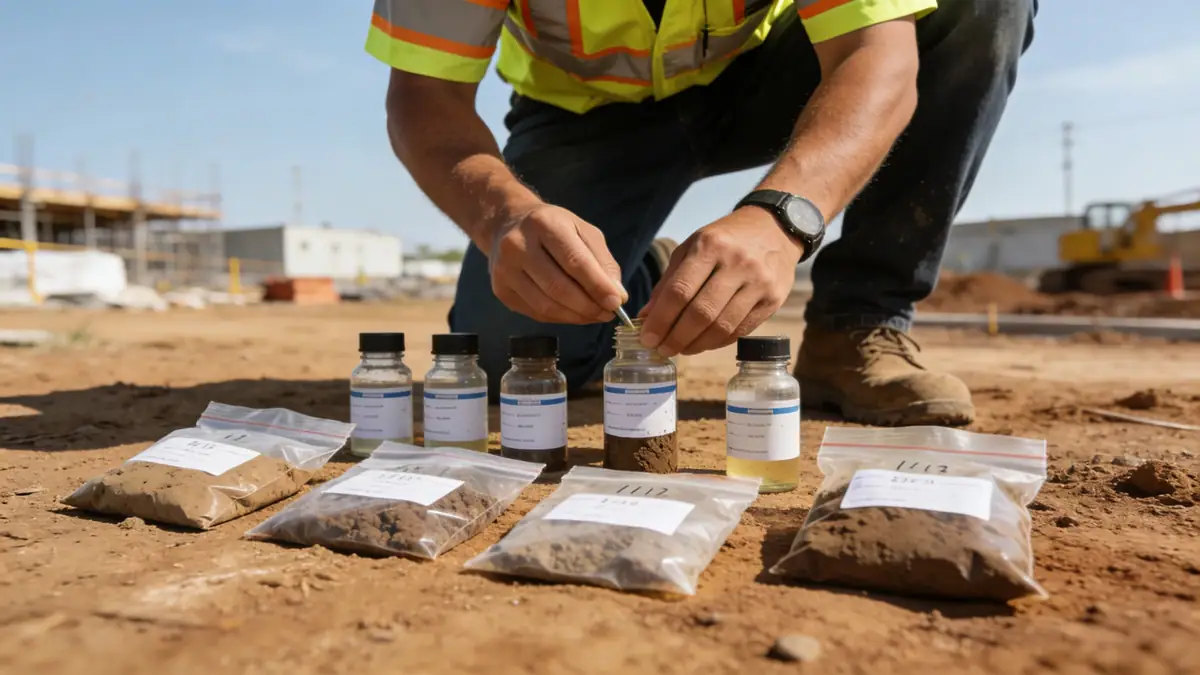
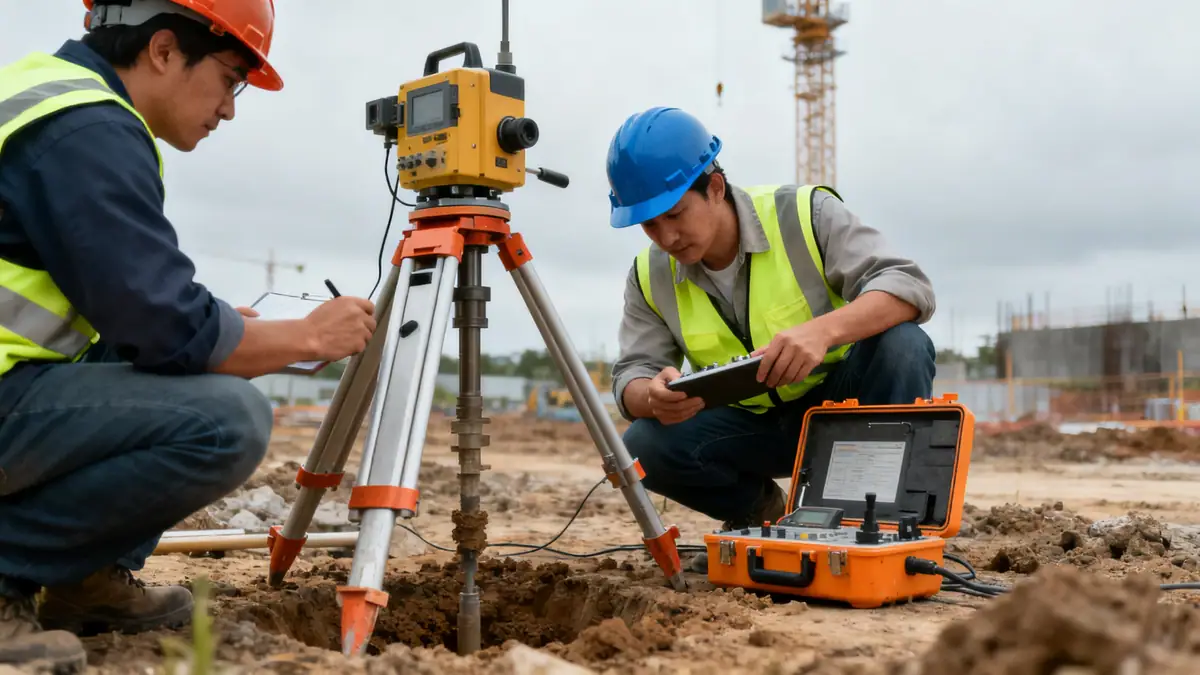
Our methodology for soil mechanics laboratory projects in Elk Grove integrates field exploration and advanced laboratory testing following ASTM D1586 for Standard Penetration Tests. We conduct continuous soil sampling to characterize subsurface stratigraphy, measure groundwater levels, and assess liquefaction potential. In our laboratory, we perform index properties, compaction, and strength tests to generate design parameters. This systematic approach ensures that our soil mechanics laboratory services provide accurate, defensible data for foundation design and seismic analysis. Our team tailors each investigation to site-specific conditions, optimizing borehole depth and testing frequency to capture critical soil layers.
Reference Technical Parameters
| Parameter | Reference Value |
|---|---|
| Predominant soil type | Silty clay and sandy silt, interbedded with gravel lenses |
| Maximum seismic acceleration (PGA) | 0.4g (ASCE 7 Seismic Design Category D) |
| Typical groundwater level | 2-5 meters below ground surface |
| Bedrock depth | Greater than 30 meters (deep alluvial basin) |
| Typical N60 range | 5-25 blows/0.3m (soft to medium dense) |
Local Considerations — Elk Grove
Elk Grove's geology consists of deep alluvial deposits from the Sacramento River, with interbedded clays, silts, and sands. The high water table (2-5 m) creates challenges for excavation and foundation drainage. Seismic site class D or E is typical, requiring site-specific response analysis per ASCE 7. Liquefaction potential is moderate to high in loose saturated sands, necessitating mitigation measures for critical structures. Older neighborhoods near the river may have softer soils, while eastern areas show denser materials. For specialized testing, our granulometry & atterberg services support classification and design. Our firm's local experience ensures accurate characterization of these variable conditions.
Request a Quote
Our team reviews your project and issues an initial report at no cost.
Or write us directly at [email protected]
Services in Elk Grove
Applicable Standards
- ASTM D1586 (Standard Penetration Test)
- ASCE 7 (Minimum Design Loads and Associated Criteria for Buildings and Other Structures)
- ASTM D2487 (Classification of Soils for Engineering Purposes)
- California Building Code (CBC) Chapter 18 (Soils and Foundations)
Frequently Asked Questions
What types of soil are commonly found in Elk Grove?
Elk Grove's subsurface predominantly consists of interbedded silty clays, sandy silts, and gravel lenses deposited by the Sacramento River. These alluvial soils vary in density and moisture content, requiring careful characterization through boring and laboratory testing to determine engineering properties.
How does seismic activity affect soil mechanics in Elk Grove?
Elk Grove lies in a seismically active region with a maximum considered earthquake acceleration of 0.4g. Soft alluvial soils amplify ground motion and may liquefy during strong shaking. Geotechnical investigations must evaluate site-specific seismic hazards, including liquefaction and dynamic settlement, per ASCE 7.
Is a geotechnical study mandatory for construction in Elk Grove?
Yes, the California Building Code requires a geotechnical investigation for most new construction and significant renovations. The study must characterize soil conditions, groundwater, and seismic hazards to guide foundation design. Our firm provides comprehensive reports that satisfy local building department requirements.