
Methodology
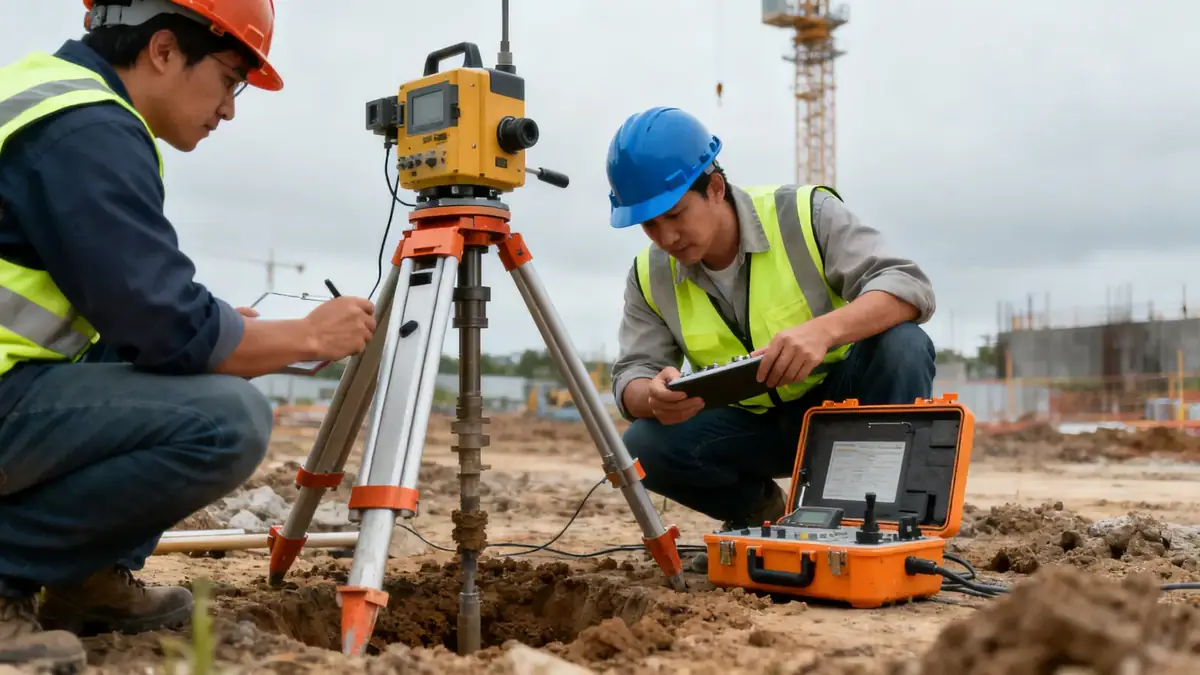
Our approach to soil mechanics laboratory in Oakland follows standardized protocols to ensure repeatable, defensible results. For subsurface exploration, we perform Standard Penetration Tests (SPT) per ASTM D1586 at 1.5 m intervals to depths of 15 m for typical structures, extending to 30 m for heavy industrial loads. Continuous push samples are taken in soft clays using thin-walled Shelby tubes. In the field, we log soil types, measure groundwater levels, and record SPT N-values. Samples are transported to our laboratory where we conduct index testing (natural moisture content, Atterberg limits, grain size distribution) and strength tests (unconfined compression, direct shear, triaxial). For projects requiring compaction control, we run Proctor tests (ASTM D698 or D1557) and field density tests. All data is synthesized into a comprehensive geotechnical report with foundation recommendations, seismic site classification per ASCE 7, and liquefaction hazard assessments. Our soil mechanics laboratory integrates seamlessly with specialized services to provide complete solutions.
Reference Technical Parameters
| Parameter | Reference Value |
|---|---|
| Predominant Soil Type | Bay mud (soft clay) in flats; colluvium/residual soil in hills |
| Maximum Seismic Acceleration (PGA) | 0.4g to 0.6g (Site Class D/E per ASCE 7-16) |
| Typical Groundwater Level | 1.5–3.0 m below grade (shallow in flats; deeper in hills) |
| Bedrock Depth | 30–60 m in flats; 0–5 m in hills (Franciscan Complex) |
| Typical N60 Range | 2–10 (bay mud); 10–30 (alluvial sands); 50+ (colluvium) |
Local Considerations — Oakland
Oakland's geology is dominated by the San Francisco Bay mud sequence in the western lowlands and the Franciscan Complex in the eastern hills. The bay mud is highly compressible, with natural water contents up to 100%, requiring deep pile foundations for most structures. In contrast, hillside sites often encounter stiff colluvium and weathered bedrock, but slope stability is a major concern due to seasonal rainfall and seismic shaking. The Hayward Fault runs along the eastern base of the hills, imposing near-source seismic effects. ASCE 7 Site Class D or E is common, with peak ground accelerations up to 0.6g. Liquefaction potential is high in the flats, especially near the estuary. Our team routinely performs site-specific response analyses and liquefaction evaluations. For broader regional support, our granulometry & atterberg services complement field investigations by characterizing soil behavior. Additionally, we coordinate with our soil mechanics laboratory en Los Angeles for complex projects spanning California.
Request a Quote
Our team reviews your project and issues an initial report at no cost.
Or write us directly at [email protected]
Services in Oakland
Applicable Standards
- ASTM D1586 (Standard Penetration Test)
- ASTM D2487 (Unified Soil Classification System)
- ASCE 7-16 (Minimum Design Loads for Buildings, Chapter 20 – Seismic Site Classification)
- California Building Code (CBC 2022, Chapter 18 – Soils and Foundations)
- ABAG (Association of Bay Area Governments) Seismic Hazard Maps
Frequently Asked Questions
What soil types are most common in Oakland?
Oakland has two dominant soil regimes: soft, compressible bay mud (Young Bay Mud) in the western flatlands, and stiff colluvium or residual soils derived from the Franciscan Complex in the hills. Alluvial sands and silts are found along creek channels. Each type poses distinct geotechnical challenges.
Is a geotechnical study mandatory for construction in Oakland?
Yes, the California Building Code requires a geotechnical investigation for most new structures, especially in Seismic Design Categories D and E, which apply to much of Oakland. The study must address foundation design, site class, liquefaction, and slope stability per ASCE 7 and CBC Chapter 18.
How does the Hayward Fault affect soil mechanics in Oakland?
The Hayward Fault, capable of a M6.8–7.2 earthquake, runs along the base of the Oakland Hills. Sites within 5 km experience near-source effects, including higher PGA and permanent ground deformation. Our analyses incorporate fault-rupture hazards, strong shaking amplification, and soil-structure interaction per ASCE 7.