
Methodology
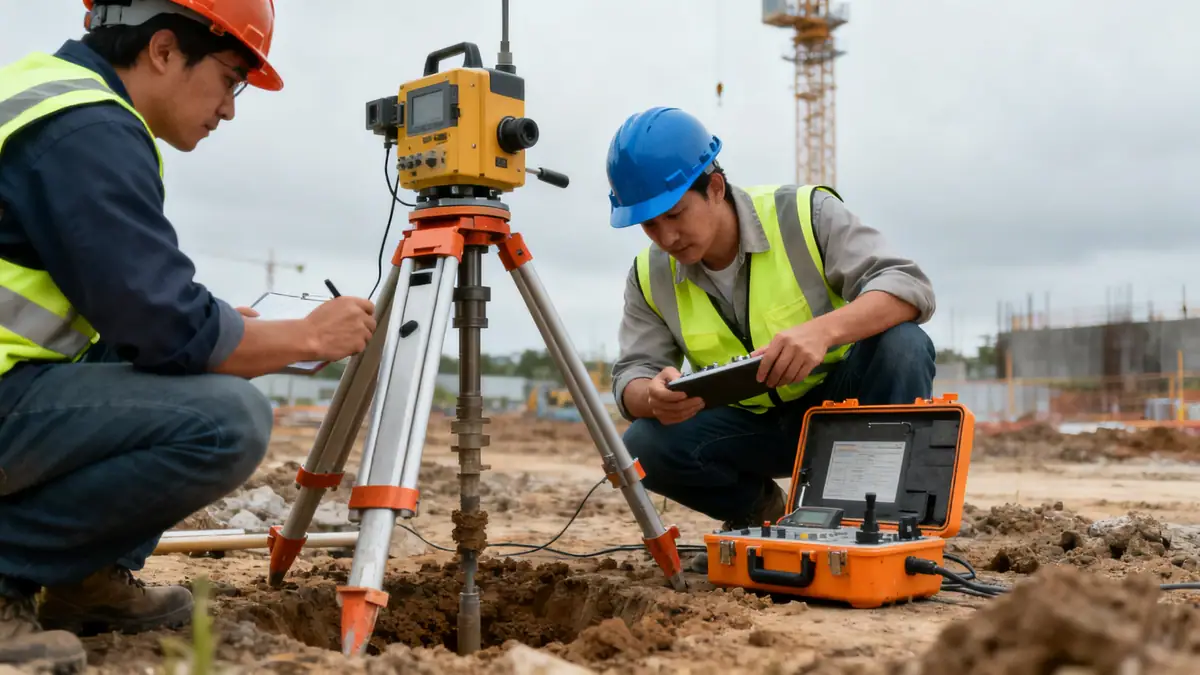
Our approach to soil mechanics laboratory in Fremont integrates field sampling and laboratory testing to characterize subsurface conditions. For site investigations, we utilize standard penetration testing (SPT) per ASTM D1586 with sampling intervals every 1.0 to 1.5 meters, typically extending to depths of 8–15 meters for residential projects. Laboratory tests include grain size analysis, Atterberg limits, and compaction tests. Our team ensures that all procedures align with local building codes and seismic design requirements. Learn more about our soil mechanics laboratory methods and how they apply to Fremont's geologic context.
Reference Technical Parameters
| Parameter | Reference Value |
|---|---|
| Predominant soil type | Alluvial clay, silt, and sand with interbedded gravel |
| Maximum seismic acceleration (PGA) | 0.4g to 0.6g (seismic zone 4 per ASCE 7) |
| Typical groundwater level | 2 to 5 meters below ground surface |
| Bedrock depth | Variable, typically >30 meters in valley areas |
| Typical N60 range (SPT) | 5–15 blows/ft in soft clay; 20–40 blows/ft in dense sand |
Local Considerations — Fremont
Fremont's geology is dominated by Quaternary alluvial deposits and Bay Mud formations, which exhibit high compressibility and low shear strength in some areas. The city lies within a seismically active region, with the Hayward Fault running nearby, necessitating detailed liquefaction and settlement analyses. Groundwater levels are typically shallow, often requiring dewatering considerations. Our team has experience evaluating these conditions across Fremont's diverse neighborhoods, from the Niles district to the Mission San Jose area. For comprehensive soil analysis, refer to our granulometry & atterberg services tailored to local soil behavior.
Request a Quote
Our team reviews your project and issues an initial report at no cost.
Or write us directly at [email protected]
Services in Fremont
Applicable Standards
- ASTM D1586 (Standard Penetration Test)
- ASCE 7 (Minimum Design Loads for Buildings)
- California Building Code (CBC) Chapter 18
- ASTM D2487 (Unified Soil Classification System)
- ASTM D698 (Proctor Compaction)
Frequently Asked Questions
What soil types are commonly found in Fremont?
Fremont's subsurface typically consists of alluvial clay, silt, sand, and occasional gravel layers, with Bay Mud deposits in low-lying areas. These soils can be compressible and may require stabilization for construction.
Are soil mechanics laboratory studies mandatory for construction in Fremont?
Yes, most jurisdictions in Fremont require geotechnical investigations for new buildings, especially in seismic zones. The California Building Code mandates soil testing to assess bearing capacity, settlement, and liquefaction potential.
How does seismic activity affect soil testing in Fremont?
Fremont is in a high seismic zone near the Hayward Fault. Soil testing must evaluate liquefaction susceptibility, site amplification, and dynamic shear strength. Our laboratory follows ASCE 7 and CBC standards to provide relevant parameters.