Methodology

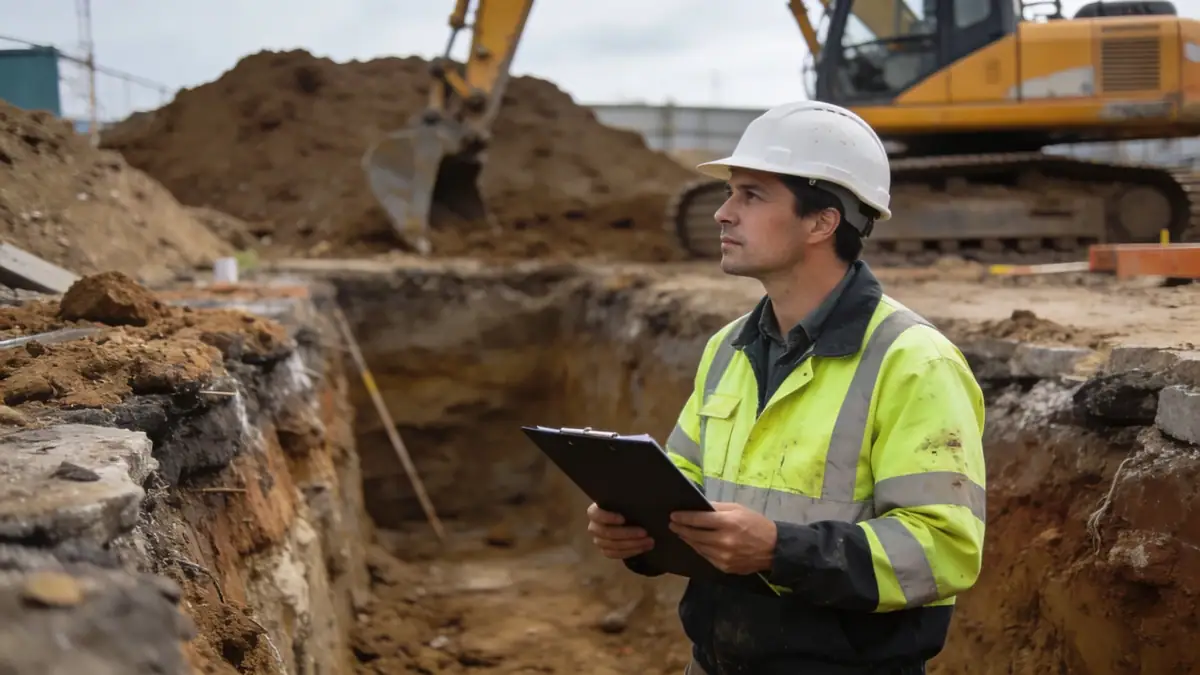
Our methodology for Honolulu projects follows a systematic approach tailored to the island's unique subsurface conditions. We begin with a comprehensive review of existing geologic maps and previous investigations to plan an efficient field program. In situ testing, including Standard Penetration Tests per ASTM D1586, is performed at intervals of 1.0 to 1.5 meters to capture stratigraphic variability. Samples are transported to our laboratory for classification, strength, and compaction testing. We integrate results with seismic site classification per ASCE 7 to inform foundation design. Our team emphasizes quality control at every stage, from field data collection to final reporting, ensuring reliable parameters for geotechnical analysis. For a deeper understanding of our core capabilities, visit our soil mechanics laboratory page.
Reference Technical Parameters
| Parameter | Reference Value |
|---|---|
| Predominant Soil Type | Volcanic residual clay and silty sand (Andisol) |
| Maximum Seismic Acceleration (PGA) | 0.40g |
| Typical Groundwater Level | 3–8 m depth |
| Bedrock Depth | 10–30 m |
| Typical N60 Range | 5–30 blows/ft |
Local Considerations — Honolulu
Honolulu's geology is dominated by volcanic residual soils, primarily Andisols derived from basalt weathering. These soils exhibit high void ratios and sensitivity to disturbance, requiring careful sampling and handling. The water table is generally shallow in coastal areas, ranging from 3 to 8 meters, necessitating dewatering considerations for excavations. Seismic hazard is significant due to Hawaii's volcanic and tectonic setting; the maximum considered earthquake spectral response acceleration (SMS) can exceed 1.0g for short periods. Urban development contrasts between the dense fill areas of Waikiki and the weathered slopes of Manoa Valley, each presenting distinct challenges such as liquefaction potential or slope stability. Typical projects include high-rise foundations requiring deep caissons and retaining walls for hillside cuts. Our experience in Honolulu ensures that local conditions are properly addressed. For projects requiring regional coordination, our soil mechanics laboratory en Los Angeles provides complementary support. Additionally, we offer specialized granulometry & atterberg testing for soil classification.
Request a Quote
Our team reviews your project and issues an initial report at no cost.
Or write us directly at [email protected]
Services in Honolulu
Applicable Standards
- ASTM D1586
- ASCE 7
- International Building Code (IBC)
- Hawaii State Building Code
Frequently Asked Questions
What types of soil are commonly found in Honolulu?
Honolulu's soils are predominantly volcanic residual clays and silty sands, classified as Andisols. These materials are highly porous and can be compressible. Coral sands and fill materials are also common in coastal areas. Understanding the specific soil profile is critical for foundation design.
Is seismic analysis required for construction in Honolulu?
Yes, Honolulu is in a seismically active region due to volcanic activity and tectonic stresses. ASCE 7 requires site-specific seismic hazard analysis for most structures. Soil amplification effects can significantly increase ground motion, making proper geotechnical investigation essential for compliance with the Hawaii State Building Code.
Are soil mechanics laboratory tests mandatory for building permits in Honolulu?
For most commercial and multi-family residential projects, geotechnical reports are required by the building department. The scope depends on project size and site conditions. Our laboratory provides the necessary testing to support permit applications and ensure structural safety.