
Methodology
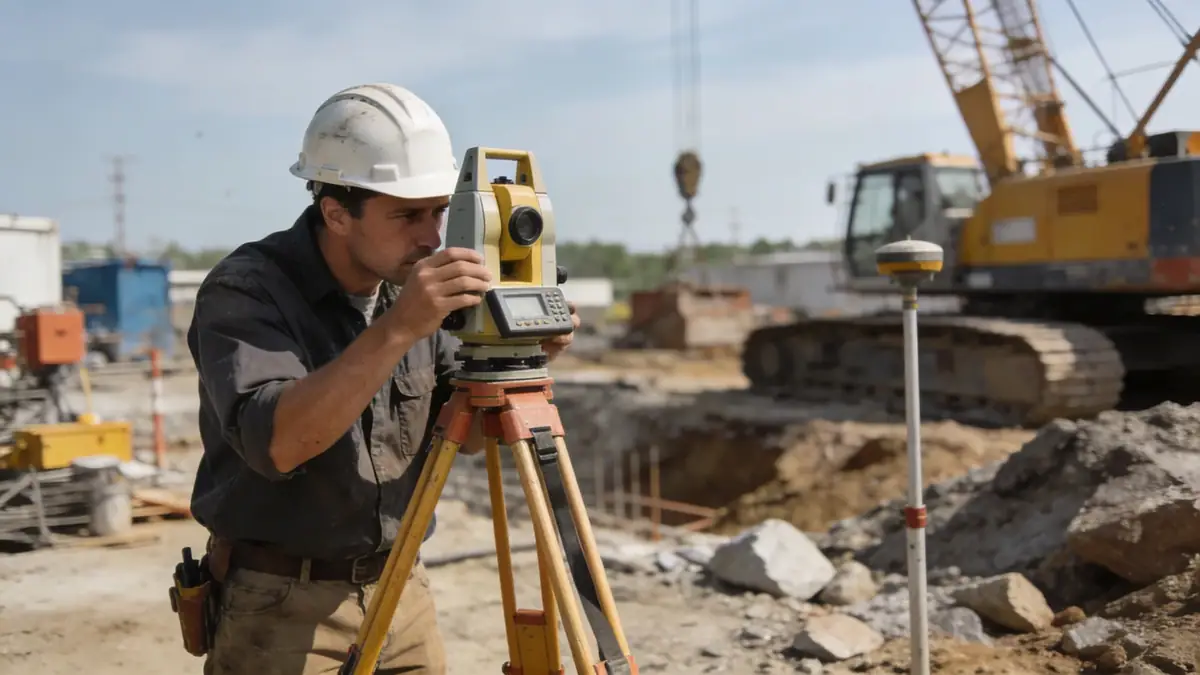
Our methodology in Winston Salem follows standardized procedures to characterize subsurface conditions. We perform field investigations including Standard Penetration Tests (SPT) per ASTM D1586, typically at 1.5 m intervals, to obtain N60 values and undisturbed samples. In the laboratory, we conduct index tests such as granulometry and Atterberg limits to classify soils according to the Unified Soil Classification System. For compaction control, we employ Proctor tests (ASTM D698) and California Bearing Ratio (CBR) assessments. Our comprehensive approach integrates field and laboratory data to develop geotechnical profiles that inform foundation design and earthwork specifications. Learn more about our soil mechanics laboratory services.
Reference Technical Parameters
| Parameter | Reference Value |
|---|---|
| Predominant soil type | Sandy silt and clay (Piedmont residuum) |
| Maximum seismic acceleration (PGA) | 0.15g to 0.20g (ASCE 7-16) |
| Typical groundwater level | 3 to 8 m below surface |
| Bedrock depth | 5 to 20 m (weathered to competent) |
| Typical N60 range | 4 to 30 blows/0.3 m |
Local Considerations — Winston Salem
The city of Winston Salem is situated in the Piedmont physiographic province, characterized by rolling hills underlain by crystalline metamorphic rocks. The dominant soil types are residual silts and clays derived from the weathering of gneiss, schist, and granite. These soils often exhibit variable thickness and engineering properties due to the irregular bedrock surface. Groundwater levels fluctuate seasonally, typically encountered at depths of 3 to 8 meters. Seismic hazard is moderate, with peak ground accelerations of 0.15–0.20g per ASCE 7-16, requiring attention to liquefaction potential in saturated loose sands. Local experience indicates that expansive clays may be present in certain areas, necessitating specialized testing such as granulometry & Atterberg for proper characterization. Redevelopment of former industrial sites often requires assessment of fill materials and potential contamination.
Request a Quote
Our team reviews your project and issues an initial report at no cost.
Or write us directly at [email protected]
Services in Winston Salem
Applicable Standards
- ASTM D1586: Standard Penetration Test
- ASTM D698: Standard Proctor Compaction
- ASCE 7-16: Minimum Design Loads for Buildings
- IBC 2021: International Building Code
- ASTM D4318: Atterberg Limits
Frequently Asked Questions
What are the typical soil conditions in Winston Salem?
Winston Salem's soils are primarily residual silts and clays derived from weathered Piedmont bedrock. These soils can be variable in depth and strength, with N60 values typically ranging from 4 to 30 blows per foot. Groundwater is generally encountered at depths of 3 to 8 meters.
Is seismic design required for buildings in Winston Salem?
Yes, according to ASCE 7-16 and the IBC, Winston Salem falls within a moderate seismic zone with a maximum considered earthquake spectral response acceleration (SDS) of approximately 0.3g. Site-specific soil amplification factors must be evaluated per code requirements.
Are soil mechanics studies mandatory for construction in Winston Salem?
While not always legally required for all projects, most local building authorities in Winston Salem recommend or mandate geotechnical investigations for commercial and multi-story residential structures. A thorough soil study helps ensure foundation safety and compliance with the IBC.