Methodology
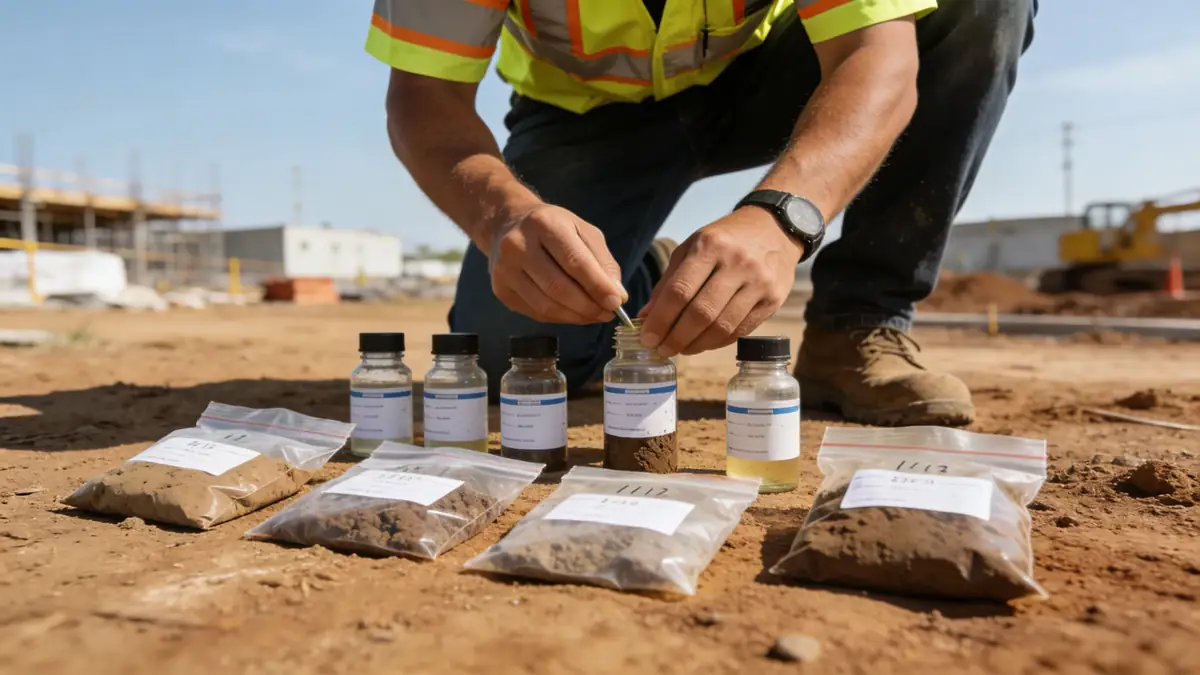
Our methodology for projects in Tallahassee begins with a detailed review of existing geological maps and prior site investigations. We then recommend a tailored sampling program using standard penetration testing (SPT) per ASTM D1586, with sample intervals typically every 1.5 meters to capture stratigraphic changes. All samples are transported to our laboratory where they undergo classification, moisture content, and density measurements. For cohesive soils, we perform Atterberg limits and consolidation tests; for granular soils, granulometry analysis is conducted. Our soil mechanics laboratory in Tallahassee follows strict quality control protocols to ensure data reliability.
Reference Technical Parameters
| Parameter | Reference Value |
|---|---|
| Predominant soil type | Sands and clayey sands (SP, SC) with interbedded clays (CL, CH) |
| Maximum seismic acceleration (PGA) | 0.10g to 0.15g per ASCE 7-16 |
| Typical groundwater level | 3 to 10 feet below ground surface |
| Bedrock depth | 50 to 100 feet (limestone and dolomite) |
| Typical N60 range | 5 to 30 blows per foot (sands); 2 to 15 (clays) |
Local Considerations — Tallahassee
Tallahassee's geology is characterized by the Woodville Karst Plain and the Red Hills region, resulting in variable soil types from sandy to clay-rich. The shallow groundwater table (typically 3–10 ft) requires careful dewatering planning and can affect compaction. Seismic hazard is moderate (PGA 0.10–0.15g per ASCE 7), but local soil amplification may occur in soft clays. Urban development often encounters undocumented fill and buried organic layers. Our team has addressed these conditions through numerous projects, and we also coordinate with our proctor & cbr testing services to optimize compaction specifications. For larger regional projects, we collaborate with our soil mechanics laboratory en Atlanta.
Request a Quote
Our team reviews your project and issues an initial report at no cost.
Or write us directly at [email protected]
Services in Tallahassee
Applicable Standards
- ASTM D1586 (Standard Penetration Test)
- ASTM D2487 (Unified Soil Classification System)
- ASCE 7-16 (Minimum Design Loads for Buildings and Other Structures)
- Florida Building Code (2020) – Chapter 18: Soils and Foundations
Frequently Asked Questions
What soil types are most common in Tallahassee?
Tallahassee predominantly features sandy soils (SP, SC) with interbedded clays (CL, CH) due to its location in the Woodville Karst Plain and Red Hills region. Clay layers can be expansive, requiring careful evaluation for foundation design.
Do I need a soil mechanics laboratory study for a residential project in Tallahassee?
Yes, it is strongly recommended. The variable soil conditions and shallow water table can lead to differential settlement and foundation issues. A laboratory analysis provides essential data for slab-on-grade or deep foundation design, ensuring long-term stability.
Which seismic code applies to Tallahassee?
Tallahassee falls under ASCE 7-16 seismic design category B with a PGA of 0.10–0.15g. However, site-specific soil amplification must be considered per Chapter 20 of ASCE 7, which requires laboratory testing to classify site class (typically C or D).