Methodology
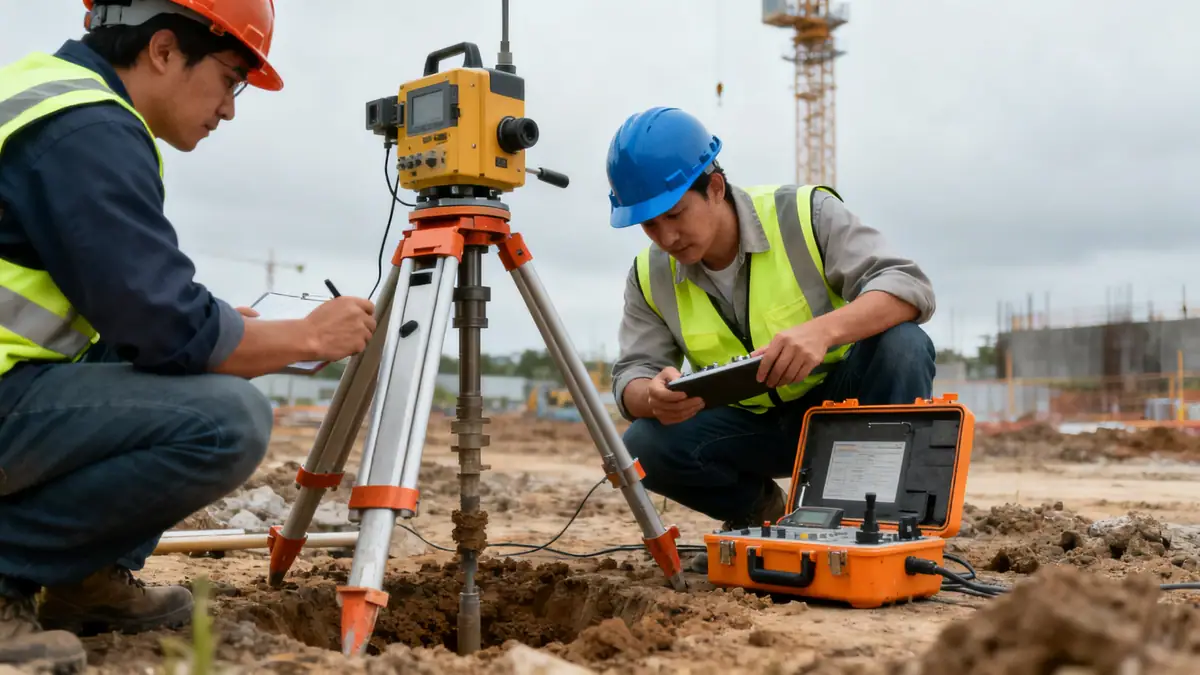
Our approach to soil mechanics laboratory in Tacoma integrates site-specific reconnaissance with standardized testing. We begin with a review of existing geological maps and nearby boring logs, then execute a targeted field program using hollow-stem augers and split-spoon sampling per ASTM D1586. Soil classification follows the Unified Soil Classification System, with moisture-density relations determined via Proctor compaction tests. All laboratory procedures adhere to applicable ASTM standards, ensuring reproducibility and regulatory compliance. For complex sites, we conduct advanced triaxial and consolidation testing to evaluate shear strength and settlement parameters, providing a complete geotechnical profile for project engineers.
Reference Technical Parameters
| Parameter | Reference Value |
|---|---|
| Predominant soil type | Glacial till (silty sand with gravel) and alluvial deposits (soft clay and silt) |
| Maximum seismic acceleration (PGA) | 0.25g to 0.40g (ASCE 7-16, Site Class C/D) |
| Typical groundwater level | 2 to 5 meters below ground surface in tideflat areas; >10 m in upland areas |
| Bedrock depth | Variable: 15 to 50 meters (Tertiary sedimentary and volcanic rocks) |
| Typical N60 range (SPT) | 10 to 30 blows/ft in alluvial soils; >50 blows/ft in glacial till |
Local Considerations — Tacoma
Tacoma's subsurface is dominated by Pleistocene glacial deposits over Tertiary bedrock. The Vashon Stade till provides excellent bearing capacity in upland areas, but the Puyallup River delta and Commencement Bay tideflats present soft Holocene sediments with high compressibility. Liquefaction potential is elevated in saturated loose sands during seismic events, requiring site-specific evaluations per ASCE 7-16. Our soil mechanics laboratory in Tacoma routinely addresses these challenges, and for clients comparing regional options, our soil mechanics laboratory en Seattle offers the same rigorous methodology. Groundwater control and fill placement are critical near the waterfront, where marine clay layers may require surcharging or wick drains.
Request a Quote
Our team reviews your project and issues an initial report at no cost.
Or write us directly at [email protected]
Services in Tacoma
Applicable Standards
- ASTM D1586 (Standard Penetration Test)
- ASCE 7-16 (Minimum Design Loads for Buildings and Other Structures)
- IBC 2021 (International Building Code)
- Washington State Department of Ecology guidelines for groundwater monitoring
Frequently Asked Questions
What soil types are most common in Tacoma, and how do they affect foundation design?
Tacoma's soils range from dense glacial till in upland areas to soft alluvial clays and silts in the tideflats. Till provides excellent bearing capacity for shallow foundations, while soft deposits often require deep foundations or ground improvement to control settlement and uplift.
How does seismic activity in the Puget Sound region influence soil testing requirements in Tacoma?
Tacoma lies in a high-seismicity zone with design spectral accelerations up to 0.40g. Site-specific seismic hazard analysis and liquefaction assessment are mandated for most projects. Our laboratory performs cyclic triaxial and resonant column tests to characterize dynamic soil properties per ASCE 7-16.
Is a soil mechanics laboratory study mandatory for residential construction in Tacoma?
While not always mandatory for single-family homes on stable till, a geotechnical evaluation is strongly recommended for any structure in tideflat areas or with deep foundations. The Tacoma Municipal Code may require reports for subdivisions and commercial permits to ensure public safety.