
Methodology
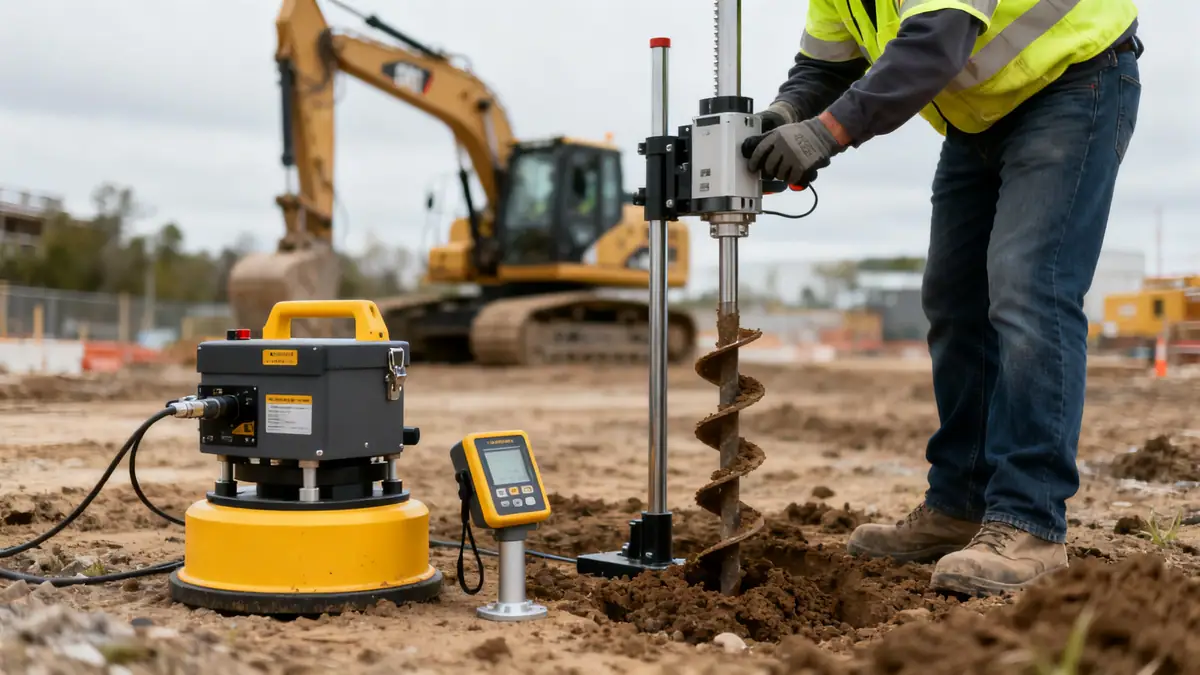
Our methodology for soil mechanics laboratory investigations in Sioux Falls follows ASTM D1586 for standard penetration testing, ensuring consistent soil sampling and N-value recording at 1.5-meter intervals. We complement SPT with continuous CPT soundings where fine-grained soils predominate. Laboratory testing includes moisture content, Atterberg limits, and grain size distribution per ASTM D6913. For strength assessment, we perform triaxial and direct shear tests. Our comprehensive approach, detailed on our soil mechanics laboratory page, integrates field and lab data for robust geotechnical profiles. We tailor testing programs to each project's scale, from single-family homes to multi-story structures.
Reference Technical Parameters
| Parameter | Reference Value |
|---|---|
| Predominant soil type | Glacial till, alluvial sands, and clays |
| Maximum seismic acceleration (PGA) | 0.15g (ASCE 7-16, Site Class D) |
| Typical groundwater level | 3-6 m below ground surface |
| Bedrock depth | Variable, 15-30 m (Sioux Quartzite) |
| Typical N60 range | 10-40 blows/0.3 m (granular soils) |
Local Considerations — Sioux Falls
Sioux Falls' geology is dominated by glacial deposits overlying Precambrian Sioux Quartzite. Our team has observed significant variability in soil stiffness across neighborhoods, with loose alluvial sands near the Big Sioux River and dense tills on higher terraces. Seismic site classification per ASCE 7 typically yields Site Class D, requiring consideration of liquefaction potential in saturated sands. Groundwater levels fluctuate seasonally, affecting excavation stability. For projects near the river, we recommend deeper foundations or ground improvement. Our experience includes residential subdivisions and commercial complexes, always referencing our granulometry & atterberg testing for fine-grained soil characterization.
Request a Quote
Our team reviews your project and issues an initial report at no cost.
Or write us directly at [email protected]
Services in Sioux Falls
Applicable Standards
- ASTM D1586
- ASCE 7-16
- IBC 2021
- ASTM D2487
Frequently Asked Questions
What soil types are commonly found in Sioux Falls?
The predominant soils include glacial till (sandy clays and silts) and alluvial deposits (sands and gravels) along river valleys. The underlying Sioux Quartzite bedrock is typically deep, requiring deep foundations for heavy structures.
Does Sioux Falls have seismic design requirements?
Yes, ASCE 7-16 maps Sioux Falls in a moderate seismic zone with a PGA of 0.15g. Site-specific response spectra may be required for critical facilities. Our soil mechanics laboratory provides shear wave velocity testing to refine site classification.
Are soil studies mandatory for new construction in Sioux Falls?
While not always legally required for all projects, most lenders and local building officials recommend or require geotechnical reports for foundation design. Our firm provides cost-effective investigations to mitigate risks related to soil variability and groundwater.