Methodology

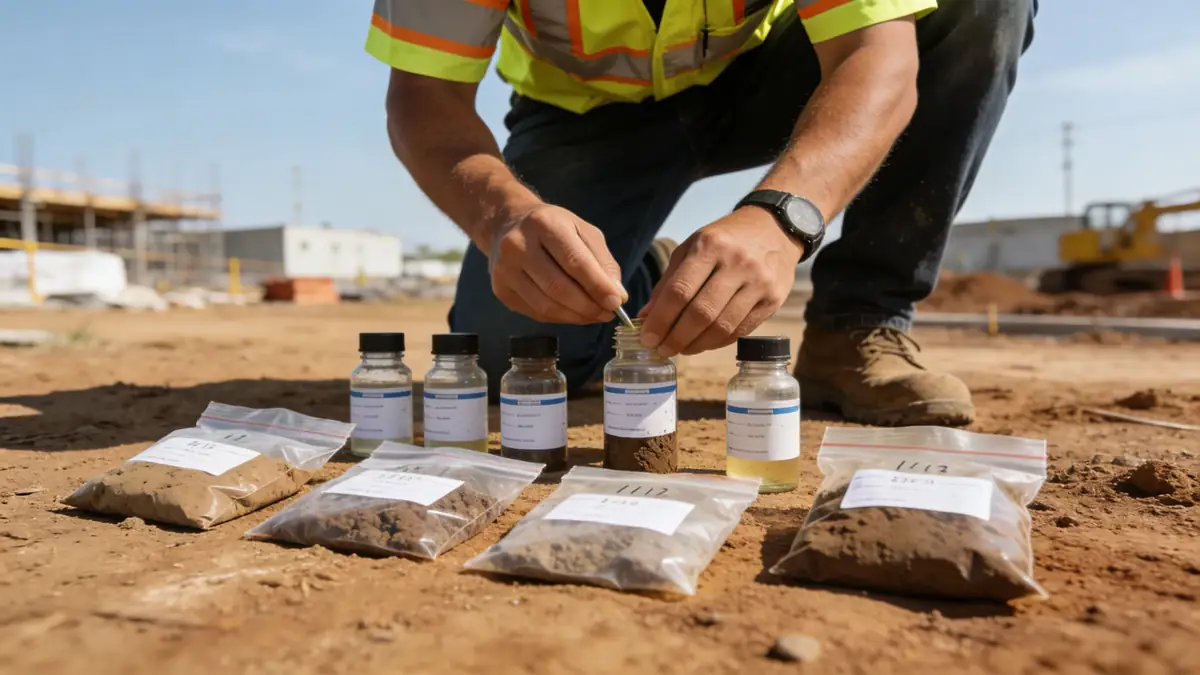
Our methodology for soil mechanics laboratory in Sioux City follows ASTM D1586 for Standard Penetration Tests, with sampling intervals every 1.0 to 1.5 meters. We also employ Cone Penetration Testing (CPT) for continuous profiling in soft alluvial deposits. For moisture-sensitive loess, we conduct undisturbed sampling using thin-wall Shelby tubes. All samples undergo classification via granulometry & atterberg testing to determine plasticity and grain size distribution. Our approach integrates field and lab data to characterize bearing capacity, settlement potential, and liquefaction susceptibility, essential for safe foundation design in Sioux City's variable soil profile.
Reference Technical Parameters
| Parameter | Reference Value |
|---|---|
| Predominant soil type | Loess and glacial till |
| Maximum seismic acceleration (PGA) | 0.10g (IBC 2021, Site Class D) |
| Typical groundwater level | 3–8 m below grade (near river: 1–3 m) |
| Bedrock depth | 20–50 m (Sioux Quartzite) |
| Typical N60 range | 4–25 blows/ft (loess); 10–40 blows/ft (till) |
Local Considerations — Sioux City
Sioux City's geology is dominated by Wisconsinan loess over glacial till, with alluvial deposits along the Missouri River. The loess is collapsible when saturated, requiring careful moisture control during compaction. Groundwater levels vary: shallow (1–3 m) near the river, deeper (8+ m) on the bluffs. Seismic hazard is moderate (PGA 0.10g per IBC 2021), but liquefaction potential exists in sandy alluvium. Our team has experience across neighborhoods like Riverside and Morningside, where soil conditions contrast sharply. For complex projects, we often coordinate with our soil mechanics laboratory in Chicago to leverage broader expertise. We also offer proctor & cbr testing to optimize compaction for local fill materials.
Request a Quote
Our team reviews your project and issues an initial report at no cost.
Or write us directly at [email protected]
Services in Sioux City
Applicable Standards
- ASTM D1586 (Standard Penetration Test)
- ASTM D2487 (Unified Soil Classification)
- IBC 2021 (International Building Code)
- ASCE 7-16 (Minimum Design Loads)
- ASTM D4318 (Atterberg Limits)
Frequently Asked Questions
What soil types are common in Sioux City?
Sioux City features loess (windblown silt) over glacial till, with alluvial sands and silts along the Missouri River. Loess can collapse when wet, so proper laboratory testing is essential to assess its behavior under load.
Is seismic design required for foundations in Sioux City?
Yes, per IBC 2021, Sioux City is in Seismic Design Category B with PGA of 0.10g. While not high, liquefaction assessment may be needed for saturated sandy soils. A soil mechanics laboratory study provides necessary parameters.
Are geotechnical studies mandatory for new construction in Sioux City?
While not always legally required, most local building departments recommend or require a geotechnical report for commercial buildings and subdivisions. It is considered standard practice to mitigate risks from variable soil conditions.