Methodology
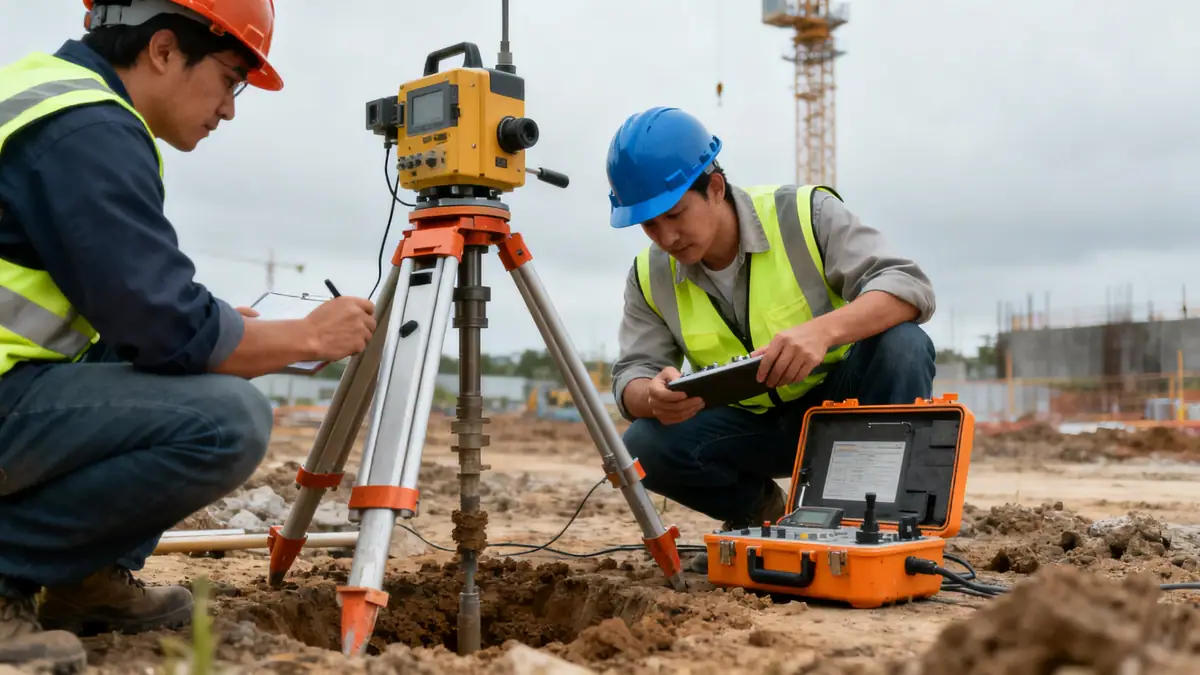
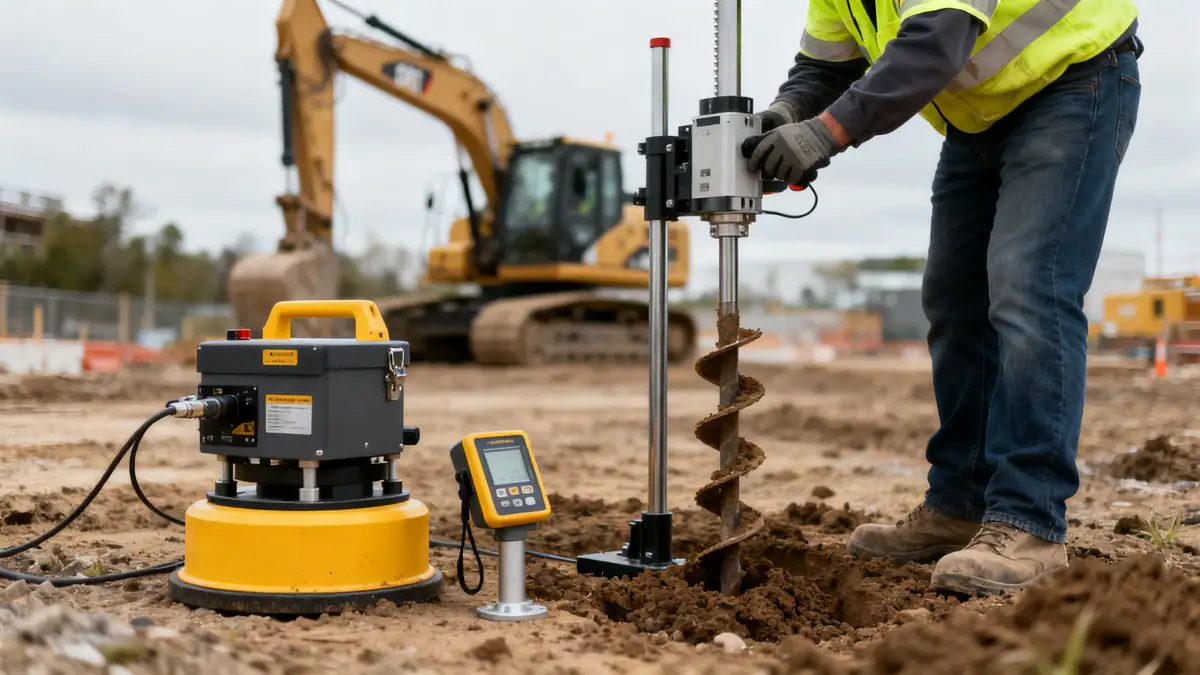
Our approach in Shreveport begins with a thorough review of existing geologic maps and prior site data to develop a targeted investigation plan. We conduct field exploration using standard penetration testing (SPT) per ASTM D1586, with sampling intervals typically every 1.5 meters to a depth of 15 meters for residential projects. For larger structures, depths may extend to 30 meters. Laboratory testing includes index properties, strength, and consolidation tests to characterize the alluvial soils. All procedures follow established ASTM standards to ensure data reliability. Our methodology integrates local knowledge with rigorous quality control, providing clients with actionable geotechnical parameters for foundation design and earthwork construction.
Reference Technical Parameters
| Parameter | Reference Value |
|---|---|
| Predominant soil type | Clay, silt, and sand (alluvial deposits) |
| Maximum seismic acceleration (PGA) | 0.10–0.15 g (ASCE 7-16) |
| Typical groundwater level | 3–6 m below ground surface |
| Bedrock depth | >30 m (deep sedimentary basin) |
| Typical N60 range | 5–15 (clay/silt), 10–30 (sand) |
Local Considerations — Shreveport
Shreveport's alluvial soils are prone to volume changes with moisture variation, necessitating careful evaluation of swell potential and collapse behavior. The region lies in Seismic Design Category B per ASCE 7, requiring moderate seismic considerations. Groundwater fluctuations can impact excavation stability and foundation performance. In contrast, our soil mechanics laboratory en Houston addresses different geologic conditions, including expansive clays and coastal sediments. For Shreveport, we emphasize site-specific testing to assess soil variability across neighborhoods, from the downtown area to suburban developments. Common project types include residential slabs, commercial buildings, and levees, where soil parameters guide foundation selection and compaction requirements.
Request a Quote
Our team reviews your project and issues an initial report at no cost.
Or write us directly at [email protected]
Services in Shreveport
Applicable Standards
- ASTM D1586 (Standard Penetration Test)
- ASTM D698 (Standard Proctor)
- ASCE 7-16 (Minimum Design Loads for Buildings)
- IBC 2021 (International Building Code)
- Louisiana State Building Code
Frequently Asked Questions
What are the typical soil types found in Shreveport?
Shreveport soils are primarily alluvial deposits from the Red River, consisting of clay, silt, and sand layers. Clay soils often exhibit moderate to high plasticity and can be expansive, requiring careful evaluation for foundation design. Sand layers provide better bearing capacity but may be loose.
Is a geotechnical study required for construction in Shreveport?
Yes, the Louisiana State Building Code and IBC 2021 mandate geotechnical investigations for most structures, especially those with shallow foundations or in areas with expansive soils. A soil mechanics laboratory report provides essential parameters for safe design and regulatory compliance.
What seismic design considerations apply in Shreveport?
Shreveport falls under Seismic Design Category B per ASCE 7-16, with a maximum considered earthquake spectral response acceleration (SDS) of approximately 0.2 g. While seismic risk is moderate, soil amplification due to deep alluvial deposits may be evaluated through site-specific response analysis.