Methodology

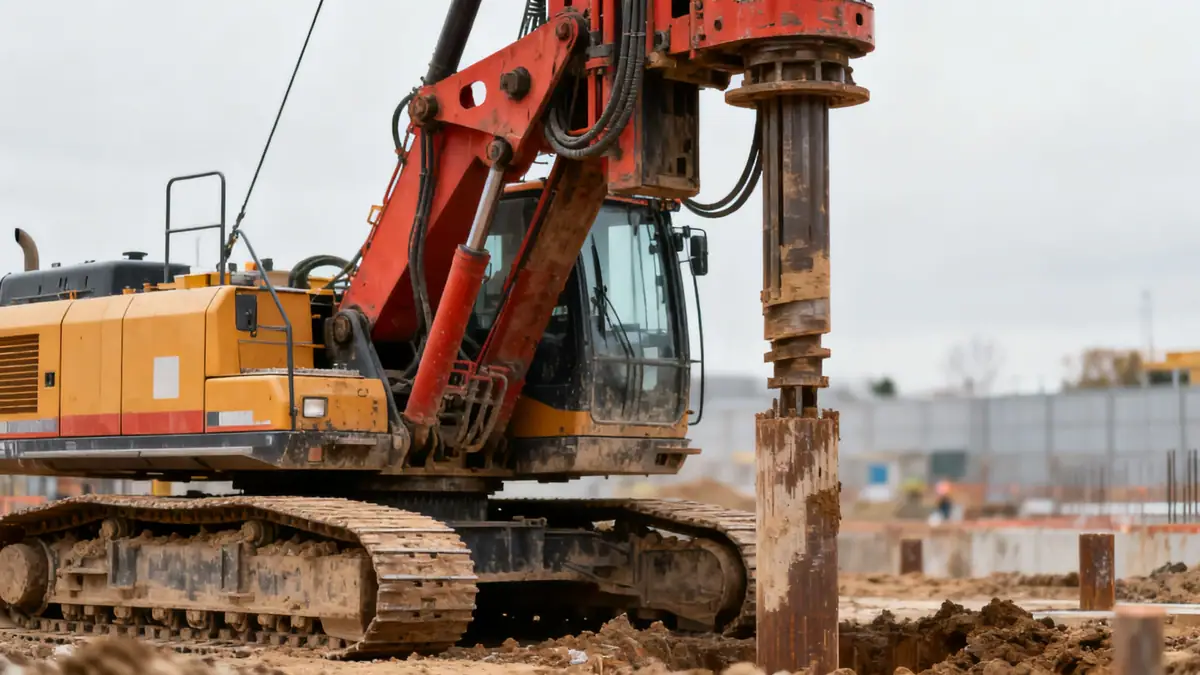
Our approach to geotechnical investigations in Nashville follows a systematic, site-specific protocol. We begin with a desk study of regional geology and available records, then design a field exploration program that may include standard penetration testing (SPT) per ASTM D1586, cone penetration testing (CPT), or test pits depending on project scale. Samples are retrieved at regular intervals and transported to our laboratory for classification, strength, and consolidation testing. Our team interprets results in the context of Nashville's geologic setting—such as the presence of residual soils over limestone or alluvial deposits near waterways—ensuring that recommendations for foundations, earthworks, and pavements are tailored to actual conditions. For a comprehensive overview of our capabilities, visit our soil mechanics laboratory page.
Reference Technical Parameters
| Parameter | Reference Value |
|---|---|
| Predominant soil type | Residual silty clay/clayey silt over limestone bedrock |
| Maximum seismic acceleration (PGA) | 0.15–0.20 g (ASCE 7-16) |
| Typical groundwater level | 3–8 m below grade, varies with season and proximity to rivers |
| Bedrock depth | 2–15 m; shallow in central basin, deeper in peripheral areas |
| Typical N60 range | 4–12 in residual clays; 20–50+ in weathered limestone |
Local Considerations — Nashville
Nashville's geology is dominated by the Nashville Basin, underlain by Ordovician limestone and shale, with residual soils formed from carbonate weathering. The region is classified as seismic zone with moderate hazard; peak ground acceleration (PGA) values per ASCE 7 can reach 0.20 g. Groundwater levels fluctuate seasonally, especially near the Cumberland River and its tributaries. In downtown areas, shallow bedrock (often less than 5 m) allows for spread footings, while in peripheral neighborhoods like Bellevue or Madison, deeper residual soils may require deep foundations. Typical projects include low-rise commercial buildings, residential subdivisions, and infrastructure improvements. Our experience includes numerous sites where karst features—such as solution cavities—required careful subsurface mapping. For more on our testing services, see our granulometry & atterberg page.
Request a Quote
Our team reviews your project and issues an initial report at no cost.
Or write us directly at [email protected]
Services in Nashville
Applicable Standards
- ASTM D1586 (Standard Penetration Test)
- ASCE 7-16 (Minimum Design Loads for Buildings and Other Structures)
- IBC 2021 (International Building Code)
- Nashville Stormwater Management Manual (for erosion control and infiltration)
Frequently Asked Questions
What types of soil are commonly encountered in Nashville?
Nashville's soils are predominantly residual silty clays and clayey silts derived from weathering of limestone and shale. These soils often exhibit high plasticity and moderate shrink-swell potential. Alluvial deposits are found along the Cumberland River floodplain, consisting of sands, silts, and clays with variable groundwater conditions.
Does Nashville have specific seismic design requirements?
Yes, Nashville is located in a region of moderate seismic hazard according to ASCE 7-16, with mapped spectral accelerations (Ss) around 0.3g and S1 around 0.1g. Site-specific seismic site classification (A through F) is required for most buildings, and geotechnical reports must address liquefaction potential and seismic bearing capacity.
Are soil mechanics laboratory studies mandatory for construction in Nashville?
While not universally required for all projects, the Nashville Metro Codes and most local jurisdictions mandate geotechnical investigations for commercial buildings, multi-story structures, and subdivisions. Even for single-family homes, many lenders and engineers recommend a soil report to assess foundation risk and avoid costly repairs.