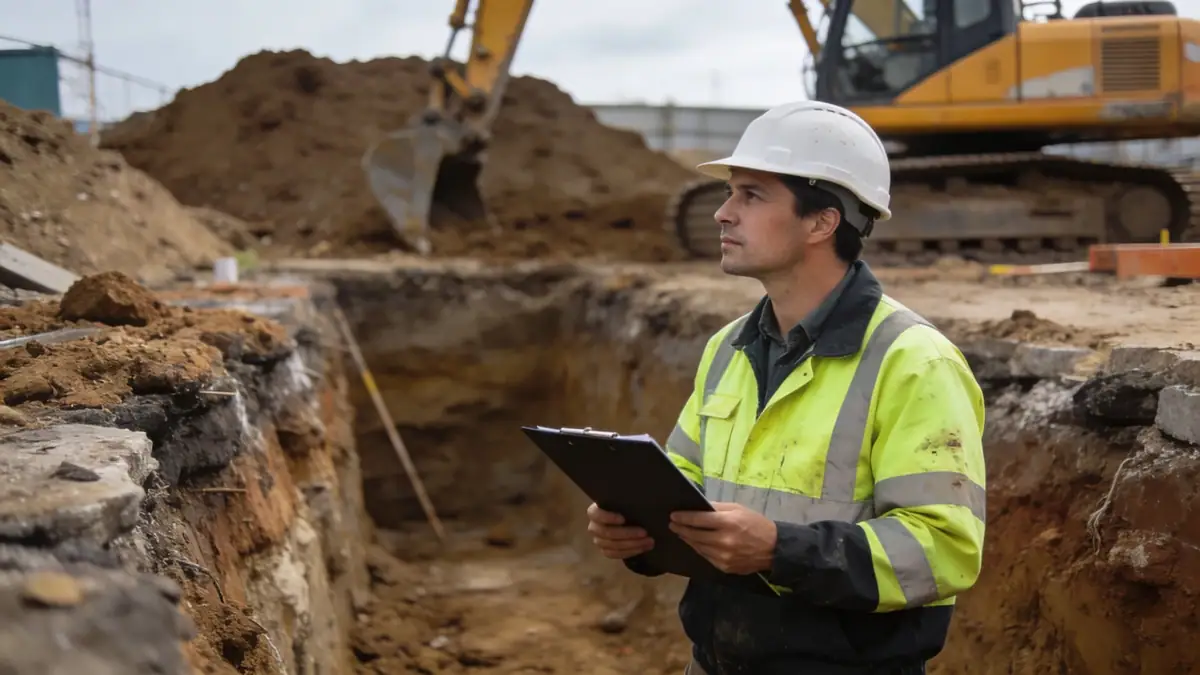
Methodology
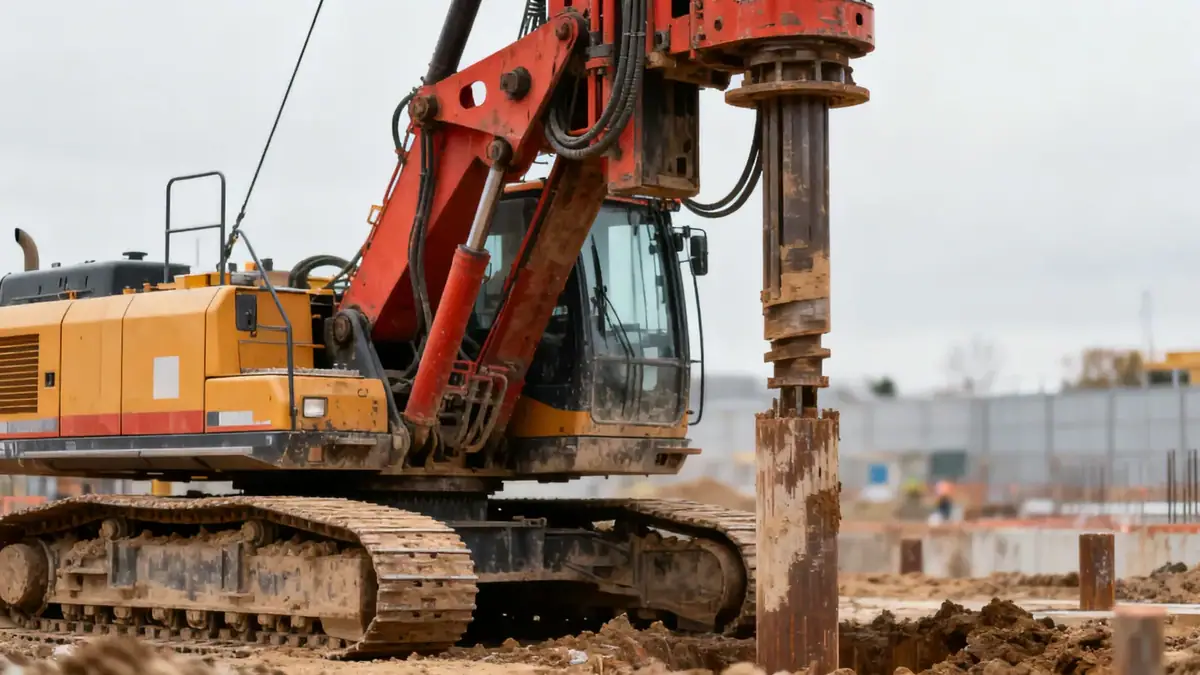
Our methodology for soil mechanics laboratory in Milwaukee follows rigorous standards, beginning with a comprehensive site reconnaissance to identify subsurface variability. We employ Standard Penetration Testing (SPT) per ASTM D1586 at 1.0–1.5 m intervals, typically reaching depths of 8–15 m for residential projects and up to 30 m for industrial sites. In cohesive soils, we supplement with undisturbed sampling for advanced laboratory testing. Our team integrates these data with local geologic maps to develop a reliable soil profile, ensuring that every recommendation is grounded in site-specific evidence. For comprehensive analysis, we combine field and lab results using our soil mechanics laboratory protocols.
Reference Technical Parameters
| Parameter | Reference Value |
|---|---|
| Predominant soil type | Glacial till and lacustrine clay |
| Maximum seismic acceleration (PGA) | 0.15–0.25 g (ASCE 7) |
| Typical groundwater level | 1.5–4.5 m below surface |
| Bedrock depth | Variable, typically 20–50 m |
| Typical N60 range | 5–30 blows/ft (cohesionless soils) |
Local Considerations — Milwaukee
Milwaukee's geology is dominated by glacial till over Silurian dolomite bedrock, with lacustrine clays in the Lake Michigan shoreline areas. Seismic design per ASCE 7 requires consideration of Site Class D or E, with PGA up to 0.25 g. Groundwater is often shallow (1.5–4.5 m), complicating excavations. Northern suburbs like Mequon have thicker till, while downtown fills and soft clays demand careful settlement analysis. Our team regularly addresses these challenges, leveraging our granulometry & atterberg tests to characterize fine-grained soils. For projects requiring regional context, we also coordinate with our soil mechanics laboratory en Chicago to share best practices across the Midwest.
Request a Quote
Our team reviews your project and issues an initial report at no cost.
Or write us directly at [email protected]
Services in Milwaukee
Applicable Standards
- ASTM D1586 (Standard Penetration Test)
- ASCE 7-22 (Minimum Design Loads for Buildings)
- IBC 2021 (International Building Code)
- Wisconsin Administrative Code SPS 321
Frequently Asked Questions
What are the typical soil conditions encountered in Milwaukee?
Milwaukee's soils consist primarily of glacial till—dense mixtures of clay, silt, sand, and gravel—overlying Silurian dolomite bedrock. Lacustrine clay deposits are common near Lake Michigan. These conditions often require deep foundations or ground improvement for heavy structures.
Is seismic design required for projects in Milwaukee?
Yes, per ASCE 7 and IBC 2021, Milwaukee is in a moderate seismic zone with PGA values of 0.15–0.25 g. Site-specific soil classification (Site Class D or E) is necessary to determine seismic design parameters, especially for critical facilities.
Are soil mechanics studies mandatory for construction in Milwaukee?
While not always mandatory for all projects, the Wisconsin Administrative Code (SPS 321) requires geotechnical investigations for buildings over three stories or with complex foundations. Lenders and insurers often demand studies for risk mitigation.