
Methodology
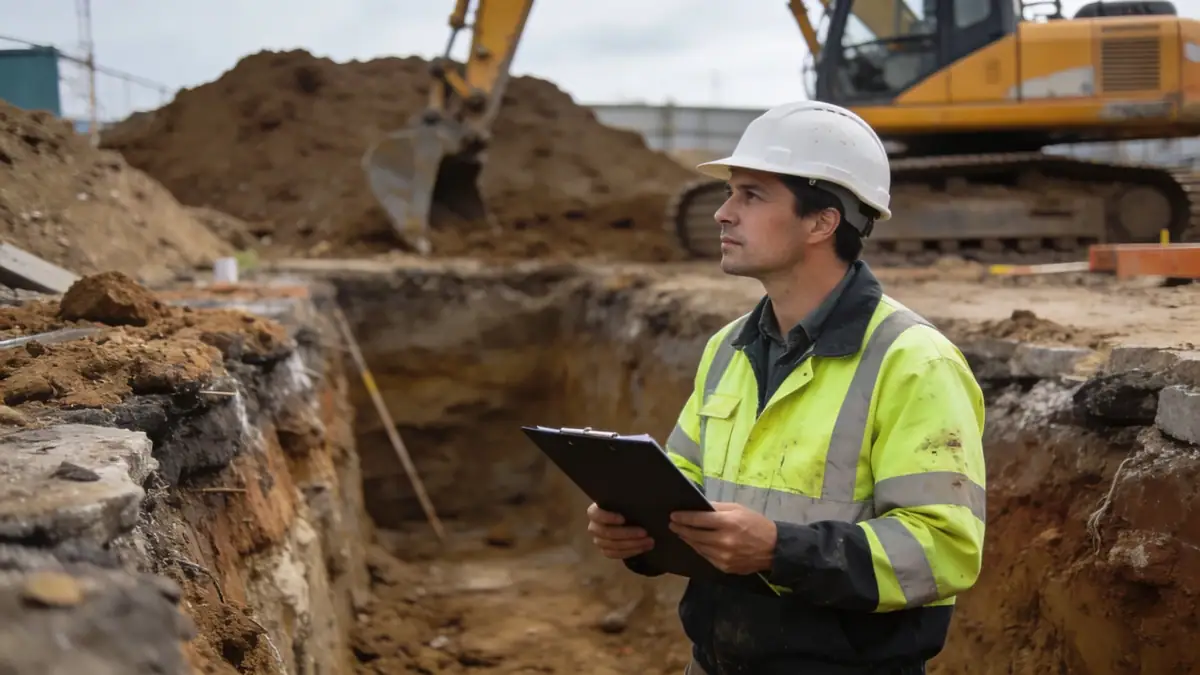
Our methodology for Mesa projects follows a systematic approach: field investigation using standard penetration testing per ASTM D1586, with sampling intervals of 1.0–1.5 m to capture stratigraphic variations. Laboratory testing includes index properties, moisture-density relations, and strength parameters. We integrate these data with local seismic hazard considerations, referencing ASCE 7-22 for site classification. For a comprehensive overview of our capabilities, visit our soil mechanics laboratory page.
Reference Technical Parameters
| Parameter | Reference Value |
|---|---|
| Predominant soil type | Alluvial silty sand (SM) and clayey sand (SC) |
| Maximum seismic acceleration (PGA) | 0.2g–0.3g (ASCE 7-22) |
| Typical groundwater level | 15–30 m below ground surface |
| Bedrock depth | Variable, typically >50 m |
| Typical N60 range (0–10 m) | 8–25 blows/300 mm |
Local Considerations — Mesa
Mesa's subsurface consists of alluvial fan deposits from the Usery and Superstition Mountains, with interbedded sands, silts, and clays. Expansive clay layers are common in the eastern areas, requiring swell-consolidation testing. Seismic site class typically ranges from C to D per ASCE 7. Our team has extensive experience with foundation solutions for single-family homes and mid-rise structures. For regional context, see our soil mechanics laboratory en Phoenix page. Additionally, our granulometry & atterberg testing addresses clay plasticity issues.
Request a Quote
Our team reviews your project and issues an initial report at no cost.
Or write us directly at [email protected]
Services in Mesa
Applicable Standards
- ASTM D1586 (Standard Penetration Test)
- ASTM D2487 (Unified Soil Classification System)
- ASCE 7-22 (Minimum Design Loads for Buildings)
- IBC 2021 (International Building Code)
Frequently Asked Questions
What soil types are prevalent in Mesa, AZ?
Mesa's soils are predominantly alluvial sands, silts, and clays derived from the surrounding mountain ranges. Expansive clays are encountered in the eastern and central areas, requiring careful evaluation of swell potential. Our laboratory performs index tests to classify these soils per ASTM D2487.
How does seismic risk affect soil laboratory testing in Mesa?
Mesa is in a moderate seismic zone with peak ground accelerations of 0.2g–0.3g per ASCE 7-22. Site classification for seismic design requires shear wave velocity measurements or SPT N-values. Our laboratory provides data to determine site class D or C, influencing foundation design.
Are geotechnical studies mandatory for construction in Mesa?
The City of Mesa and Maricopa County require geotechnical reports for most building permits, especially for commercial and multi-family structures. Single-family homes typically require a soils report when expansive soils or fill are present. Our firm assists clients in meeting these regulatory requirements.