Methodology

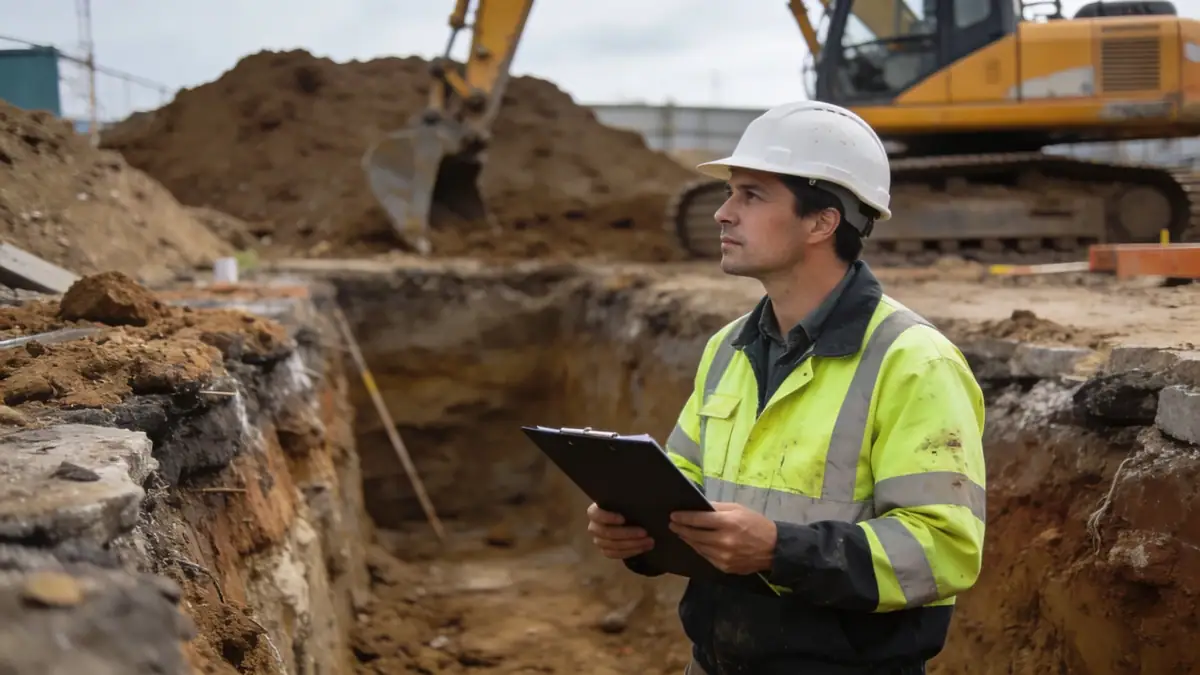
Our approach to soil mechanics laboratory investigations in Manchester New Hampshire follows a systematic methodology. We begin with a thorough review of existing geological maps and reports for the area, followed by field exploration using standard penetration testing (SPT) per ASTM D1586. Soil samples are retrieved at regular intervals and transported to our laboratory for comprehensive analysis, including granulometry & Atterberg limits and Proctor & CBR testing. Our team integrates these results with local seismic considerations to provide a complete geotechnical profile. This methodology ensures that every project in Manchester benefits from consistent, high-quality data that supports safe and economical foundation design.
Reference Technical Parameters
| Parameter | Reference Value |
|---|---|
| Predominant soil type | Glacial till, sand, and silt with occasional clay lenses |
| Maximum seismic acceleration (PGA) | 0.15g to 0.20g (ASCE 7-16, Site Class C/D) |
| Typical groundwater level | 2 to 5 meters below surface in lowland areas; deeper in upland areas |
| Bedrock depth | 5 to 15 meters in most areas; exposed in some upland zones |
| Typical N60 range (SPT) | 10 to 30 blows/0.3m in glacial till; 5 to 15 in alluvial deposits |
Local Considerations — Manchester New Hampshire
Manchester's geology is shaped by glacial processes and the Merrimack River. Five key points guide our work: (1) Glacial till deposits require careful assessment for excavation and foundation bearing capacity. (2) Downtown areas near the river have high groundwater levels, often necessitating dewatering plans. (3) Upland sites may have shallow bedrock, demanding rock excavation or specialized foundation systems. (4) Seismic site classification per ASCE 7 is critical, with most areas falling into Site Class C or D. (5) Historical fill and organic soils exist in some industrial zones. For projects requiring advanced analysis, our team in New York provides additional support, leveraging extensive regional experience.
Request a Quote
Our team reviews your project and issues an initial report at no cost.
Or write us directly at [email protected]
Services in Manchester New Hampshire
Applicable Standards
- ASTM D1586 (Standard Penetration Test)
- ASCE 7-16 (Minimum Design Loads and Associated Criteria for Buildings and Other Structures)
- New Hampshire Building Code (based on IBC)
- ASTM D2487 (Classification of Soils for Engineering Purposes)
- ASTM D6913 (Particle Size Distribution)
Frequently Asked Questions
What types of soil are commonly found in Manchester, New Hampshire?
Manchester's soils are predominantly glacial till, sand, silt, and occasional clay. Alluvial deposits exist near the Merrimack River, while upland areas have denser till over bedrock. Understanding these variations is essential for foundation design and earthwork planning.
Is seismic analysis required for construction in Manchester?
Yes, Manchester is in a moderate seismic zone per ASCE 7-16. Site-specific seismic analysis may be required depending on building occupancy and soil conditions. Our laboratory provides relevant testing to determine site class and liquefaction potential.
Are geotechnical studies mandatory for residential projects in Manchester?
While not always mandatory for single-family homes, geotechnical studies are strongly recommended, especially in areas with shallow groundwater, fill soils, or steep slopes. Local building officials may require them for certain permits and foundation designs.