
Methodology
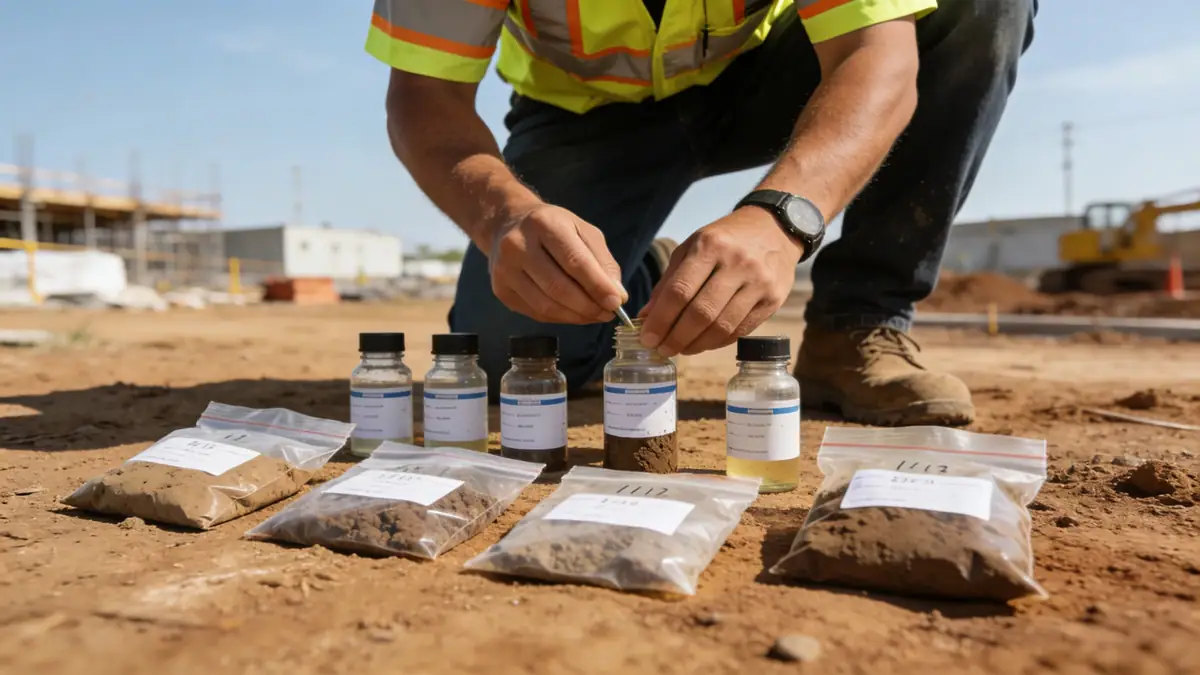
Our methodology for soil mechanics laboratory investigations in Louisville follows standardized procedures to ensure reliable data. Field exploration includes standard penetration testing (SPT) per ASTM D1586 at intervals of 1.0 to 1.5 m, typically extending to depths of 8–15 m for residential projects and up to 30 m for industrial structures. In cohesive soils, undisturbed tube sampling is performed for laboratory strength and consolidation tests. Our soil mechanics laboratory integrates index properties, compaction, and shear strength evaluations, all calibrated to Louisville's specific soil conditions. This systematic approach minimizes uncertainty and supports informed engineering decisions.
Reference Technical Parameters
| Parameter | Reference Value |
|---|---|
| Predominant soil type | Silty clay and sand with gravel (Ohio River alluvium) |
| Maximum seismic acceleration (PGA) | 0.2g (ASCE 7-16, Site Class D) |
| Typical groundwater level | 3–6 m below ground surface (varies seasonally) |
| Bedrock depth | 10–30 m (limestone/shale) |
| Typical N60 range (SPT) | 5–25 blows/0.3 m (in alluvial deposits) |
Local Considerations — Louisville
Louisville's subsurface conditions are dominated by Ohio River alluvium, consisting of interlayered silts, clays, sands, and gravels, often with variable plasticity and compressibility. The water table fluctuates between 3 and 6 m, impacting excavations and foundation choices. Seismic design per ASCE 7-16 requires Site Class D with PGA around 0.2g. In older downtown areas, fill and prior construction debris complicate soil profiles. Our team, also operating from our principal office in Chicago, applies this knowledge to deliver relevant soil mechanics laboratory services. Typical challenges include collapsible soils in the eastern suburbs and high-plasticity clays near the river.
Request a Quote
Our team reviews your project and issues an initial report at no cost.
Or write us directly at [email protected]
Services in Louisville
Applicable Standards
- ASTM D1586 (Standard Penetration Test)
- ASCE 7-16 (Minimum Design Loads for Buildings)
- Kentucky Building Code (IBC-based)
- ASTM D2487 (Unified Soil Classification System)
- ASTM D698 (Standard Proctor Compaction)
Frequently Asked Questions
What are the dominant soil types in Louisville?
Louisville's soils are primarily alluvial deposits from the Ohio River: silty clays, sands, and gravels. Glacial outwash and limestone/shale bedrock underlie the area. These materials require careful evaluation for foundation design and earthwork.
Is seismic analysis required for projects in Louisville?
Yes, the Kentucky Building Code adopts ASCE 7-16, which mandates seismic design for most structures. Louisville falls in Seismic Design Category B/C with a PGA of 0.2g. Soil site class determination via laboratory testing is essential for accurate spectral response.
When is a soil mechanics laboratory study mandatory in Louisville?
Studies are typically required for commercial buildings, multi-story residential, infrastructure projects, and sites with known problematic soils. Local building officials often request geotechnical reports for permit approval, especially in floodplains or areas with high water tables.