Methodology

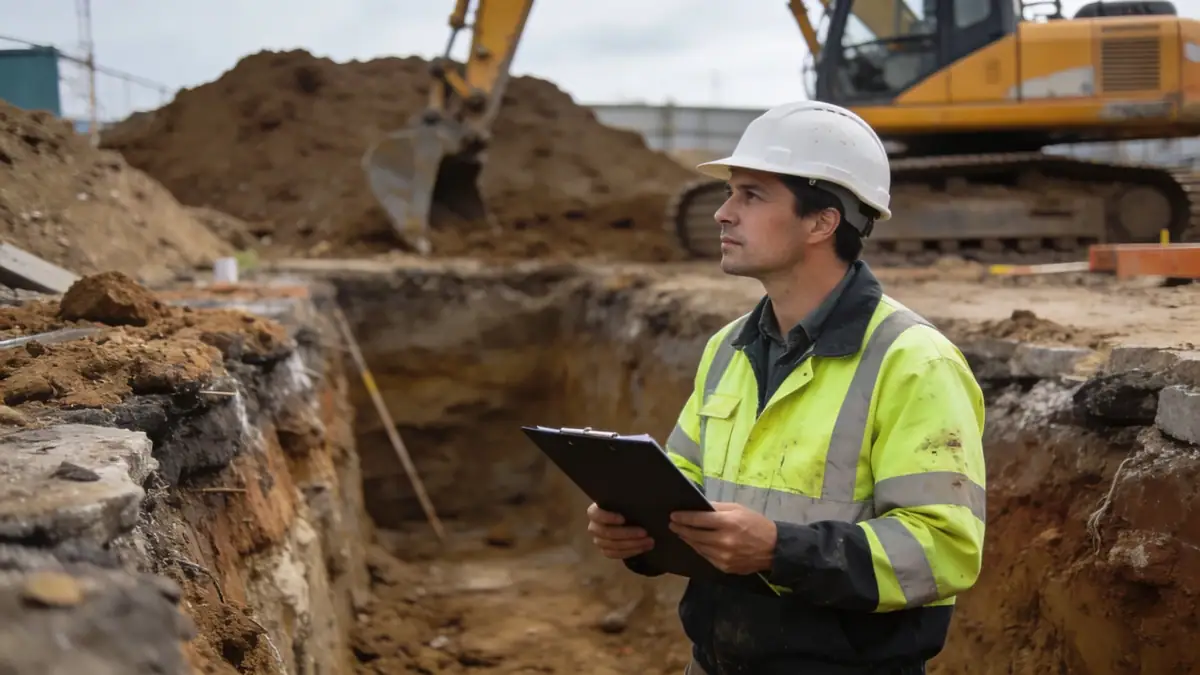
Our methodology for soil mechanics laboratory in League City follows standardized procedures to capture representative soil parameters. We perform site investigations using ASTM D1586 SPT methods, with sampling intervals of 1.0 to 1.5 m to depths of 8–15 m for residential structures. For larger projects, we extend borings to 30 m. Our soil mechanics laboratory integrates field and laboratory testing, including continuous CPT logging every 1–2 cm, to map stratigraphy and groundwater conditions. We emphasize quality control through chain-of-custody documentation and calibrated equipment. The data supports foundation design, slope stability analysis, and compaction control, tailored to League City's expansive clay and sandy deposits.
Reference Technical Parameters
| Parameter | Reference Value |
|---|---|
| Predominant soil type | Expansive clay (high plasticity) over sandy deposits |
| Maximum seismic acceleration (PGA) | 0.10–0.15 g (ASCE 7-16) |
| Typical groundwater level | 1.5–3.0 m below ground surface |
| Bedrock depth | >30 m (deep sedimentary basin) |
| Typical N60 range (SPT) | 4–15 blows/ft (clay); 10–30 blows/ft (sand) |
Local Considerations — League City
League City's geology features Beaumont Formation clays with high shrink-swell potential, requiring careful moisture control and deep foundation alternatives. The shallow water table (1.5–3 m) necessitates dewatering considerations. Seismic site class D (ASCE 7) applies due to soft soils, amplifying ground motions. Our team accounts for these factors in granulometry & atterberg testing to classify soils and assess plasticity. For projects near Clear Lake, we evaluate liquefaction potential. Typical challenges include slab heave in residential areas and differential settlement in commercial fills. We collaborate with local engineers to address these conditions, referencing our experience from soil mechanics laboratory en Houston.
Request a Quote
Our team reviews your project and issues an initial report at no cost.
Or write us directly at [email protected]
Services in League City
Applicable Standards
- ASTM D1586 (Standard Penetration Test)
- ASTM D2487 (Unified Soil Classification System)
- ASCE 7-16 (Minimum Design Loads for Buildings)
- International Building Code (IBC) 2021
- City of League City Geotechnical Requirements
Frequently Asked Questions
What are the typical soil conditions in League City?
League City is underlain by expansive clay soils of the Beaumont Formation, with high plasticity and moderate to high shrink-swell potential. Sandy layers are present at depth. Groundwater is typically shallow, between 1.5 and 3 meters. These conditions require careful geotechnical evaluation for foundation design.
Is seismic analysis required for projects in League City?
Yes, per ASCE 7-16, League City falls in Seismic Design Category C or D depending on soil class. Site-specific response spectra may be needed for critical structures. Our laboratory provides shear wave velocity measurements and cyclic testing to support seismic design.
Are geotechnical studies mandatory for residential construction in League City?
While not always mandatory for single-family homes, most local building departments require a geotechnical report for new construction, especially in areas with expansive soils. Our soil mechanics laboratory in League City provides the necessary testing and documentation to meet permit requirements.