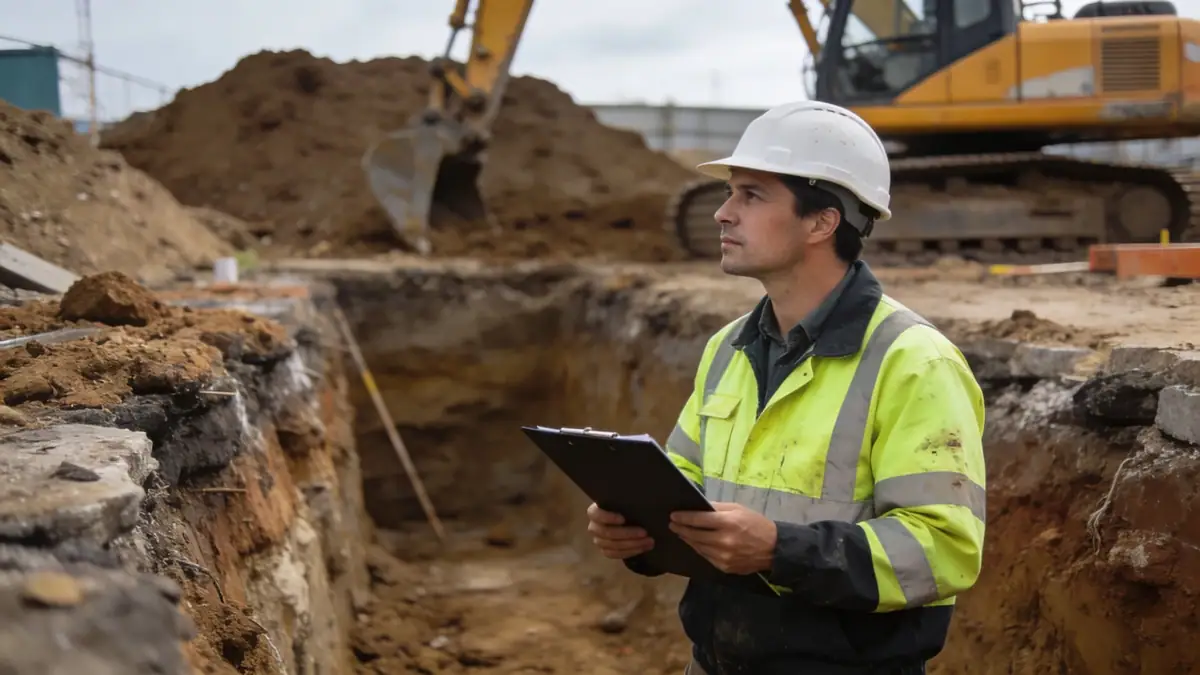
Methodology
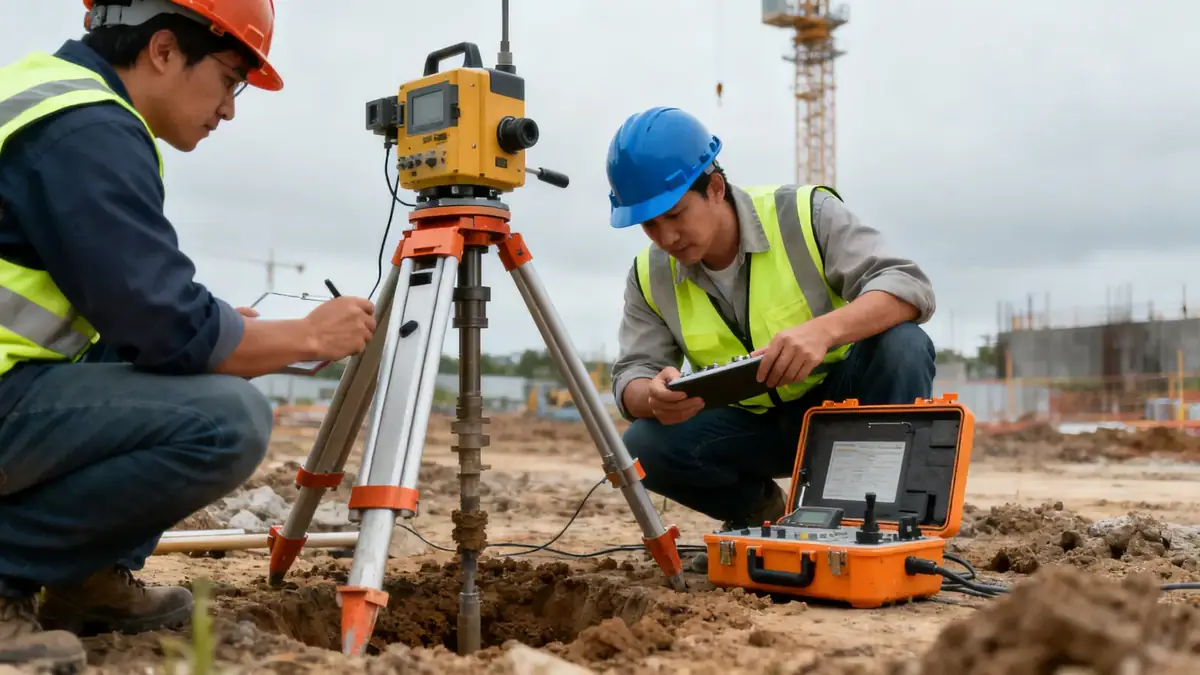
Our methodology for projects in Laramie follows rigorous standards, beginning with site reconnaissance and subsurface exploration using standard penetration testing (SPT) per ASTM D1586. We collect disturbed and undisturbed samples for laboratory analysis, including classification, compaction, and strength testing. Our team employs advanced techniques such as cone penetration testing (CPT) for continuous profiling and seismic dilatometer tests (SDMT) for modulus evaluation. All testing is conducted in our accredited soil mechanics laboratory to provide reliable data for foundation design and slope stability assessments.
Reference Technical Parameters
| Parameter | Reference Value |
|---|---|
| Predominant soil type | Expansive clay and glacial till |
| Maximum seismic acceleration (PGA) | 0.15g (per ASCE 7) |
| Typical groundwater level | 3–6 m below ground surface |
| Bedrock depth | 10–20 m in plains; <5 m in foothills |
| Typical N60 range (SPT) | 4–15 blows/0.3 m |
Local Considerations — Laramie
Laramie’s geology features expansive clays prone to volume change, requiring careful evaluation of swell potential for slab-on-grade foundations. The shallow groundwater table in spring months demands dewatering considerations for excavations. Seismic design per ASCE 7 accounts for a peak ground acceleration of 0.15g, influencing liquefaction assessments in saturated sands. Our firm provides specialized granulometry & atterberg testing to characterize soil plasticity. For complex projects, we coordinate with our main hub, soil mechanics laboratory en Denver, to leverage regional expertise.
Request a Quote
Our team reviews your project and issues an initial report at no cost.
Or write us directly at [email protected]
Services in Laramie
Applicable Standards
- ASTM D1586 (Standard Penetration Test)
- ASCE 7 (Minimum Design Loads for Buildings)
- ASTM D698 (Standard Proctor Compaction)
- Wyoming Department of Transportation Standard Specifications
Frequently Asked Questions
What types of soil are common in Laramie, Wyoming?
Laramie predominantly features expansive clays from the Laramie Formation and glacial till in the downtown area. These soils present challenges for foundation design due to high plasticity and potential for swelling. Alluvial sands and gravels are found along river valleys.
Does Laramie have specific seismic requirements for soil testing?
Yes, Laramie is in Seismic Design Category C per ASCE 7, with a peak ground acceleration of 0.15g. This requires site-specific response spectra for critical structures and liquefaction assessment for saturated granular soils.
Are geotechnical studies mandatory for construction in Laramie?
While not always legally mandatory, most local building departments require a geotechnical report for commercial and multi-family projects. For residential construction, it is highly recommended due to expansive soils and variable bedrock depth.