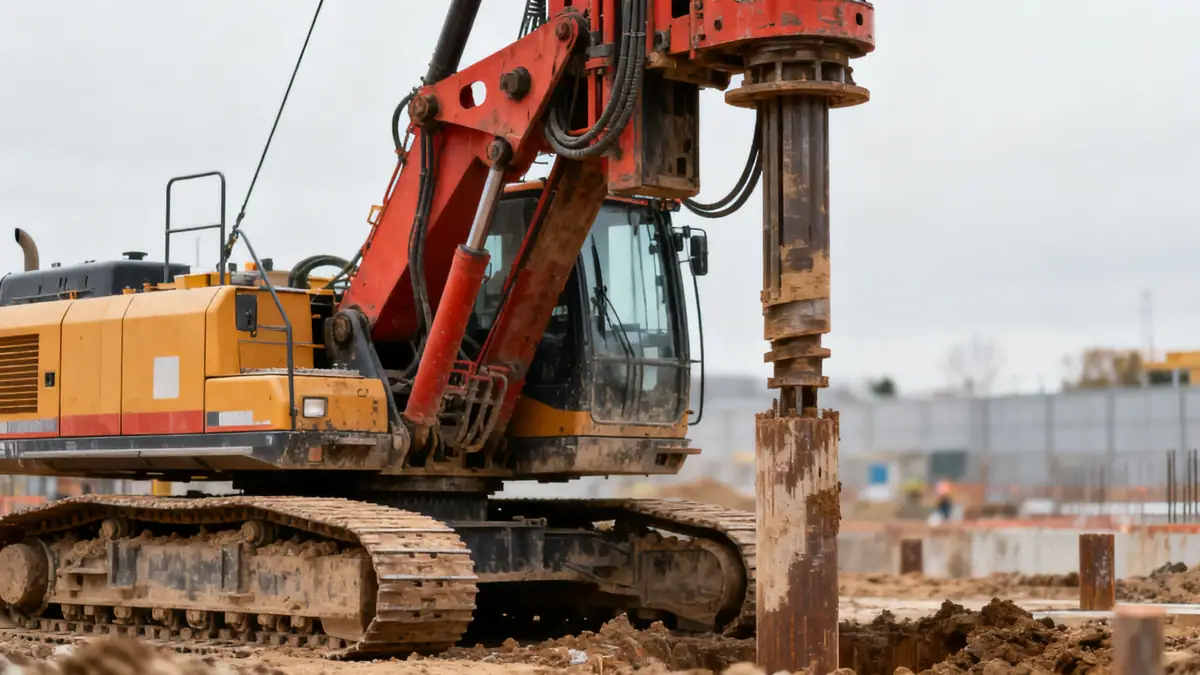
Methodology
Our methodology for soil mechanics laboratory investigations in Kansas City follows a systematic approach tailored to the region's stratigraphy. We begin with a comprehensive desk study of existing geological maps and borehole records, then deploy in-situ testing such as Standard Penetration Tests (SPT) per ASTM D1586, with sampling intervals of 1.0 to 1.5 meters. For continuous profiling, we utilize Cone Penetration Testing (CPT) to obtain detailed soil behavior type and strength parameters. All samples are transported to our laboratory for classification tests including granulometry & atterberg, Proctor compaction, and triaxial shear strength. Our integrated approach ensures that the laboratory data directly informs geotechnical design parameters for foundations, earthworks, and slope stability.
Reference Technical Parameters
| Parameter | Reference Value |
|---|---|
| Predominant soil type | Glacial till (clay with silt/sand) |
| Maximum seismic acceleration (PGA) | 0.15g to 0.25g (ASCE 7-16) |
| Typical groundwater level | 3 to 10 m below grade |
| Bedrock depth | 10 to 30 m (Pennsylvanian limestone/shale) |
| Typical N60 range | 8 to 30 blows/ft (clay till) |
Local Considerations — Kansas City
Kansas City's geology is dominated by glacial till overlying Pennsylvanian bedrock, creating a complex layering of clay, silt, and sand. Our team addresses five key local factors: (1) expansive clay soils prone to shrink-swell cycles; (2) shallow groundwater in the Missouri River floodplain; (3) moderate seismic hazard requiring site-specific response analysis; (4) variable soil stiffness across the city—dense till in the north versus softer alluvium in the south; (5) typical foundation challenges include differential settlement on fill and basement flooding. For broader context, our soil mechanics laboratory en Chicago team encounters similar glacial deposits but with different bedrock depth. Local expertise ensures practical recommendations.
Request a Quote
Our team reviews your project and issues an initial report at no cost.
Or write us directly at [email protected]
Services in Kansas City
Applicable Standards
- ASTM D1586 (Standard Penetration Test)
- ASCE 7-16 (Minimum Design Loads for Buildings)
- IBC 2021 (International Building Code)
- Kansas City Building Code (Chapter 18: Soils and Foundations)
Frequently Asked Questions
What are the typical soil types found in Kansas City?
Kansas City's soils are primarily glacial till, a heterogeneous mix of clay, silt, sand, and gravel. In river valleys, alluvial deposits of silty clay and sand are common. Expansive clays are prevalent in the till, requiring careful evaluation for foundation design.
What seismic design considerations apply to Kansas City?
Kansas City is in Seismic Design Category C per ASCE 7-16, with peak ground accelerations of 0.15g to 0.25g. Site-specific response spectra are required for critical structures, and liquefaction potential must be assessed in loose, saturated sands along the Missouri River.
Are soil mechanics studies mandatory for construction in Kansas City?
Yes, the Kansas City Building Code requires a geotechnical investigation for most commercial and multi-family projects. Single-family homes often require a soils report if expansive soils or fill are present. Always consult local code officials for specific requirements.