Methodology
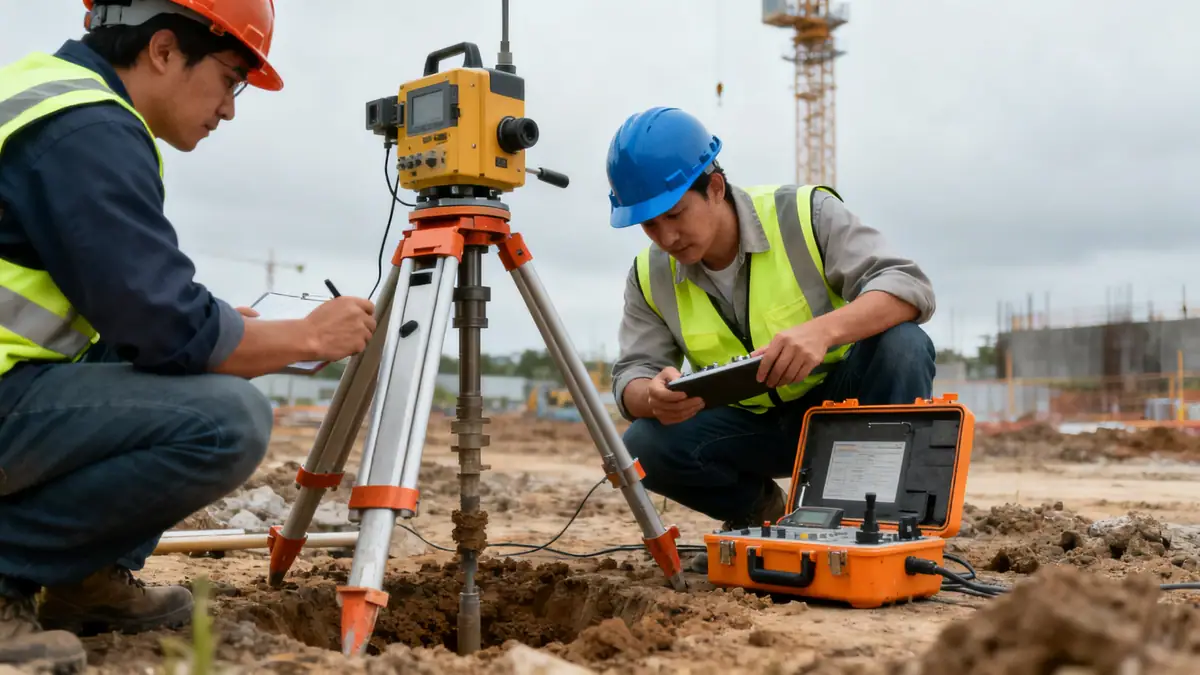
Our methodology for soil mechanics laboratory work in Jersey City follows ASTM standards and local building codes. We begin with a comprehensive site reconnaissance and review of existing geologic maps. Field exploration includes standard penetration testing (SPT) per ASTM D1586, with sampling intervals typically every 1.5 meters to a depth of 15 meters. Our laboratory phase encompasses classification tests (granulometry, Atterberg limits) and strength/consolidation tests tailored to project requirements. All procedures are documented and traceable, ensuring data integrity for regulatory submissions. For a detailed overview of our core capabilities, visit our soil mechanics laboratory page.
Reference Technical Parameters
| Parameter | Reference Value |
|---|---|
| Predominant soil type | Glacial till and alluvial sand/silt |
| Maximum seismic acceleration (PGA) | 0.2g to 0.3g (ASCE 7-16) |
| Typical groundwater level | 2 to 5 meters below grade |
| Bedrock depth | Variable; 5 to 30 meters (diabase/sandstone) |
| Typical N60 range (SPT) | 4 to 30 blows per foot |
Local Considerations — Jersey City
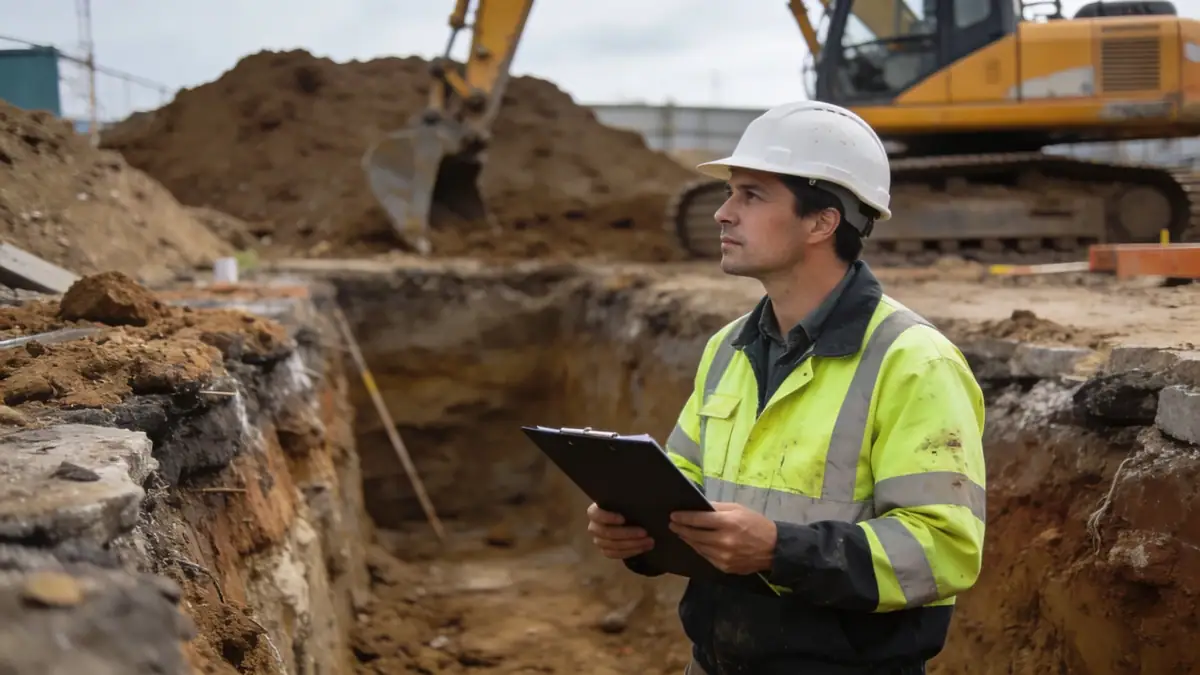
Jersey City's geology is dominated by glacial till overlying the Newark Basin bedrock (sandstone and shale). The waterfront areas feature deep fill and soft compressible clays, requiring careful settlement analysis. Upland districts exhibit stiffer soils but with shallow groundwater and potential for rock excavation. Seismic site classification per ASCE 7 ranges from C to E, with peak accelerations up to 0.3g. Our team routinely addresses challenges such as liquefaction potential in sandy fills and lateral spreading along the Hudson River. For comprehensive testing solutions, explore our granulometry & atterberg services.
Request a Quote
Our team reviews your project and issues an initial report at no cost.
Or write us directly at [email protected]
Services in Jersey City
Applicable Standards
- ASTM D1586 (Standard Penetration Test)
- ASCE 7-16 (Minimum Design Loads and Associated Criteria)
- IBC 2018 (International Building Code)
- NJDEP (New Jersey Department of Environmental Protection) regulations
Frequently Asked Questions
What are the typical soil types encountered in Jersey City?
Jersey City soils are predominantly glacial till (silty sand with gravel) in upland areas, and alluvial sands/silts with organic clays along the waterfront. Bedrock (Newark Basin sandstone/shale) depth varies significantly, from 5 m in the Heights to over 30 m near the Hudson River.
How do seismic requirements affect foundation design in Jersey City?
Jersey City falls under Seismic Design Category C to D per IBC 2018, with mapped spectral accelerations (S_s) of 0.3g to 0.5g. Site-specific soil amplification factors (Fa, Fv) from ASCE 7 are used to adjust design spectra. Deep foundations or ground improvement may be needed in liquefiable zones.
Are soil mechanics studies mandatory for all construction projects in Jersey City?
New Jersey building codes require geotechnical investigations for most structural projects, especially those with foundations, retaining walls, or earthwork. The extent depends on project size and site conditions. Our firm provides the necessary soil mechanics laboratory testing to meet these requirements.