Methodology
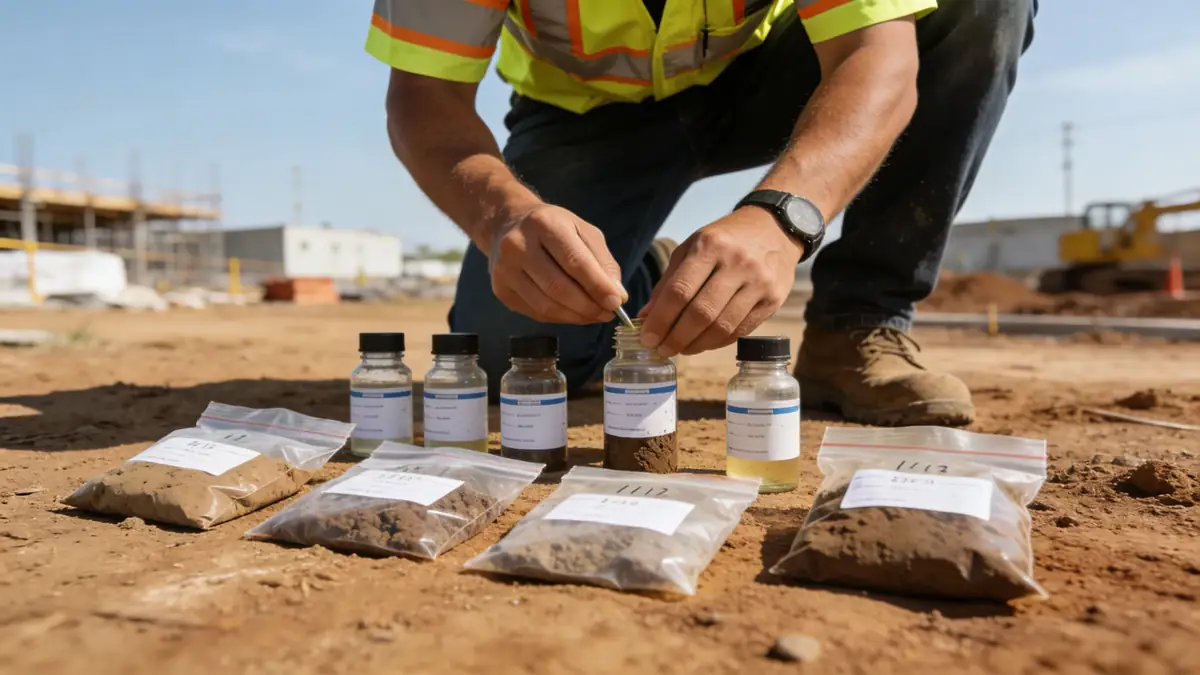
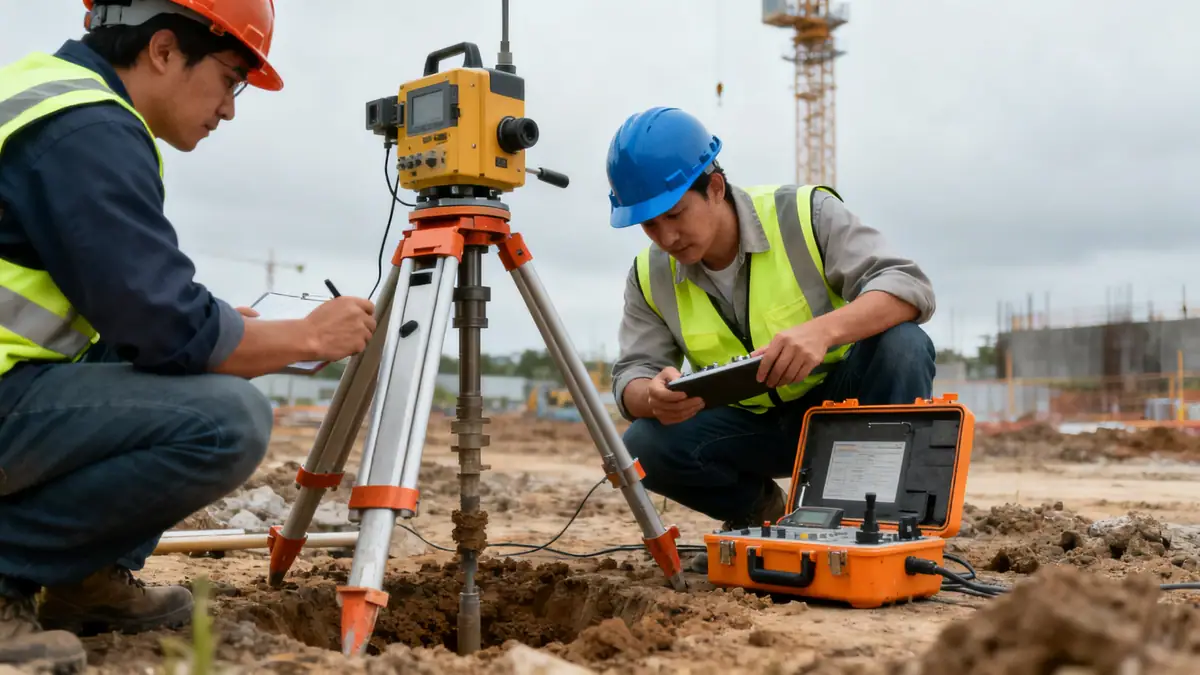
Our methodology for soil mechanics laboratory projects in Jacksonville follows established protocols to address the region's specific subsurface challenges. We perform standard penetration testing (SPT) in accordance with ASTM D1586, with sampling intervals typically every 1.5 meters to capture stratigraphic variations. In cohesive soils, we collect undisturbed samples for triaxial and consolidation testing. Our soil mechanics laboratory integrates these results with advanced laboratory procedures, including grain size analysis and Atterberg limits, to define soil behavior under loading and moisture changes. This approach ensures reliable parameters for settlement and stability analyses.
Reference Technical Parameters
| Parameter | Reference Value |
|---|---|
| Predominant soil type | Sands and silty sands (SP, SM) |
| Maximum seismic acceleration (PGA) | 0.05 g (ASCE 7-16) |
| Typical groundwater level | 1.5–3.0 m below ground surface |
| Bedrock depth | >30 m (deep limestone formation) |
| Typical N60 range | 5–30 blows per 0.3 m |
Local Considerations — Jacksonville
Jacksonville's subsurface is dominated by sandy soils of the Coastal Plain, often underlain by the Hawthorn Group clays and limestone. The shallow water table, typically between 1.5 and 3.0 meters, complicates excavation and requires dewatering considerations. Seismic hazard is low, with a PGA of 0.05 g per ASCE 7-16, but liquefaction potential in loose saturated sands must be evaluated. In older urban areas, undocumented fill may be present. Our team, also serving from our granulometry & atterberg facility, adapts testing to these conditions. For broader regional context, we coordinate with our soil mechanics laboratory en Atlanta team.
Request a Quote
Our team reviews your project and issues an initial report at no cost.
Or write us directly at [email protected]
Services in Jacksonville
Applicable Standards
- ASTM D1586 (Standard Penetration Test)
- ASCE 7-16 (Minimum Design Loads and Associated Criteria for Buildings)
- Florida Building Code (2023)
- ASTM D2487 (Unified Soil Classification System)
Frequently Asked Questions
What soil types are commonly found in Jacksonville?
Jacksonville's soils are predominantly sandy, including poorly graded sands (SP) and silty sands (SM), often underlain by clayey sands and limestone of the Hawthorn Group. Groundwater is typically high, affecting soil behavior.
Is seismic design required in Jacksonville?
Yes, the Florida Building Code adopts ASCE 7-16, which assigns a low seismic design category (PGA 0.05 g). However, site-specific soil response may amplify ground motion, so geotechnical evaluation is recommended for essential facilities.
Are soil mechanics laboratory tests mandatory for construction in Jacksonville?
For most commercial and multi-family projects, the Florida Building Code requires geotechnical investigations to determine soil bearing capacity and settlement. Single-family homes may have exemptions, but testing is advised for problematic sites.