Methodology

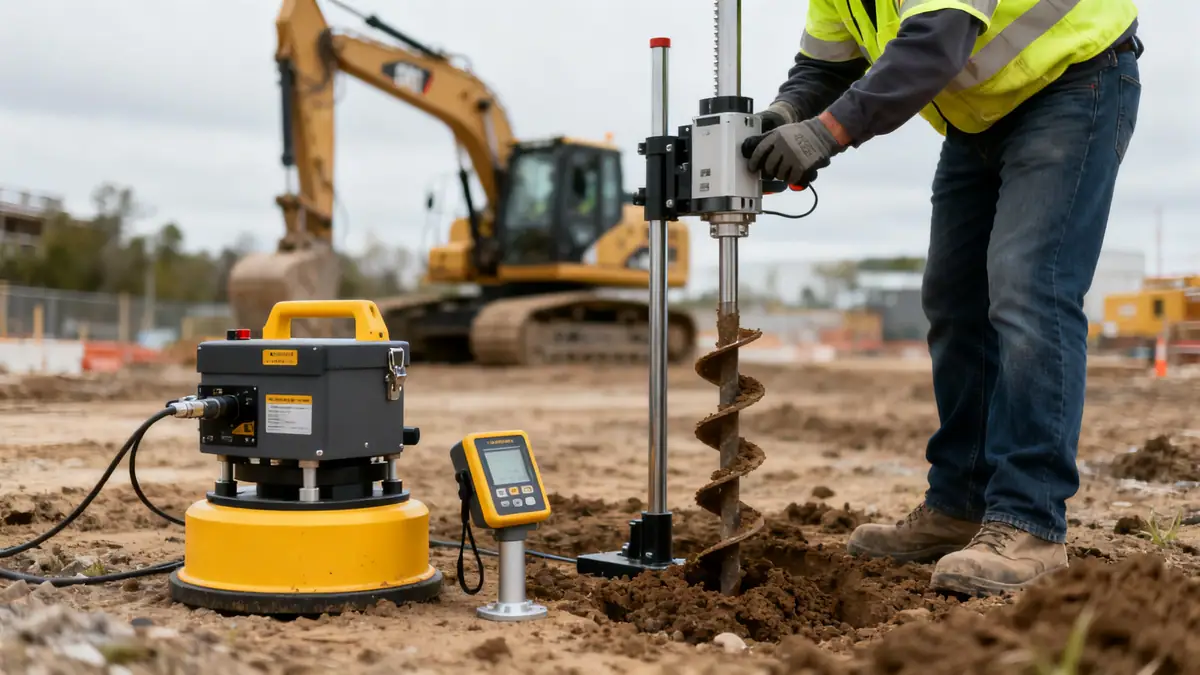
Our methodology at Soil Mechanics Laboratory in Glendale Arizona follows ASTM D1586 for Standard Penetration Tests, ensuring consistent and reliable data collection. We employ a phased approach, starting with a thorough site reconnaissance and review of existing geological maps. Our field operations include drilling, sampling, and in-situ testing, followed by laboratory analysis of soil properties. This systematic process allows our team to deliver accurate recommendations for foundation design and earthworks. For a detailed overview of our capabilities, visit our soil mechanics laboratory page.
Reference Technical Parameters
| Parameter | Reference Value |
|---|---|
| Predominant soil type | Silty sands (SM) and clayey sands (SC) |
| Maximum seismic acceleration (PGA) | 0.20g (ASCE 7-16) |
| Typical groundwater level | 10 to 25 meters below surface |
| Bedrock depth | 30 to 60 meters |
| Typical N60 range | 10 to 30 blows per foot |
Local Considerations — Glendale Arizona
Glendale Arizona's geology is characterized by alluvial deposits from the nearby White Tank Mountains and Salt River. The soil profile typically consists of interbedded sands, silts, and clays, with occasional gravel layers. The area lies in a seismically active region, with a maximum considered earthquake (MCE) spectral response acceleration of 0.20g per ASCE 7. Groundwater levels are generally deep but can rise near the Salt River. Our team has extensive experience with these conditions, having completed numerous projects across the city. For more specialized services, refer to our granulometry & atterberg testing capabilities.
Request a Quote
Our team reviews your project and issues an initial report at no cost.
Or write us directly at [email protected]
Services in Glendale Arizona
Applicable Standards
- ASTM D1586
- ASCE 7-16
- IBC 2021
- City of Glendale Engineering Standards
Frequently Asked Questions
What are the typical soil types found in Glendale Arizona?
The predominant soil types in Glendale Arizona are silty sands (SM) and clayey sands (SC), with occasional layers of gravel. These alluvial deposits vary in density and consistency, requiring careful evaluation for foundation design.
What seismic design criteria apply in Glendale Arizona?
Glendale Arizona falls under Seismic Design Category D per ASCE 7-16, with a maximum considered earthquake spectral response acceleration (SDS) of 0.20g. Our soil mechanics laboratory incorporates these parameters into geotechnical recommendations.
Is a soil mechanics study required for construction in Glendale Arizona?
Yes, the City of Glendale typically requires a geotechnical report for new construction and major renovations. Our team provides the necessary soil mechanics laboratory services to comply with local building codes and ensure safe development.