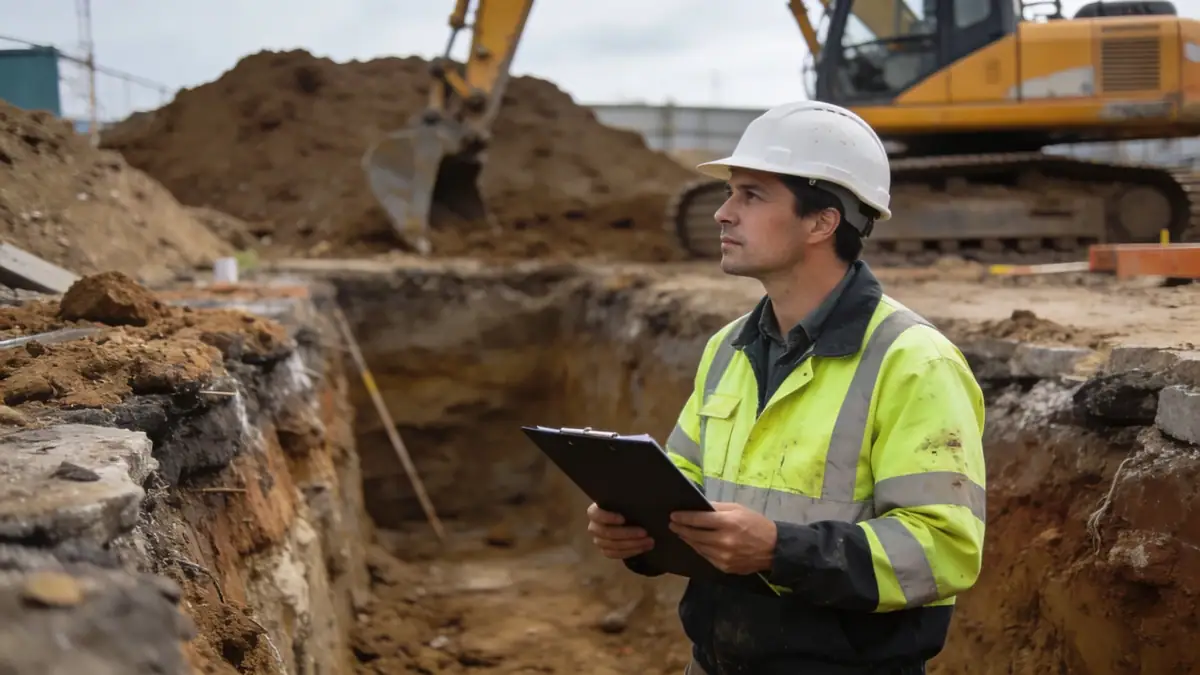
Methodology
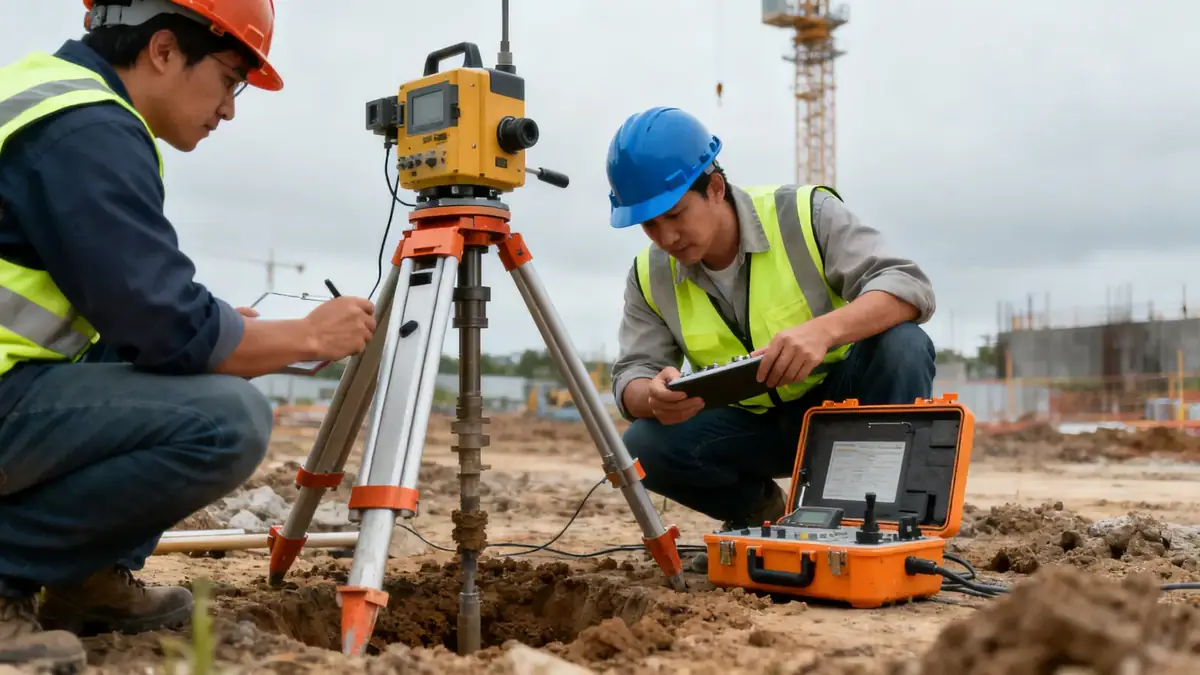
Our methodology for soil mechanics laboratory projects in El Paso integrates field exploration and laboratory testing to characterize subsurface conditions. We perform standard penetration tests (SPT) per ASTM D1586 to assess soil strength, with sampling intervals typically every 1.0 to 1.5 meters. Our team also conducts cone penetration tests (CPT) for continuous profiling and test pits for shallow investigations. Laboratory analyses include grain size distribution, Atterberg limits, and compaction tests to classify soils and determine their engineering properties. For more details on our comprehensive approach, visit our soil mechanics laboratory page.
Reference Technical Parameters
| Parameter | Reference Value |
|---|---|
| Predominant soil type | CL (lean clay) and SM (silty sand) |
| Maximum seismic acceleration (PGA) | 0.13g (MCE, per ASCE 7) |
| Typical groundwater level | 10–20 m below ground surface |
| Bedrock depth | 30–60 m (variable) |
| Typical N60 range | 4–15 blows per 0.3 m |
Local Considerations — El Paso
El Paso's geology is dominated by alluvial fan deposits and Rio Grande floodplain sediments, with variable clay and sand layers. The region's high evaporation rates lead to desiccated clay crusts that can cause differential settlement. Shallow groundwater is typically encountered below 10 meters, but localized perched aquifers exist near irrigation zones. Seismic hazard is moderate, with a maximum considered earthquake (MCE) PGA of 0.13g per ASCE 7. The city's west side features more competent volcanic rock, while the east side has deeper soil profiles. Typical projects include slab-on-grade foundations for subdivisions and deep foundations for commercial towers. For specialized testing, see our granulometry & atterberg services.
Request a Quote
Our team reviews your project and issues an initial report at no cost.
Or write us directly at [email protected]
Services in El Paso
Applicable Standards
- ASTM D1586 (Standard Penetration Test)
- ASCE 7 (Minimum Design Loads for Buildings)
- IBC 2021 (International Building Code)
- City of El Paso Building Code
Frequently Asked Questions
What soil types are common in El Paso and how do they affect construction?
El Paso soils are predominantly lean clays (CL) and silty sands (SM), often with high plasticity and shrink-swell potential. These expansive clays can cause heave and settlement, requiring proper foundation design. Our soil mechanics laboratory tests determine plasticity index and swell pressure to mitigate risks.
Is seismic testing required for projects in El Paso?
Yes, El Paso is in a moderate seismic zone (PGA 0.13g). Per ASCE 7 and IBC 2021, site-specific seismic analysis is required for certain structures. Our team performs shear wave velocity measurements and cyclic triaxial tests to classify site class and evaluate liquefaction potential.
Are geotechnical studies mandatory for residential construction in El Paso?
The City of El Paso requires a geotechnical report for most new residential buildings, especially on expansive soils. This typically includes soil classification, bearing capacity, and compaction recommendations. Our soil mechanics laboratory provides comprehensive reports to satisfy local permitting.