
Methodology
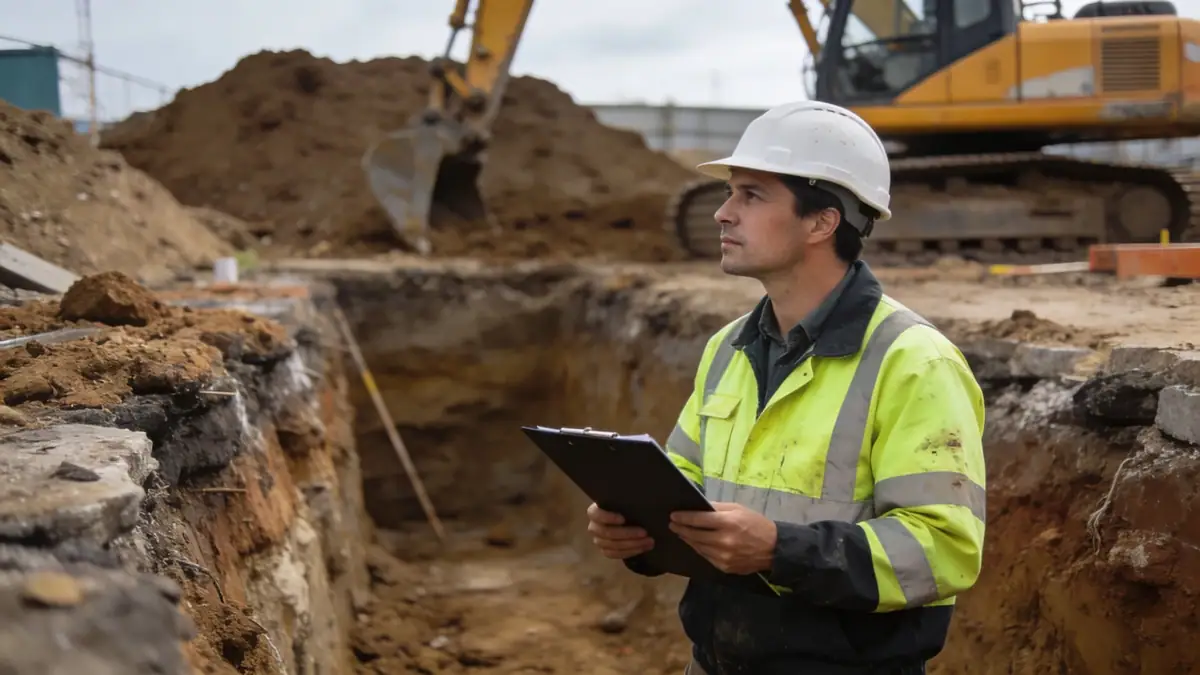
Our methodology in Durham follows a systematic approach: we begin with a site reconnaissance to understand local conditions, then execute a drilling program using SPT (ASTM D1586) at 1.5 m intervals to depths of 15–30 m. Samples are tested in our accredited laboratory for index properties, compaction, and shear strength. For seismic evaluations, we perform shear wave velocity measurements and classify per ASCE 7. Our integrated soil mechanics laboratory procedures ensure data consistency across all projects.
Reference Technical Parameters
| Parameter | Reference Value |
|---|---|
| Predominant Soil Type | Residual sandy silt and clay (Piedmont saprolite) |
| Maximum Seismic Acceleration (PGA) | 0.15–0.25 g (ASCE 7, Site Class C/D) |
| Typical Groundwater Level | 3–8 m below surface (seasonal variation) |
| Bedrock Depth | 5–25 m (weathered gneiss/schist) |
| Typical N60 Range (SPT) | 8–30 blows/0.3 m (in residual soils) |
Local Considerations — Durham
Durham's Piedmont region features residual soils derived from crystalline bedrock, with varying thickness and weathering profiles. The groundwater table is typically deep but can rise near streams. Seismic hazard is moderate, requiring site-specific response analysis for critical structures. Older neighborhoods may have undocumented fill or previous grading. Our team addresses these variables through targeted borings and laboratory testing. For clients needing broader regional support, we coordinate with soil mechanics laboratory en Philadelphia to leverage additional resources.
Request a Quote
Our team reviews your project and issues an initial report at no cost.
Or write us directly at [email protected]
Services in Durham
Applicable Standards
- ASTM D1586
- ASCE 7
- North Carolina Building Code (IBC-based)
- ASTM D2487 (USCS classification)
Frequently Asked Questions
What soil types are most common in Durham for foundation design?
The predominant soils are residual sandy silts and clays (saprolite) over weathered gneiss or schist. These soils have variable density and stiffness, often requiring site-specific testing to determine bearing capacity and settlement parameters.
Is seismic analysis required for projects in Durham?
Yes, per ASCE 7, Durham falls in a moderate seismic zone with PGA values of 0.15–0.25 g. Site classification and response spectra are needed for structures in Risk Category II or higher, especially on deeper soil profiles.
When is a soil mechanics laboratory study mandatory in Durham?
It is required for all commercial buildings, multi-family residential, and any structure on expansive or fill soils. Local building officials often request geotechnical reports for permit approval, especially for foundations deeper than 3 m.