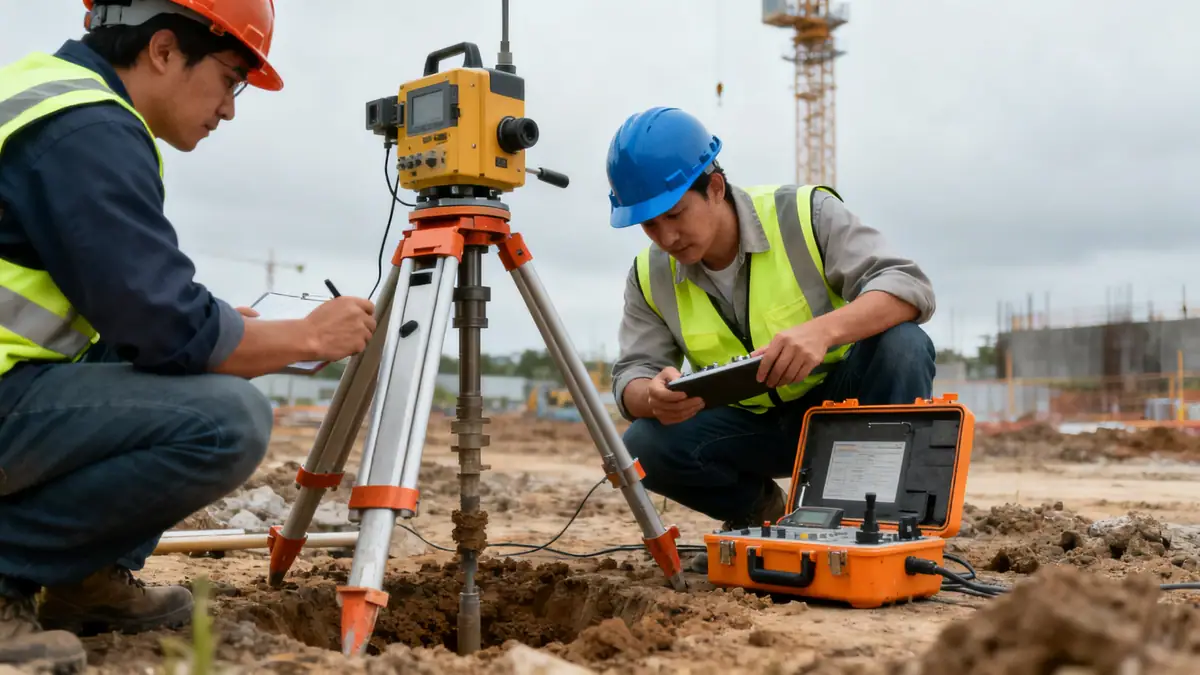
Methodology
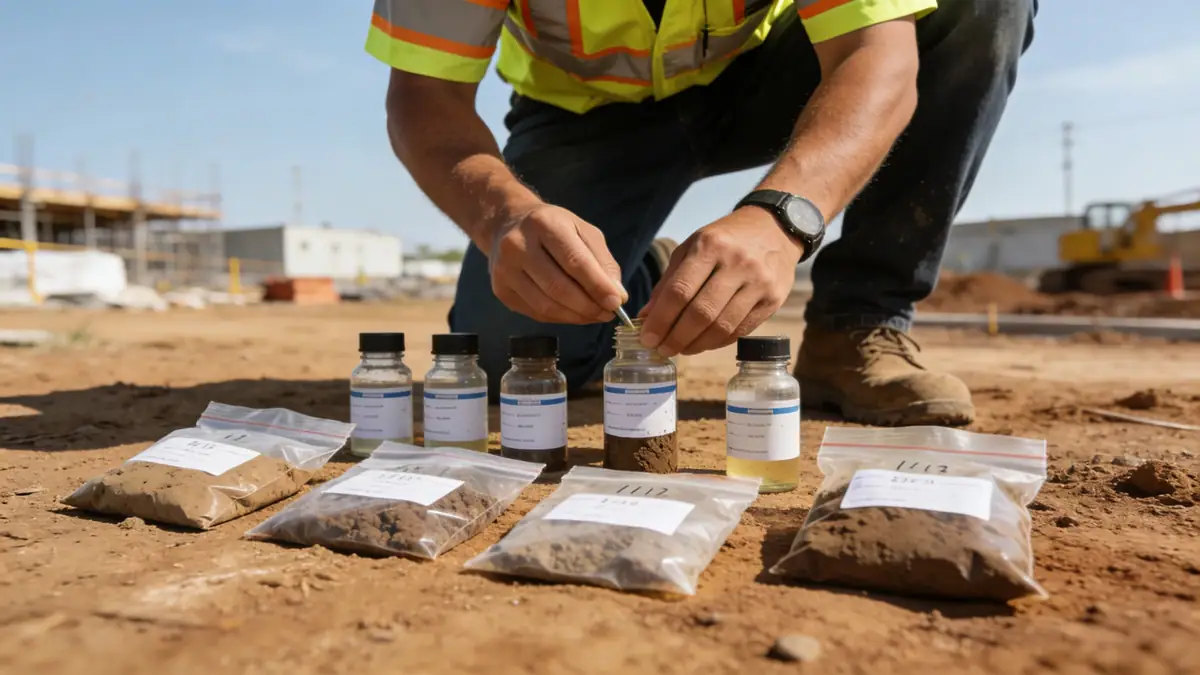
Our methodology for soil mechanics laboratory in Columbus Georgia follows ASTM D1586 for SPT and ASTM D2487 for soil classification. We employ a phased approach: initial site reconnaissance, drilling and sampling, laboratory testing (including granulometry and Atterberg limits), and analysis. Our soil mechanics laboratory procedures ensure precise determination of soil properties, such as density, moisture content, and shear strength, which are critical for evaluating bearing capacity and settlement. We adapt our testing program to the specific geotechnical challenges of Columbus Georgia, including variable alluvial and residual soils.
Reference Technical Parameters
| Parameter | Reference Value |
|---|---|
| Predominant Soil Type | Sandy clay and clayey sand (SM, SC) |
| Maximum Seismic Acceleration (PGA) | 0.2g (ASCE 7-16) |
| Typical Groundwater Level | 3–6 m below ground surface |
| Bedrock Depth | 15–30 m (Piedmont metamorphic rock) |
| Typical N60 Range | 8–25 blows/0.3 m (SPT) |
Local Considerations — Columbus Georgia
Columbus Georgia lies within the Piedmont physiographic province, characterized by residual soils derived from weathered metamorphic rocks. These soils often exhibit high plasticity and shrink-swell potential. The region experiences moderate seismic activity, with peak ground acceleration of 0.2g per ASCE 7-16. Groundwater levels are typically shallow in low-lying areas near the Chattahoochee River. Our team considers these factors when designing testing programs for projects in Columbus Georgia. For broader regional context, our soil mechanics laboratory en Atlanta provides similar expertise across Georgia.
Request a Quote
Our team reviews your project and issues an initial report at no cost.
Or write us directly at [email protected]
Services in Columbus Georgia
Applicable Standards
- ASTM D1586
- ASTM D2487
- ASTM D698
- ASCE 7-16
- IBC 2021
Frequently Asked Questions
What soil types are commonly found in Columbus Georgia?
The predominant soils are residual sandy clays and clayey sands (SM, SC) derived from weathered granite and gneiss bedrock. These soils can be highly plastic and may exhibit significant volume changes with moisture variation.
Is seismic design required for structures in Columbus Georgia?
Yes, according to ASCE 7-16 and the IBC 2021, Columbus Georgia is in Seismic Design Category C with a peak ground acceleration of 0.2g. Site-specific soil response analysis may be necessary for critical facilities.
Are geotechnical investigations mandatory for new construction in Columbus Georgia?
While not always legally required for small residential projects, most local building authorities recommend or require soil testing for commercial and multi-story buildings. Proper investigations help mitigate risks related to settlement and expansive soils.