Methodology
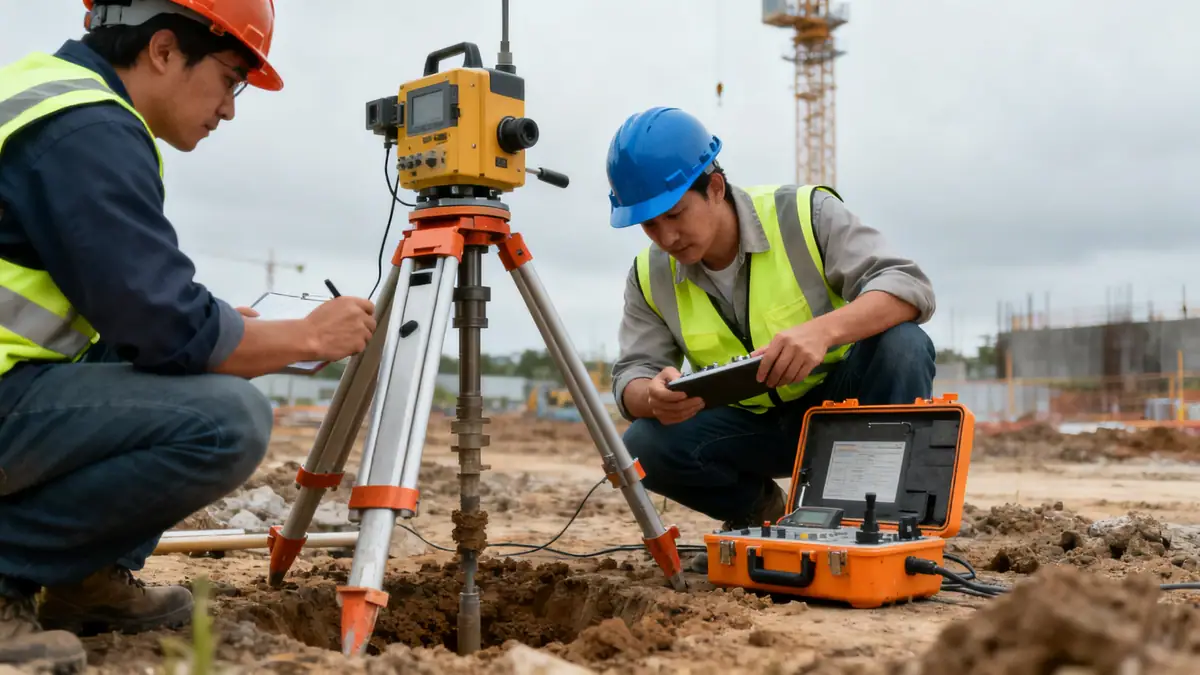
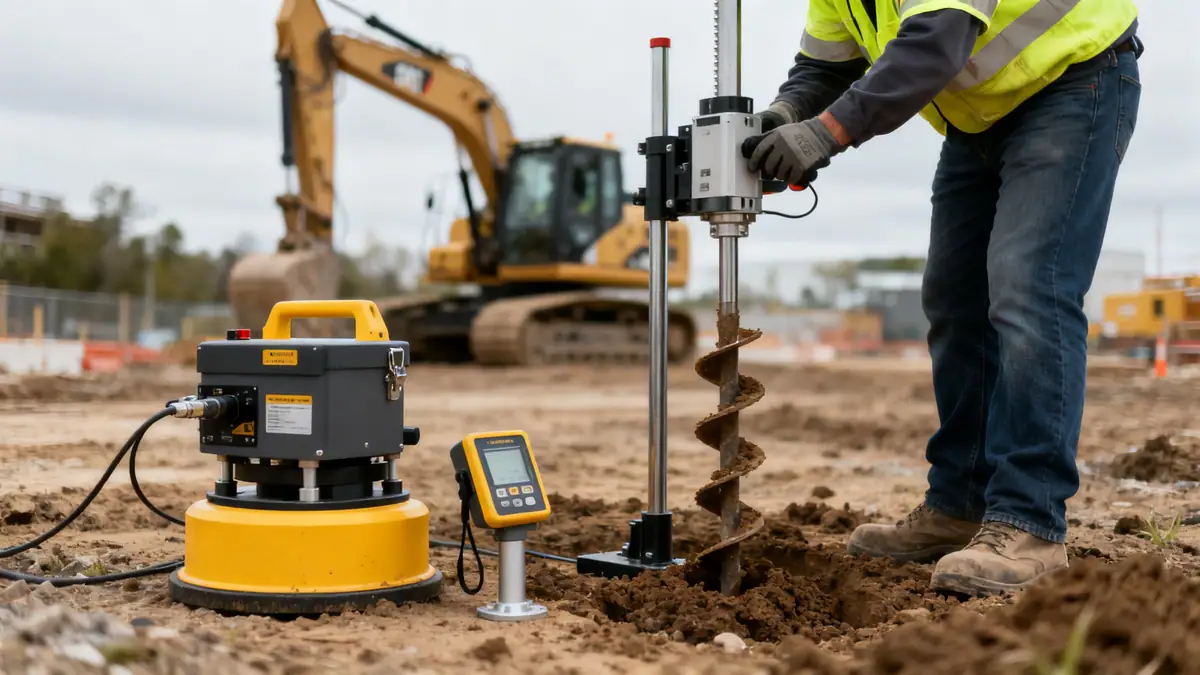
Our methodology for projects in Buffalo follows a systematic approach tailored to the region's geology. We begin with a thorough review of existing geological maps and previous site investigations to identify potential soil variability. Field exploration, including standard penetration testing (SPT) per ASTM D1586, is executed at intervals of 1.0 to 1.5 meters to capture stratigraphic changes. Samples are then transported to our soil mechanics laboratory for index property testing, including natural moisture content and unit weight. We prioritize characterization of the predominant clay and silt layers, which often control settlement and slope stability. Our integrated approach ensures that laboratory data directly informs foundation recommendations, optimizing design parameters for safety and economy.
Reference Technical Parameters
| Parameter | Reference Value |
|---|---|
| Predominant soil type | Glacial till, lacustrine clay, and silt |
| Maximum seismic acceleration (PGA) | 0.14g (ASCE 7-16, Site Class D) |
| Typical groundwater level | 2–5 meters below ground surface |
| Bedrock depth | 15–30 meters (shale and limestone) |
| Typical N60 range (SPT) | 5–15 blows/ft (clay); 20–40 blows/ft (till) |
Local Considerations — Buffalo
Buffalo's geology is dominated by glacial deposits from the Laurentide Ice Sheet, resulting in a complex layering of tills, lacustrine clays, and outwash sands. The region experiences low-to-moderate seismicity (PGA 0.14g per ASCE 7-16), but site amplification due to soft soils requires careful evaluation. Groundwater levels are shallow near Lake Erie and the Niagara River, often within 2–5 meters of the surface, necessitating dewatering plans. Neighborhoods like the East Side and South Buffalo exhibit variable fill and former industrial contamination. Local building codes, including the New York State Building Code, mandate geotechnical investigations for most structures. Our granulometry & atterberg testing is frequently employed to classify soils for fill suitability and foundation design.
Request a Quote
Our team reviews your project and issues an initial report at no cost.
Or write us directly at [email protected]
Services in Buffalo
Applicable Standards
- ASTM D1586 (Standard Penetration Test)
- ASCE 7-16 (Minimum Design Loads and Associated Criteria for Buildings)
- New York State Building Code (2019)
- ASTM D2487 (Unified Soil Classification System)
Frequently Asked Questions
What are the typical soil types encountered in Buffalo?
Buffalo's subsurface is characterized by glacial till, lacustrine clay, and silt. These soils often exhibit variable density and compressibility, requiring careful laboratory testing to determine engineering properties such as shear strength and consolidation characteristics.
Is seismic analysis required for projects in Buffalo?
Yes, per ASCE 7-16, Buffalo falls under Seismic Design Category B with a PGA of 0.14g. Site-specific seismic analysis is recommended for critical structures, especially on softer soils that may amplify ground motions.
Are soil mechanics laboratory tests mandatory for construction permits in Buffalo?
The New York State Building Code requires a geotechnical investigation for most building permits. A soil mechanics laboratory provides essential data on soil bearing capacity, settlement, and groundwater conditions to support foundation design and permit approval.