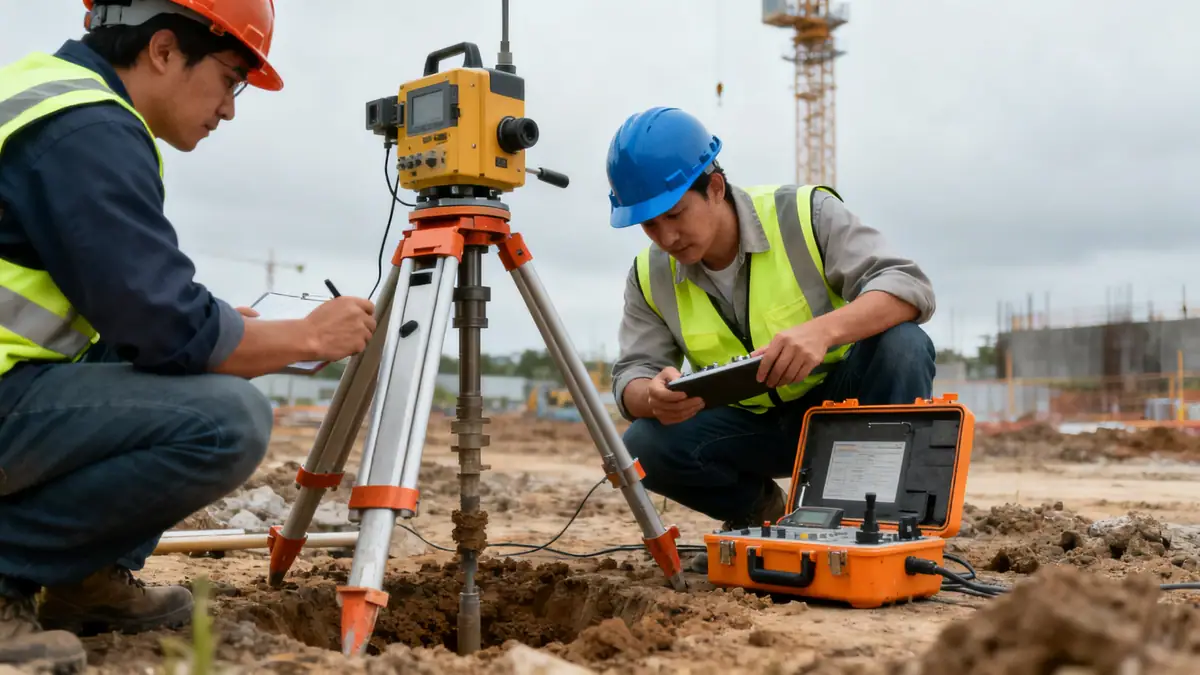
Methodology
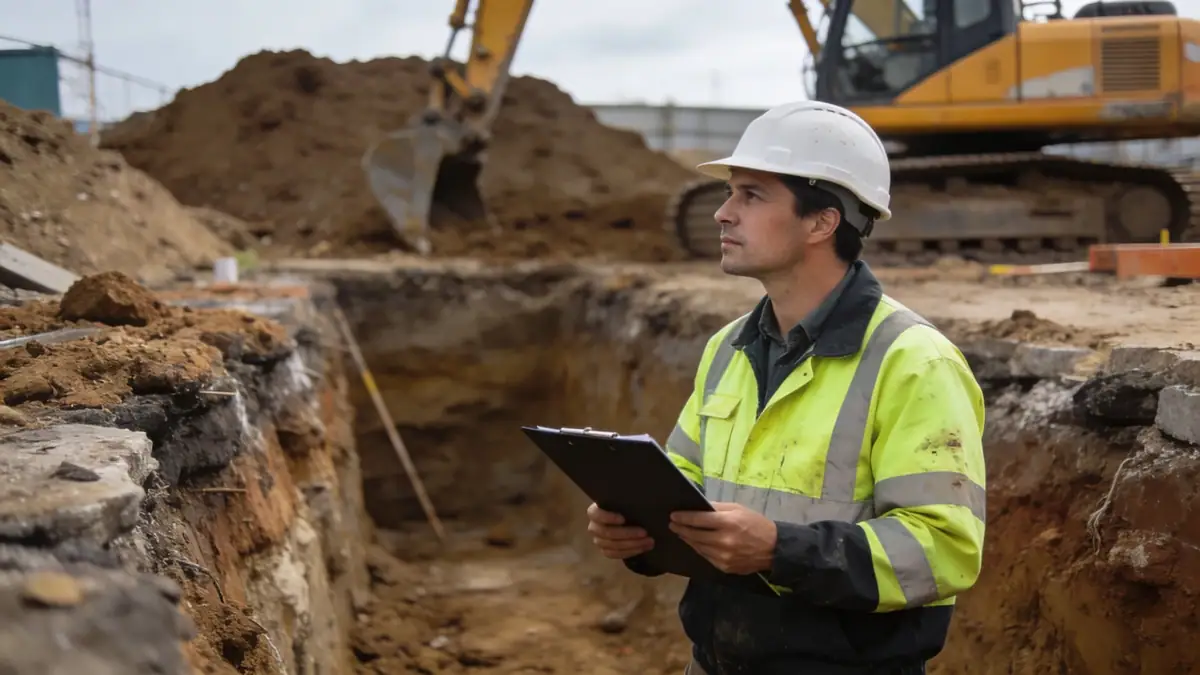
Our methodology for soil mechanics laboratory in Brownsville Texas integrates field exploration and laboratory testing under ASTM standards. We perform standard penetration tests (ASTM D1586) at 1.0–1.5 m intervals to obtain N60 values, typically reaching 8–15 m for residential structures. For deeper industrial projects, we extend borings up to 30 m. In cohesive soils, undisturbed tube samples are collected for triaxial and consolidation testing. All sampling adheres to our internal protocols, ensuring representative data for analysis. Our soil mechanics laboratory procedures are designed to characterize the alluvial deposits common in Brownsville, providing a foundation for safe design.
Reference Technical Parameters
| Parameter | Reference Value |
|---|---|
| Predominant soil type | Clayey silt and silty sand (alluvial) |
| Maximum seismic acceleration (PGA) | 0.1–0.2 g (ASCE 7-16) |
| Typical groundwater level | 1.5–3.0 m below surface |
| Bedrock depth | > 30 m (deep sedimentary basin) |
| Typical N60 range | 4–15 blows/0.3 m (loose to medium dense) |
Local Considerations — Brownsville Texas
Brownsville Texas sits in the Rio Grande Valley, characterized by deep Quaternary alluvial deposits of clay, silt, and sand. The shallow water table (1.5–3 m) often requires dewatering for excavations. Seismic hazard is moderate (PGA 0.1–0.2 g per ASCE 7), with Site Class D prevalent. Older downtown areas may have undocumented fill, while newer subdivisions on former agricultural land show higher compressibility. Our experience includes evaluating liquefaction potential in saturated sands and designing foundation solutions for expansive clays. For regional support, we coordinate with soil mechanics laboratory en Houston to share resources and expertise across Texas.
Request a Quote
Our team reviews your project and issues an initial report at no cost.
Or write us directly at [email protected]
Services in Brownsville Texas
Applicable Standards
- ASTM D1586 (Standard Penetration Test)
- ASCE 7-16 (Minimum Design Loads and Associated Criteria for Buildings and Other Structures)
- IBC 2021 (International Building Code)
- ASTM D2487 (Classification of Soils for Engineering Purposes)
Frequently Asked Questions
What soil types are commonly found in Brownsville Texas?
The predominant soils in Brownsville Texas are alluvial clayey silts and silty sands deposited by the Rio Grande. These soils often exhibit moderate to high plasticity and are prone to volume changes with moisture. Understanding their behavior is essential for foundation design.
Is a soil mechanics laboratory study required for construction in Brownsville Texas?
While not always mandatory for all projects, most local building authorities in Brownsville Texas require geotechnical reports for commercial and multi-family structures. The IBC 2021 and ASCE 7-16 recommend site-specific soil investigations to determine seismic site class and bearing capacity.
How does seismic activity affect soil testing in Brownsville Texas?
Brownsville Texas lies in a moderate seismic zone (PGA 0.1–0.2 g). Soil mechanics laboratory tests must evaluate liquefaction potential in saturated sands and assess site amplification. Our testing includes cyclic triaxial and resonant column tests when needed, following ASTM D5311 and D4015.