
Methodology
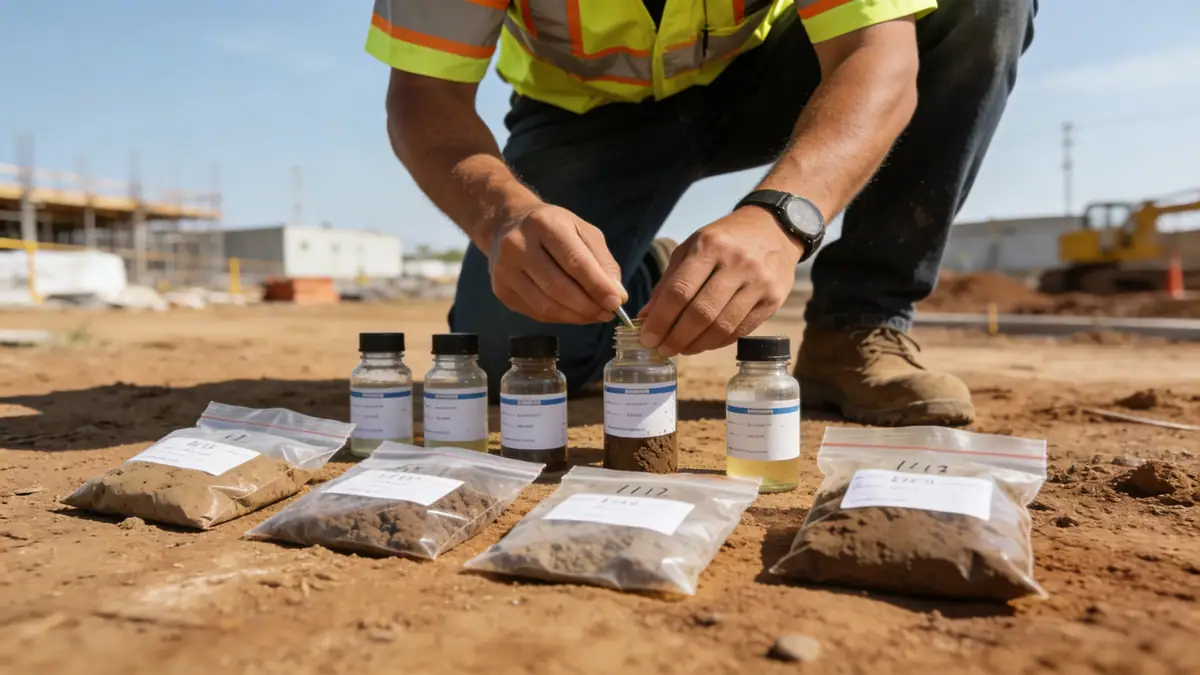
Our methodology for soil mechanics laboratory in Anchorage follows a systematic approach: sample collection per ASTM D1586 using split-spoon samplers at 1.5 m intervals, followed by classification, moisture content, and density determinations. We then conduct index property tests, including granulometry & atterberg limits, to classify soils according to the Unified Soil Classification System. For strength and compaction assessments, we perform direct shear and Proctor tests. All procedures adhere to ASTM standards, ensuring reproducibility and compliance with local building codes. Our team prioritizes quality control through calibrated equipment and duplicate testing.
Reference Technical Parameters
| Parameter | Reference Value |
|---|---|
| Predominant soil type | Glacial till, outwash sand/gravel, silty clay with organics |
| Maximum seismic acceleration (PGA) | 0.4 g (per ASCE 7-16 for Anchorage) |
| Typical groundwater level | 3–8 m below surface in lowland areas; deeper in Hillside |
| Bedrock depth | Variable: 10–50 m in Downtown; <5 m in Hillside |
| Typical N60 range (SPT) | 10–50 blows/ft for glacial till; 5–15 for silty clays |
Local Considerations — Anchorage
Anchorage's geology is dominated by glacial and alluvial deposits, with permafrost present in some northern zones. Liquefaction potential is high in sandy outwash areas near Cook Inlet, requiring detailed grain size analysis. The 1964 Good Friday earthquake (M9.2) highlighted the need for robust seismic evaluations. Our firm integrates these local factors into every soil mechanics laboratory study. For broader regional context, we collaborate with our soil mechanics laboratory en Seattle team to benchmark testing protocols. Additionally, we reference proctor & cbr testing procedures to assess compaction characteristics for fill materials commonly used in Anchorage subdivisions.
Request a Quote
Our team reviews your project and issues an initial report at no cost.
Or write us directly at [email protected]
Services in Anchorage
Applicable Standards
- ASTM D1586 (Standard Test Method for SPT)
- ASTM D2487 (Unified Soil Classification System)
- ASCE 7-16 (Minimum Design Loads for Buildings – seismic maps for Anchorage)
- International Building Code (IBC) with Alaska amendments
Frequently Asked Questions
What soil types are most common in Anchorage?
Anchorage soils include glacial till (dense sandy gravel with silt), outwash sands and gravels, silty clays from lacustrine deposits, and organic soils in wetlands. Permafrost is sporadic in northern areas. Proper classification per ASTM D2487 is essential for foundation design.
Does seismic design in Anchorage require specific soil testing?
Yes, the high seismicity (PGA up to 0.4g) requires site-specific shear wave velocity measurements or SPT N60 correlations for liquefaction assessment per ASCE 7-16. Our laboratory provides cyclic triaxial and resonant column tests to evaluate dynamic soil properties.
Are soil mechanics studies mandatory for construction in Anchorage?
Municipal code requires a geotechnical report for most commercial and multi-family projects. Single-family homes in Hillside or areas with known unstable soils also require site evaluation. Our laboratory supports these requirements with comprehensive index and strength testing.